

High-Denomination Banknotes
However, these figures can change over time. In practice, central-bank updates may revise the latest shares and circulation totals.
Collect banknotes related to this article
Explore authentic world banknotes connected to this country, region or collecting theme.


What Changed in the Role of High-Denomination Banknotes?
High-denomination banknotes were once seen mainly as practical tools for moving large sums of cash efficiently. Today, they are discussed in a very different context: as instruments of precaution, store-of-value assets, and controversial symbols in the tension between financial privacy and anti-crime regulation, as noted by Central Banking and in the Bundesbank’s analysis of demand during crises.
The notes themselves did not always change dramatically in design, but their economic meaning changed as societies became more digital, banking systems more interconnected, and regulators more concerned about illicit finance. The European Central Bank’s study on the paradox of banknotes shows that cash in circulation can keep rising even while the use of cash for everyday retail transactions declines.
The earlier view
For decades, large banknotes were mostly treated as a normal part of a country’s denomination structure. They made it easier to store, transport and withdraw high values in physical cash, and in many markets they were considered a practical feature of the monetary system rather than a policy problem, as also reflected in research from the Reserve Bank of Australia.
The newer view
That perception shifted as electronic payments expanded and as law-enforcement agencies and policy researchers focused more closely on the role of large notes in money laundering, corruption and tax evasion. At the same time, crises such as the global financial shock and the pandemic showed that households and businesses still wanted physical cash as a buffer against instability, especially in the highest denominations, a trend discussed both by the Bundesbank and in Peter Sands’ Harvard Kennedy School report.
The clearest policy example is the €500 note. The European Central Bank announced in 2016 that it would stop producing and issuing the denomination because of concerns that it could facilitate illicit activities, while existing notes would remain legal tender. The ECB later confirmed on its current banknotes page that the €500 note was not included in the Europa series and has not been issued since April 2019.

Why Did High-Denomination Notes Become So Controversial?
Large-value banknotes attract attention because they sit at the intersection of two powerful and competing ideas. On one side, they serve as a compact store of value and a precautionary form of cash during periods of uncertainty. On the other, they have long been suspected of making money laundering, corruption and tax evasion easier by allowing large sums to move anonymously in physical form.
The precautionary explanation
A Bundesbank study on demand for banknotes during crises argues that uncertainty often increases the public’s desire to hold cash for precautionary reasons. In this view, high denominations are not necessarily exceptional or suspicious. They are simply the most efficient way to hold large values in physical money when households, firms or foreign users want reassurance outside the banking system.
The regulatory explanation
The opposite interpretation is that large denominations create disproportionate risks. The European Central Bank’s 2016 decision on the €500 note explicitly cited concerns that the denomination could facilitate illicit activities. The same logic appears in the Harvard Kennedy School report by Peter Sands, which argues that high-denomination notes lower the physical cost of moving criminal cash and therefore deserve closer scrutiny than lower-value notes.
The debate is not merely theoretical. The ECB’s current banknotes guidance confirms that the €500 note remains legal tender but was excluded from the Europa series and has not been issued since April 2019. That makes it one of the clearest modern examples of how a denomination can remain valid while being gradually pushed out of active circulation for policy reasons.
What This Means for Banknote Collectors
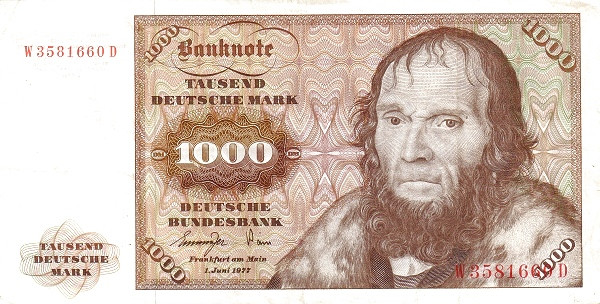
For collectors, high-denomination notes occupy a special position. They are often the most recognisable issues of a country, the ones that appear in news headlines and policy debates, and frequently the most technically advanced in terms of security features. At the same time, their controversial reputation affects availability, pricing and long-term demand.
Why collectors care about high denominations
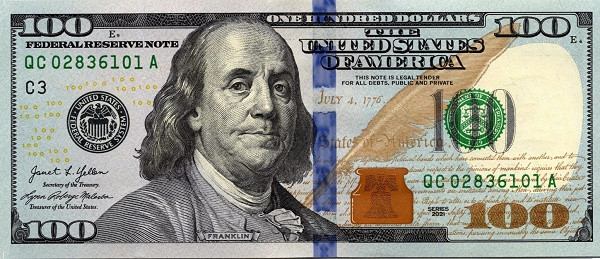
Large notes usually carry the most visible designs, the most complex security elements and, in many cases, the longest production runs. They are the denominations that define a series in the public mind, such as the US $100 bill or the former €500 note. That visibility makes them attractive both to new collectors and to advanced specialists who focus on varieties, print runs or signature combinations.
Practical implications
- High-denomination notes in uncirculated condition often command higher premiums than lower denominations from the same series, especially when they are tied to well-known historical or policy moments.
- Discontinued or restricted issues, such as the €500 note, can develop a dual identity: still legal tender in face-value terms, but potentially worth significantly more to collectors depending on condition, year and variety.
- Regulatory debates can influence market behaviour: when a denomination is associated with illicit use or possible phase-out, some holders may dispose of notes quickly, while others may treat them as long-term store-of-value items outside the traditional banking system.
In short, high-denomination banknotes are not just technical objects. They are also political and economic symbols, and that extra layer of meaning often strengthens their appeal to collectors who are interested in the story behind the paper as much as in the note itself.
Key Takeaways
- High denominations are not obsolete. Despite the rise of digital payments, large-value notes remain important as a store of value and as precautionary cash in times of uncertainty.
- They are under regulatory scrutiny. Authorities such as the European Central Bank have explicitly linked high denominations to risks of illicit finance, leading to decisions like the discontinuation of the €500 note.
- Demand is structural, not temporary. Data from central banks show that demand for large notes tends to rise in crises and remains elevated even when retail cash use declines.
- Collectors benefit from the debate. The tension between precautionary use and regulatory concerns makes high-denomination notes especially interesting as historical and economic artefacts, not just as collectible objects.
Explore United States Banknotes and Market Values
Discover US dollar issues, catalogue varieties, collector information and GlobeNote market-value references. The $100 bill, as the leading high-denomination note in global circulation, is a natural starting point for any collection focused on modern world banknotes.
Open the United States Banknote CatalogueReferences
- Central Banking: The Role of High-Denomination Banknotes, article by Antti Heinonen, 9 April 2026.
- Deutsche Bundesbank: Demand for Banknotes During Crises: An International Comparison, Monthly Report, March 2024.
- European Central Bank: The Paradox of Banknotes, Economic Bulletin article on euro cash demand.
- European Central Bank: ECB Ends Production and Issuance of €500 Banknote, official press release, 4 May 2016.
- European Central Bank: Current Banknotes, official guidance confirming the €500 note remains legal tender but is no longer issued.
- U.S. Currency Education Program: U.S. Currency in Circulation, official data on the value of banknotes in circulation.
- Federal Reserve: The International Role of the U.S. Dollar – 2025 Edition, including updated estimates of foreign demand for US currency.
- Federal Reserve: Demand for U.S. Banknotes at Home and Abroad, post-Covid research update on the international use of US cash.
- Harvard Kennedy School: Making it Harder for the Bad Guys, report by Peter Sands on high-denomination banknotes and illicit finance.
- Reserve Bank of Australia: The Future of Cash, analysis of ongoing demand for banknotes including large denominations.
- U.S. Currency Education Program: $100 Note, official overview of the design and security features of the US $100 bill.
Information current as of August 2026. The evidence shows that high-denomination banknotes remain important as store-of-value and precautionary instruments, even as regulatory concern about their potential use in illicit finance continues to shape policy and public debate.