A Singapore S$10 note looked fake because someone had scraped away Yusof Ishak’s moustache and altered his eyes. The surprise was that the note was completely genuine. The case raises a much bigger question: when does a damaged banknote stop being money, and when does it become something else entirely?
Singapore’s altered S$10 note: quick facts
DenominationS$10
SeriesPortrait Series
PortraitYusof bin Ishak
What was alteredMoustache and eye area
AuthenticityConfirmed genuine by bank staff
Type of damageDeliberate scraping of the printed surface
Incident date2 August 2026
Why it mattersA genuine banknote can look counterfeit after deliberate alteration
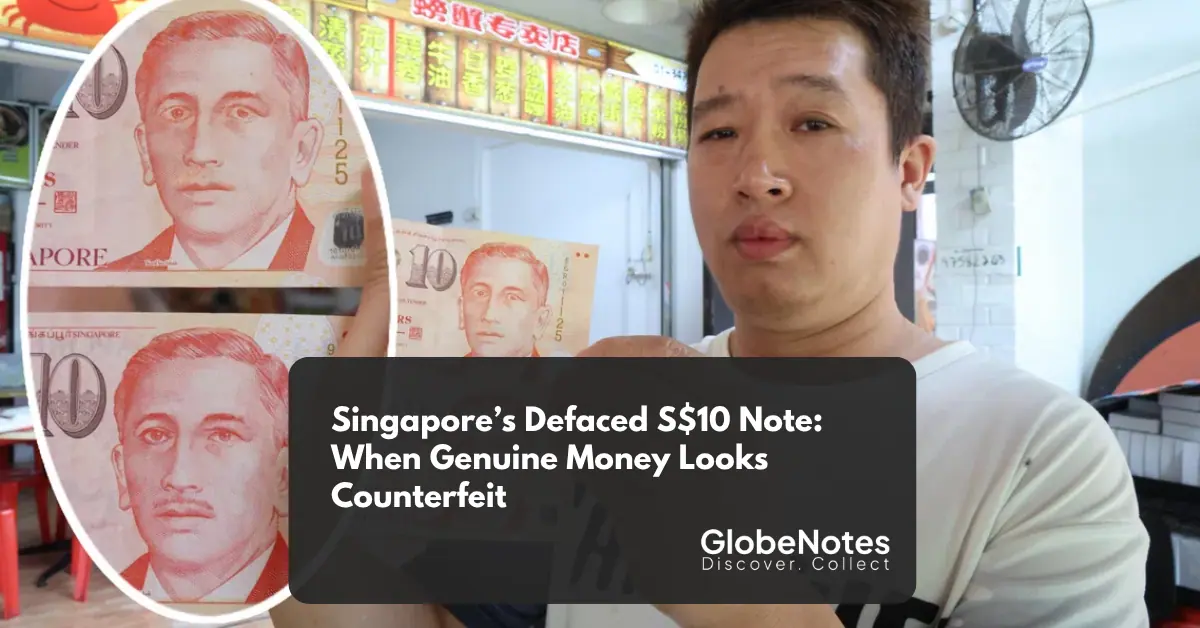
A Singapore food stall thought it had received a counterfeit S$10 note. The portrait looked wrong: President Yusof Ishak had lost his moustache, his eyelids had been scratched and his expression had become strangely wide-eyed.
There was only one problem with the counterfeit theory. The banknote was genuine. Staff at two banks reportedly examined it and confirmed that the note itself was authentic. Someone had simply taken a real Singapore dollar and deliberately altered the portrait printed on it.
The note raises a surprisingly difficult question: if the paper is genuine, the serial number is genuine and the security features are genuine, how much can someone damage a banknote before it stops being money?
The incident occurred on 2 August 2026 at 21 Seafood in the Kovan area. The unusual note was discovered only later, while staff were preparing change for another customer. Its missing moustache and scratched eyes were so convincing as an anomaly that the first reaction was to suspect a fake.
By 27 August, the stall owner had taken the note for examination. Both OCBC and DBS were reported to have confirmed that it was genuine, with the damage apparently caused by scraping the printed surface with a sharp object.
The owner was even offered a replacement. He declined. The damaged S$10 note had already acquired something its face value could not provide: a story.
A damaged banknote can still be genuine, but that does not guarantee its value
This is where the Singapore case becomes more interesting than a simple story about vandalism.
Authenticity and usability are two different questions.
A banknote may still be completely genuine even after someone has written on it, scratched it, cut it or otherwise damaged its surface.
The printing, paper, serial number and security features do not suddenly become counterfeit simply because the note has been altered.
Question 1
Is the banknote genuine? This concerns whether it was originally issued by the Monetary Authority of Singapore.
Question 2
Will its full value still be recognised? That depends on the type and extent of the damage and, ultimately, on the Authority’s assessment.
Singapore’s Currency Act 1967 specifically deals with mutilated and defaced money. A note can be considered to have been “illegally dealt with” when it has been damaged beyond normal wear, including by writing, marking, perforating, cutting, splitting or otherwise defacing it.
There is no automatic right to compensation.
Under Section 19 of the Currency Act, a person is not automatically entitled to recover the value of a mutilated or illegally altered banknote. Any refund may instead be granted by the Monetary Authority of Singapore as an act of grace and under conditions determined by the Authority.
The law also allows authorised officers to repossess mutilated or illegally altered currency when it is submitted for assessment.
So the owner of a strange S$10 note cannot necessarily insist on receiving another ten dollars simply because enough of the original note survives.
Deliberately damaging currency is also treated differently from ordinary wear.
A banknote softened by years in wallets is one thing. A portrait deliberately scraped with a blade is another.
That distinction explains why the moustache-less S$10 note is so unusual. The note remained genuine, but somebody had intentionally transformed an official portrait printed on legal tender into something the issuing authority never designed.
The moustache was not decoration: Yusof Ishak is the face of Singapore’s money
The person scratched out on the strange S$10 note was not an anonymous figure chosen by a designer.
He was Yusof bin Ishak, Singapore’s first president, who served as head of state from independence in 1965 until his death in 1970.
His portrait has appeared across Singapore’s Portrait Series since 1999, making his face one of the most recognisable elements of the country’s physical currency.
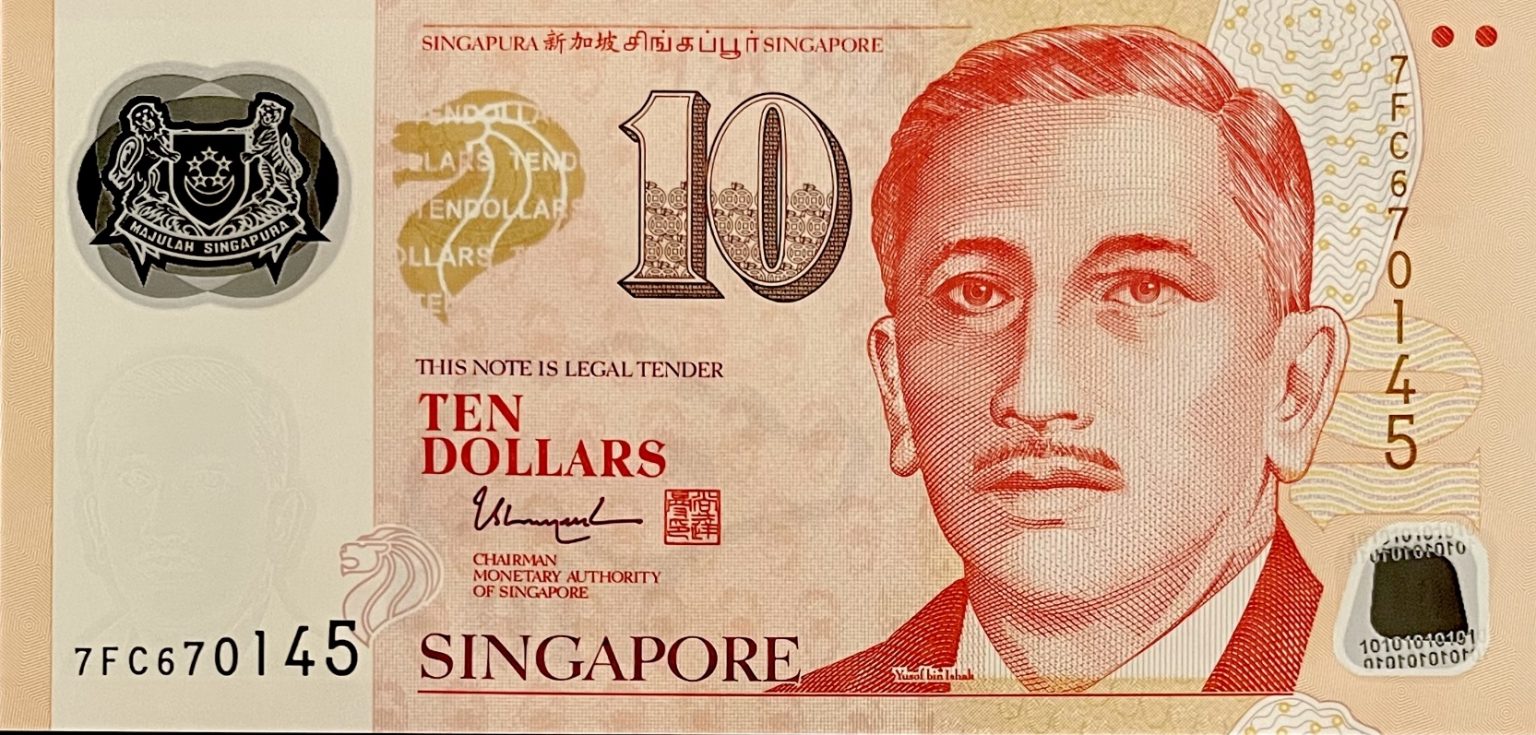
On the S$10 note, the portrait occupies a large part of the front and works alongside the denomination, signatures, serial numbers and security features to create an instantly recognisable design.
Singapore S$10 Portrait Series banknote featuring Yusof Ishak.
Image and reference:
BanknoteNews
.
That helps explain why removing his moustache produced such a striking effect.
Humans are exceptionally good at recognising faces, and even a relatively small alteration to familiar facial features can make an authentic banknote suddenly look suspicious.
Singapore law does not treat deliberate banknote alteration as harmless doodling.
The Currency Act specifically addresses mutilating, destroying and defacing currency. It also defines a note as having been illegally dealt with when it has been marked, written on, perforated, cut, split or otherwise deliberately defaced beyond normal wear and tear.
The distinction matters. A folded corner, faded ink or a note softened after years in circulation is ordinary wear.
Taking a sharp object to the president’s portrait is intentional alteration.
Under the Currency Act, deliberately mutilating or destroying currency, or printing, stamping or otherwise impressing marks, words, letters or figures onto a banknote, can constitute an offence.
The law therefore protects more than the monetary value represented by the note. It also protects the physical object through which that value circulates.
And that brings us back to the peculiar S$10 note. Someone did not manufacture a fake portrait of Yusof Ishak. They started with a genuine one and removed just enough of it to make genuine money look counterfeit.
This is what the altered S$10 actually looked like
At first glance, the note looks almost normal.
The colour is right, the substrate feels right and the familiar Portrait Series design is still there.
Then the face begins to look wrong.
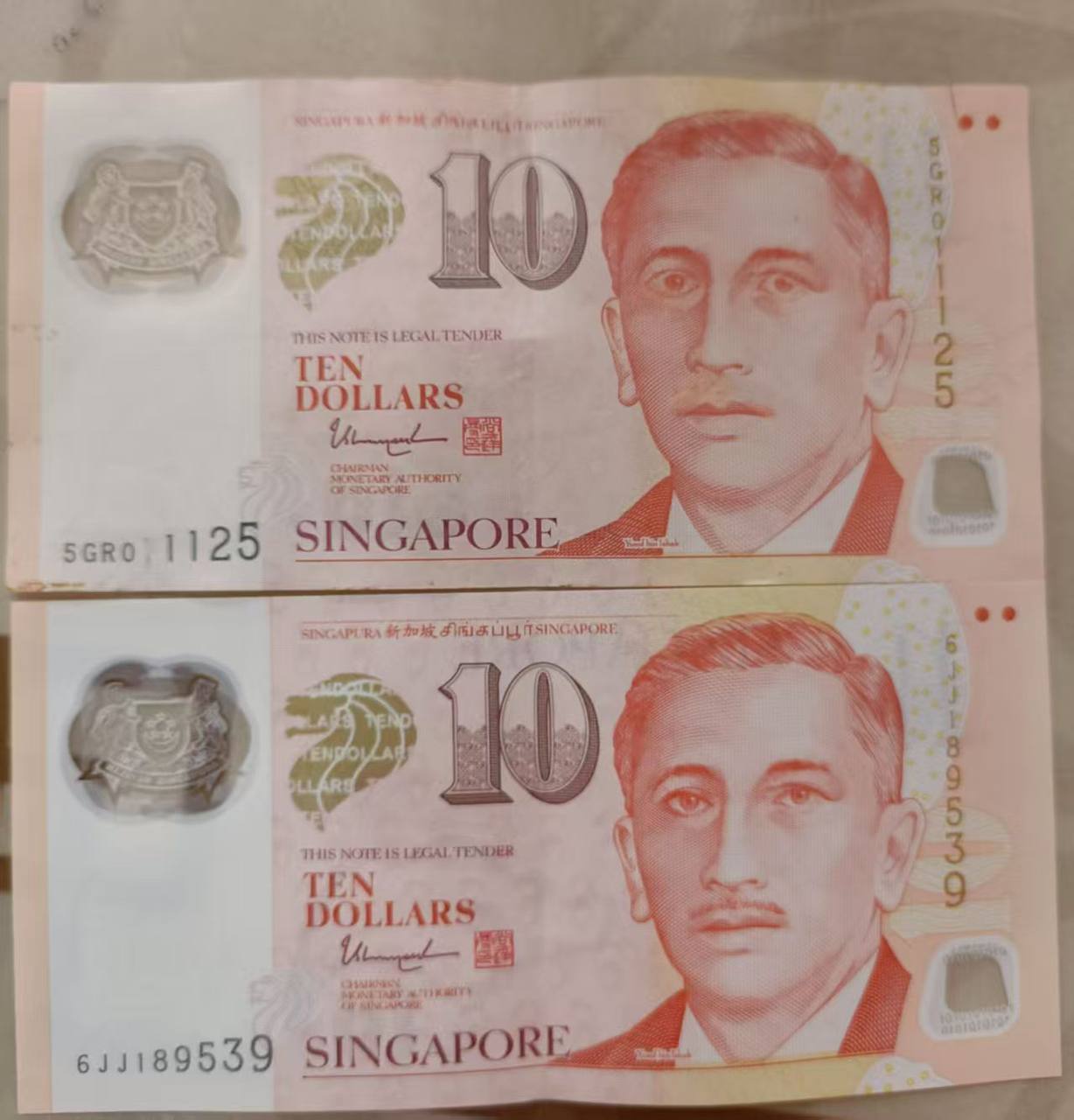
The altered S$10 note, top, compared with a normal Portrait Series S$10 below.
The moustache has been scraped away and the eyelids visibly altered.
Photo courtesy of Zhang Xiao Hai.
Source:
Mothership Singapore
.
The most obvious change is the moustache. On the normal note, Yusof Ishak’s thin moustache is clearly visible.
On the altered example, much of it has been physically scraped from the printed surface.
The eyes are stranger still. Marks around the eyelids make them appear wider and more exposed, changing the expression of the portrait enough that the note can look suspicious even before a person consciously identifies what has changed.
Defaced is not the same as counterfeit.
A counterfeit note is an unauthorised imitation of money. This S$10 began life as genuine legal currency. Someone later altered its printed surface. The security features did not become fake simply because the portrait had been damaged.
That distinction was confirmed when the note was taken to banks for inspection.
According to the stall owner, bank staff confirmed that it was genuine and concluded that its surface had been deliberately damaged with a sharp object. OCBC even offered to exchange it for another note.
The owner declined.
From a purely monetary point of view, exchanging a damaged S$10 for an undamaged S$10 would have been the obvious choice.
From a collector’s point of view, however, the calculation had already changed.
Once photographs of the unusual note reached social media, some users reportedly said they would be willing to pay more than its S$10 face value to own it. A damaged banknote that businesses might refuse had, paradoxically, acquired a different kind of value: the value of being unusual.
Frequently asked questions
Was the altered Singapore S$10 note counterfeit?
No. The note itself was genuine. The unusual appearance came from deliberate damage to the printed portrait of Yusof Ishak.
What had been changed on the banknote?
The moustache on Yusof Ishak’s portrait had been scraped away and the area around his eyes had also been altered, giving the portrait an unfamiliar expression.
Can a damaged banknote still be genuine?
Yes. Damage does not change the original authenticity of a banknote. A genuine note can be written on, torn, scraped or otherwise defaced while still remaining an originally issued piece of currency.
Does Singapore automatically replace damaged banknotes?
No. Under Singapore’s Currency Act, compensation for mutilated or illegally altered currency is not an automatic right and may be granted at the discretion of the Monetary Authority of Singapore.
Is it illegal to deliberately damage Singapore currency?
Singapore law specifically addresses the mutilation, destruction and defacement of currency. Deliberately marking, cutting, perforating or otherwise damaging a note can fall within those provisions.
Who is Yusof Ishak?
Yusof bin Ishak was Singapore’s first president. His portrait has appeared on the country’s Portrait Series banknotes since 1999.
Why did the stall owner keep the damaged note?
Although a bank reportedly offered to exchange it, the owner decided to keep it because the unusual alteration had turned the note into a curiosity with a story of its own.