

Quick Facts
Key takeaways about AI-powered banknote quality control.
Machine learning algorithms can analyse millions of production images to detect defects that conventional inspection systems may overlook.
AI improves the identification of printing imperfections before banknotes enter circulation, increasing consistency and manufacturing efficiency.
Researchers demonstrated how deep learning techniques can support automated inspection of banknote paper and printed security features.
Earlier defect detection reduces waste, lowers production costs and helps maintain public confidence in physical currency.
Advanced AI inspection systems could gradually become part of future banknote production facilities around the world.
Combining artificial intelligence with modern printing technologies strengthens quality assurance while supporting the production of increasingly sophisticated banknotes.

Why Banknote Quality Matters More Than Ever
To the average person, a banknote may seem like a simple piece of printed paper. In reality, it is one of the most sophisticated security products ever manufactured. Every genuine banknote combines advanced printing techniques, multiple security features and extremely tight production tolerances to ensure that it remains both secure and durable throughout its life in circulation.
Central banks invest enormous resources in maintaining these standards because public confidence depends on consistency. If genuine banknotes showed frequent printing defects, unusual colours or misplaced security elements, people could begin questioning whether the notes they receive are authentic. Quality control is therefore much more than a manufacturing process. It is a cornerstone of trust in a nation’s currency.
Every Security Feature Must Be Perfect
Modern banknotes contain a remarkable combination of technologies designed to discourage counterfeiting while remaining easy for the public to recognise. Each security element must be printed or embedded with exceptional precision. Even the smallest deviation can result in an entire sheet being rejected during production.
Did You Know?
Many modern banknote printing facilities inspect every single note several times during production. High-speed cameras can capture thousands of images every minute, allowing automated systems to detect microscopic defects long before the finished banknotes leave the printing works.
Small Defects Can Have Major Consequences
Not every production flaw makes a banknote unusable, yet even tiny imperfections can create significant challenges. A slightly misplaced security thread, a colour variation that falls outside acceptable tolerances or an incomplete serial number may force manufacturers to discard entire production sheets. These quality checks inevitably increase production costs, but they also ensure that only banknotes meeting the highest standards enter circulation.
As security features become increasingly sophisticated, inspection systems must evolve alongside them. Conventional machine vision has served central banks exceptionally well for decades. However, today’s banknotes contain so many intricate elements that recognising every possible defect using predefined rules alone is becoming increasingly difficult. This growing complexity is one of the main reasons why researchers are now turning to artificial intelligence to support the next generation of automated quality control.
The Challenge of Inspecting Millions of Banknotes
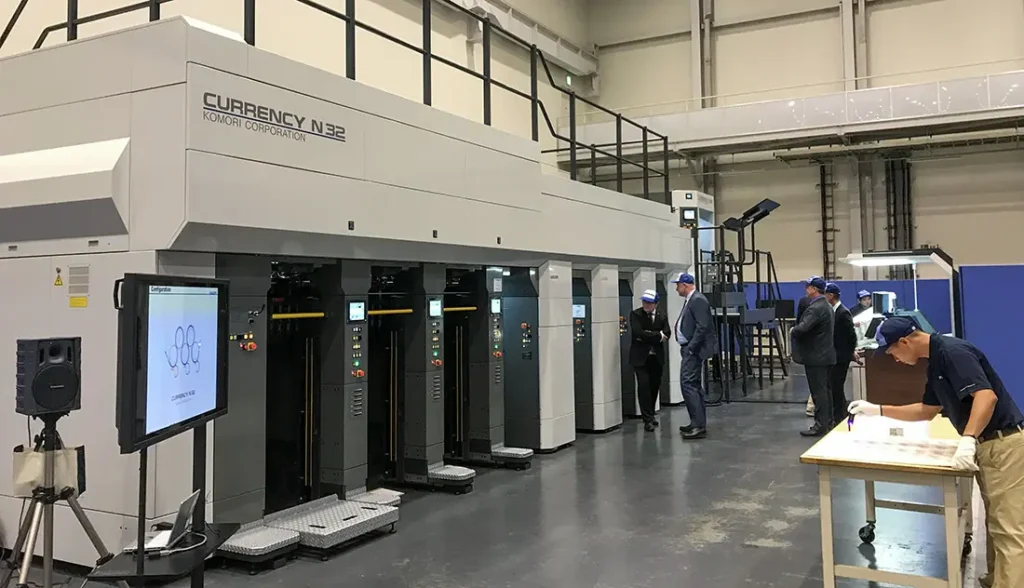
Producing banknotes on a national or international scale requires extraordinary precision. Large security printing facilities manufacture millions of notes every year, and each one must pass strict quality controls before being approved for circulation. Unlike ordinary printed products, a banknote cannot simply be corrected after production. Once a defect is discovered, the affected notes must usually be removed, destroyed and replaced.
The challenge becomes even greater when considering the complexity of modern currency. Today’s banknotes are no longer just printed sheets of cotton paper or polymer. They are carefully engineered security objects containing multiple layers of protection, each requiring independent verification.
Traditional Inspection Systems: Powerful but Limited
For many years, central banks and security printers have relied on advanced optical inspection systems. These machines use high-resolution cameras and specialised software to compare each banknote against a reference model of a perfectly printed note.
These systems are extremely accurate when searching for known problems. They can quickly identify missing ink, incorrect colours, damaged printing plates, alignment errors and other production issues that have already been defined by engineers.
Why Artificial Intelligence Changes the Approach
Artificial intelligence introduces a different method of analysis. Instead of looking only for defects that engineers already know, AI systems can learn from thousands or millions of examples and identify patterns associated with quality problems.
Through machine learning, algorithms are trained using large collections of images showing both acceptable and defective banknotes. Over time, the system develops a deeper understanding of the characteristics that define a perfect note.
From Detection to Prediction
Traditional inspection asks: “Does this banknote contain a known defect?”
Artificial intelligence can ask a broader question: “Does this banknote differ from the expected standard in a way that could indicate a production problem?”
Learning to Recognise the Unexpected
One of the greatest advantages of artificial intelligence is its ability to identify unusual combinations of small irregularities. A single minor variation may not appear significant, but several subtle differences occurring together could reveal a deeper manufacturing issue.
For example, an AI model may detect a slight texture difference in the paper, a small colour shift and a tiny printing variation that individually remain within acceptable limits. Together, these signals may indicate that a production process requires adjustment.
This ability is particularly valuable because banknote manufacturing constantly evolves. New substrates, new security features and new printing techniques create challenges that cannot always be anticipated when inspection software is first developed.
Artificial intelligence provides a flexible system capable of adapting alongside innovation. Instead of replacing existing quality controls, AI works as an additional layer of intelligence, helping central banks achieve a level of accuracy that would be extremely difficult through traditional methods alone.
From Rule-Based Inspection to Artificial Intelligence
Traditional banknote inspection systems have always depended on carefully defined rules. Engineers establish acceptable parameters for colour accuracy, printing position, security features and other characteristics. When a banknote falls outside these limits, the system identifies a possible defect and sends it for further analysis.
This approach has been extremely successful for decades. However, as banknotes become more complex, some quality issues become increasingly difficult to describe using simple rules. A rare printing variation may not match any previously classified defect, even though an experienced inspector could immediately recognise that something appears unusual.
This is where artificial intelligence introduces a different perspective. Instead of relying only on predefined instructions, AI models learn patterns from large collections of examples. They do not simply ask whether a banknote matches a checklist. They analyse relationships between images and identify similarities or differences that may indicate a quality issue.
Siamese Neural Networks: Comparing Banknote Images
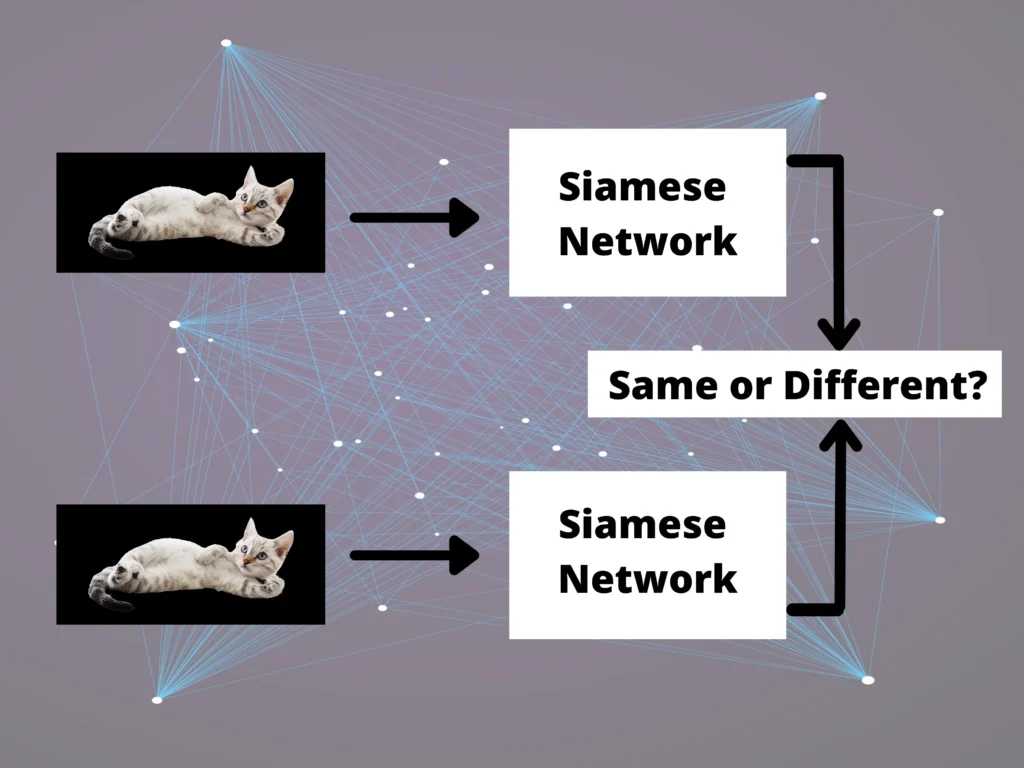
The research developed by the Bank of Italy explores the use of a particular type of artificial intelligence architecture known as a Siamese Neural Network. Unlike traditional classification models that simply assign an image to a category, Siamese networks are designed to compare two images and measure how similar they are.
This makes them particularly suitable for banknote quality control. Instead of requiring thousands of examples for every possible defect, the system can learn the difference between a normal banknote and a potentially problematic one by analysing visual similarities.
How Does It Work?
The AI model receives pairs of images and learns whether they represent the same quality standard or contain meaningful differences. Over time, it becomes better at identifying small variations that may deserve additional attention from human inspectors.
Few-Shot Learning: Training AI With Limited Examples
One of the most interesting aspects of this approach is the use of few-shot learning. In many industrial applications, artificial intelligence requires enormous quantities of labelled data. However, in banknote production, some defects are extremely rare. A manufacturer may encounter only a limited number of examples of a specific problem.
Few-shot learning addresses this challenge by allowing AI systems to learn effectively from a smaller number of examples. This is particularly valuable in banknote manufacturing because unusual defects cannot always be collected in large datasets before they appear in real production environments.
AI as an Assistant for Banknote Experts
The objective of this technology is not to remove human expertise from the quality control process. Instead, artificial intelligence acts as an advanced assistant that helps inspectors focus their attention where it is most needed.
Experienced specialists remain essential because banknote quality assessment often involves complex decisions that require professional judgement. AI can highlight unusual patterns, prioritise suspicious cases and accelerate analysis, but human experts continue to provide the final evaluation.
This combination of artificial intelligence and human experience represents one of the most promising directions for the future of banknote manufacturing. It creates a partnership between advanced algorithms and specialised knowledge, improving efficiency while preserving the expertise developed by central banks and security printers over decades.
How Artificial Intelligence Could Shape the Future of Banknote Production
The introduction of artificial intelligence into banknote quality control represents a new chapter in the evolution of currency manufacturing. However, the most important aspect of this technology is not automation alone. Its real value lies in creating a more intelligent collaboration between machines and the specialists responsible for protecting the quality of national currencies.
Central banks and security printers operate in an environment where accuracy is essential. A defective banknote can affect production efficiency, increase costs and create unnecessary challenges once currency enters circulation. AI-powered systems offer an additional analytical layer capable of helping experts identify unusual patterns earlier and with greater consistency.
Improving Efficiency Without Replacing Human Expertise
Banknote production remains a field where human knowledge plays a fundamental role. Experienced inspectors understand subtle characteristics of printing quality that cannot always be reduced to numerical measurements. Their expertise is built through years of analysing real production environments.
Artificial intelligence complements this expertise by processing large amounts of visual information at a speed impossible for manual inspection. Instead of replacing specialists, AI can help them focus on the most complex cases and make better-informed decisions.
The Future Is Human + Artificial Intelligence
The most effective quality control systems are likely to combine three elements: advanced imaging technology, artificial intelligence algorithms and expert human judgement. Together, these components create a more reliable and adaptable inspection process.
Potential Applications Beyond Quality Control
Although current research focuses on identifying defects during production, the same AI techniques could eventually support other areas connected with currency management. Machine learning may assist central banks in analysing production data, improving manufacturing processes and understanding patterns that influence banknote durability.
What This Means for Collectors
For banknote collectors, improvements in production quality have an interesting consequence. Future generations of banknotes may become even more consistent, with fewer accidental printing variations entering circulation.
At the same time, unusual production errors and genuine printing anomalies will likely remain highly valuable to collectors. In fact, improved quality control may make authentic errors even rarer, increasing their importance within the numismatic market.
As artificial intelligence becomes part of modern currency production, collectors may eventually see a new relationship between technology and rarity. Better manufacturing standards can coexist with the fascination created by exceptional and historically significant banknote varieties.
Conclusion: A Smarter Future for Physical Currency
Despite the growth of digital payments, physical banknotes continue to evolve. Behind every note is a combination of traditional craftsmanship, advanced engineering and increasingly sophisticated technology.
Artificial intelligence is becoming another important tool in this process. By helping experts detect subtle differences, analyse complex patterns and improve production quality, AI strengthens the reliability of modern currency while preserving the human knowledge that has always been central to banknote manufacturing.
The future of banknotes will not simply be digital or physical. It will be a combination of innovation, security and expertise, where technology helps create safer and more reliable currencies for generations to come.
Frequently Asked Questions
Everything you need to know about artificial intelligence and modern banknote quality control.
References
This article is based on official research papers and industry sources concerning artificial intelligence applications in banknote quality control and currency production technology.
-
Banca d’Italia – Siamese Networks for AI-powered automated banknote quality control (2026)
Official research paper published by the Bank of Italy exploring the use of Siamese Neural Networks and few-shot learning to support human experts in detecting potential defects during banknote production quality control.
-
Central Banking – Novel AI could help with banknote quality control – paper (2026)
Industry article reporting on the Bank of Italy research and explaining how artificial intelligence could support banknote inspection processes.
Source: Central Banking
-
Banca d’Italia – Siamese neural networks for detecting banknote printing defects (2023)
Earlier research from the Bank of Italy investigating Siamese Neural Networks and one-shot learning approaches for identifying banknote printing defects using limited training examples.
Source: Bank of Italy research archive