
Poland NBP Is Killing the Golden Goose: How Greed and Poor Quality Are Destroying Collector Trust
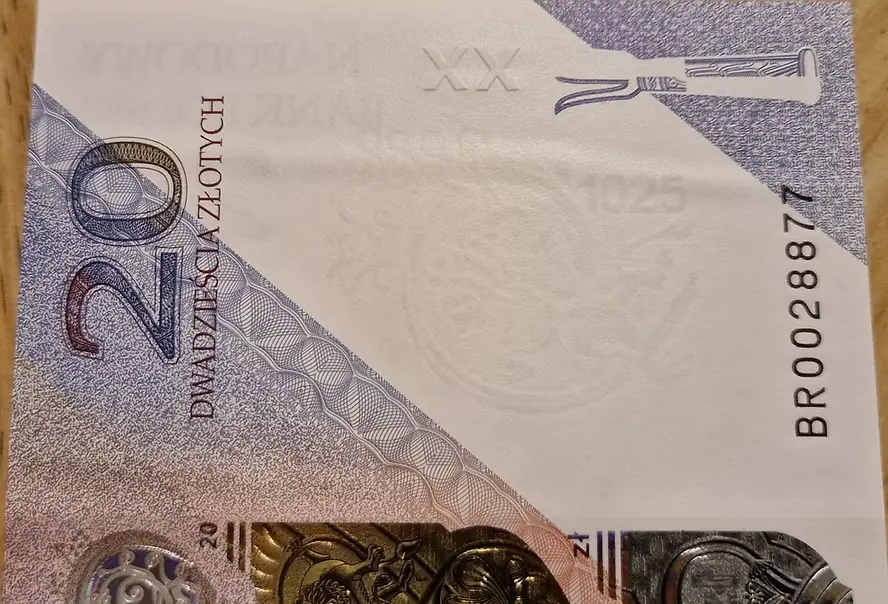
Let’s be brutally honest: the National Bank of Poland (NBP) is systematically destroying one of Europe’s most promising commemorative banknote programs. On November 5, 2025, they released a 20 złoty note honoring Boleslaus the Brave with a laughable 70,000-unit print run and an insulting 800% markup over face value. Yes, you read that correctly—160 złoty for a 20 złoty note. And what did collectors get for their money? Wrinkled, wave-patterned disasters packed in fingerprint-magnet folders that looked worse after a single touch.
– Price: 160 złoty (800% markup over 20 złoty face value)
– Print run: 70,000 units
– Quality disaster: ~75% of notes had unacceptable paper waves and creases
– No returns policy—you’re stuck with defective notes
– Replacement process: 2-3 weeks, Poland addresses only
– Folder quality: Dark blue surface shows every fingerprint immediately

From Reasonable to Ridiculous: The NBP’s Markup Madness
How a 45% premium became an 800% cash grab
The NBP launched its commemorative program in 2006 with a 50 złoty Pope John Paul II note—2 million units at 90 złoty (80% markup). Reasonable? Perhaps. But they printed too many, and 19 years later, they’re still trying to unload them at discount prices. That should have been a lesson. Instead, it became a blueprint for exploitation.
| Year | Face Value | Sale Price | Markup % | Comment |
|---|---|---|---|---|
| 2006 | 50 złoty | 90 złoty | +80% | Still available 19 years later—massive overprint |
| 2009 | 20 złoty | 29 złoty | +45% | First 20 złoty commemorative—reasonable |
| 2019 | 19 złoty | ~50 złoty | +163% | Greed accelerating |
| 2025 | 20 złoty | 160 złoty | +800% | Boleslaus the Brave—absolute insanity |
This isn’t a premium for artistry or scarcity. This is corporate greed dressed up as numismatics. And collectors are finally saying: enough.
The Quality Disaster: When “Commemorative” Means “Defective”
PWPW’s production catastrophe and NBP’s arrogant response
Donald Ludwig from geldscheine-online.com was physically present in Warsaw on release day and witnessed the horror firsthand: approximately 75% of the Boleslaus notes exhibited unacceptable paper waves and creases. Not minor imperfections—ugly, undulating paper distortions that ruined the watermark area and destroyed collectibility.
The Polish Security Printing Works (PWPW) failed catastrophically at quality control. But here’s the truly infuriating part: the NBP’s “solution”:
- No on-site returns: NBP branches refuse to exchange defective notes immediately
- 2-3 week process: Submit notes, wait for inspection, hope for replacement
- No guarantee: Replacement notes might also be defective
- Poland addresses only: International collectors? You’re screwed
- Folder disaster: Dark blue presentation folder shows fingerprints instantly, ruining resale appeal
This is unacceptable for a product sold at 800% markup. Collectors paid premium prices for premium quality. They received garbage wrapped in arrogance.
The Market Speaks: Collectors Are Walking Away
Declining interest, stagnant inventory, and the death spiral begins
The signs are everywhere. Three recent NBP commemoratives remain unsold at NBP branches years after release:
Defense of the Eastern Border (2022)
80,000 units—still available. Political theme that alienated collectors seeking historical neutrality.
Copernicus (2023)
100,000 units—still available despite historical theme. Overpriced and oversupplied.
80th Anniversary Warsaw Uprising (2024)
80,000 units—still available. Quality concerns beginning to surface.
Collectors and speculators who once queued for hours in Warsaw are staying home. Why? Because the immediate resale profit margins have collapsed. When release-day prices barely exceed NBP retail, the game is over. The NBP raised prices so aggressively that secondary markets can’t absorb the markup.
Ludwig notes that Warsaw ticket distribution dropped from 10 notes per person (2023) to just 5 (2025). Not because of overwhelming demand—because demand is dying.
History Repeats: The Bank of England Disaster
When greed killed the golden goose in Britain
This story has happened before. Between 1990 and 2003, the Bank of England partnered with Debden Security Printing to produce over 80 numismatic presentation sets. Initially, collectors were thrilled. But as years passed, the releases became relentless, prices climbed, and quality became inconsistent.
Collectors felt overwhelmed and exploited. Many organized informal boycotts. The program collapsed under its own greed. The Bank of England killed the golden goose, and the commemorative program was discontinued entirely.
– Relentless markup increases (45% → 800%)
– Declining quality control
– Arrogant customer service policies
– Ignoring collector feedback
– Oversupply of politically divisive themes
– Market saturation and fatigue
The NBP is on the same path. And unless they change course immediately, Polish commemoratives will suffer the same fate.
What the NBP Must Do—Immediately
Five non-negotiable demands from the collector community
The NBP and PWPW have one chance to save this program. Here’s what must happen:
- 1. Fix quality control NOW: PWPW must implement rigorous inspection protocols. Every note must be pristine. No waves, no creases, no excuses. If 75% of production is defective, production must stop until the problem is solved.
- 2. Implement immediate on-site exchanges: NBP branches must accept defective notes and provide replacements immediately—not in 2-3 weeks. No bureaucracy, no forms, no delays. Defective note = instant swap.
- 3. Serve international collectors: The NBP’s Poland-only replacement policy is insulting. Establish international return processes or stop selling to international buyers entirely.
- 4. Redesign presentation folders: Dark blue fingerprint-magnet folders are unacceptable. Use materials that maintain appearance after handling.
- 5. Stop the markup insanity: An 800% markup is exploitation, not numismatics. Return to reasonable premiums (50-100% maximum) that reflect actual production costs and artistic value—not corporate greed.
And collectors? Write formal complaints to both NBP and PWPW. Document defects with photos. Demand accountability. The only language institutions understand is organized, persistent pressure.
The Choice Is Clear: Reform or Die
Poland’s commemorative banknote program once represented one of Europe’s most exciting numismatic offerings. Historical themes, beautiful designs, limited runs—collectors loved it. Early issues trade at strong premiums today precisely because the program had integrity.
But integrity has been replaced by greed. Quality has collapsed. Customer service is arrogant and exclusionary. Prices have become obscene. And collectors—the very people who made this program successful—are walking away.
The National Bank of Poland has a choice: reform immediately, restore quality, price reasonably, and treat collectors with respect—or watch the program collapse into irrelevance like the Bank of England debacle before it.
The market has spoken. Collectors have spoken. The question is: will the NBP listen before it’s too late?