
“Live Long and Prosper”: Canada’s Viral Spocking Banknote Phenomenon
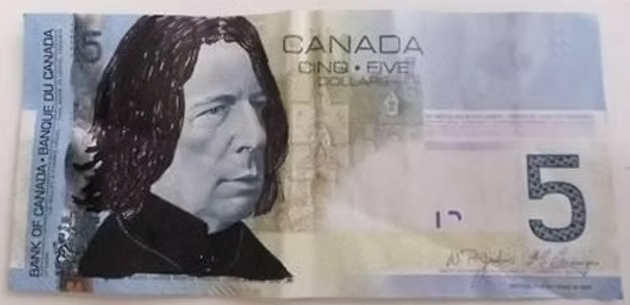
Since 1972, Canada’s $5 banknote has featured Sir Wilfrid Laurier, the nation’s seventh Prime Minister (1896-1911). When the Bank of Canada redesigned the note in 2002 as part of the “Canadian Journey” series, replacing Laurier’s frontal portrait with a three-quarter profile, Canadians immediately noticed an uncanny resemblance to Star Trek’s Mr. Spock—portrayed by Canadian-born actor Leonard Nimoy. This sparked “Spocking,” a nationwide viral tradition of defacing $5 bills by drawing Spock’s iconic pointed eyebrows and bowl-cut hairstyle onto Laurier’s portrait.[web:441][web:444]
• Origins: 2002 Canadian Journey series $5 redesign
• Peak virality: 2008 (social media spread), 2015 (Leonard Nimoy tribute)
• Method: Drawing Spock’s eyebrows and hair on Laurier portrait
• Legal status: Not illegal in Canada (Bank discourages but cannot prosecute)
• Cultural impact: National meme, commemorative ritual after Nimoy’s death
• Bank of Canada response: 2019 official appeal to stop the practice
— Bank of Canada spokesperson, 2019
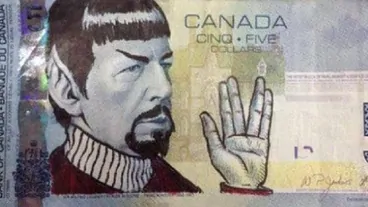
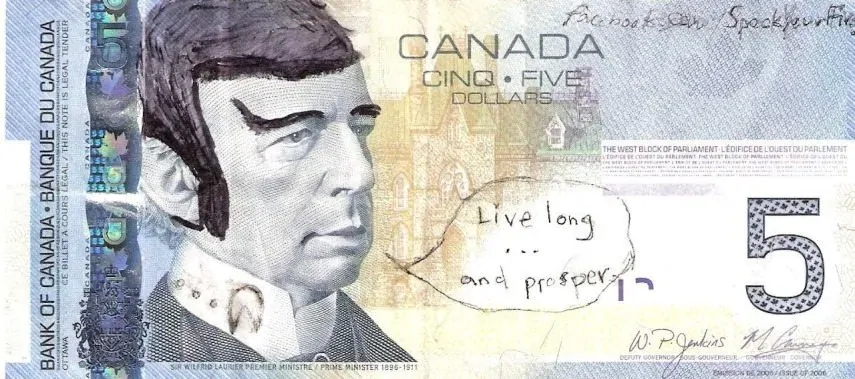
Why Laurier Looks Like Spock: The 2002 Portrait Redesign
Three-quarter profile, sharp features, perfectly Vulcan
The 2002 Canadian Journey series replaced Laurier’s traditional frontal view with a three-quarter profile showing sharp facial angles, arched eyebrows, and swept-back hair—features eerily similar to Leonard Nimoy’s iconic Spock portrayal. The resemblance became instantly apparent to Star Trek fans across Canada, who began modifying banknotes by exaggerating Laurier’s eyebrows into Spock’s distinctive Vulcan peaks and reshaping his hair into the famous bowl cut.[web:441][web:445]
| Feature | Laurier Portrait | Spock Character |
|---|---|---|
| Profile angle | Three-quarter left | Frequently shown in profile |
| Eyebrows | Naturally arched | Iconic pointed peaks |
| Hair | Swept back, formal | Black bowl cut with bangs |
| Facial structure | Angular, defined cheekbones | Sharp Vulcan features |
| Expression | Serious, dignified | Stoic, logical demeanor |
The 2002 design shift from full-face to profile inadvertently created Canada’s most beloved currency meme, transforming a solemn national symbol into pop culture canvas.[web:445]
From Twitter Trend to National Phenomenon: Spocking Goes Viral
Social media turns currency defacement into tribute art
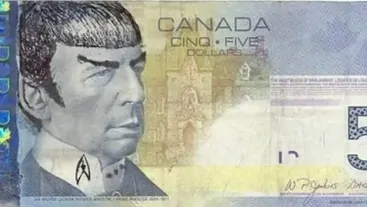
Spocking gained momentum around 2008 as Twitter users encouraged followers to “Spock your fives,” posting photos of modified banknotes under hashtags like #Spocking and #SpockFives. Celebrities and influencers amplified the trend, turning it into a widespread participatory meme. By 2015, when Leonard Nimoy died on February 27, Spocking experienced a massive resurgence as Canadians transformed the practice into a grassroots memorial tribute to the beloved actor.[web:441][web:444]
2002: Canadian Journey $5 redesign launches
2007-2008: Early Spocking examples appear on social media
2008-2014: Twitter campaigns spread trend nationally
Feb 2015: Leonard Nimoy dies, Spocking becomes tribute
2019: Bank of Canada issues official discouragement statement
The phenomenon expanded beyond Spock: some Canadians drew Severus Snape from Harry Potter onto Laurier portraits, demonstrating the banknote’s versatility as pop culture canvas. However, Spock remained the dominant motif due to Nimoy’s Canadian heritage and Star Trek’s cultural penetration.[web:441]
Is Spocking Illegal? Currency Defacement Laws Explained
Canada’s permissive vs. Australia’s draconian approach
Drawing on Canadian banknotes is technically legal—Canada’s Currency Act prohibits reproducing or damaging currency to render it unfit for circulation, but surface markings that don’t impair usability remain unprosecuted. The Bank of Canada can only appeal to national pride, not enforce penalties. This contrasts sharply with countries like Australia, where defacing currency carries up to two years imprisonment.
| Country | Legal Status | Penalties |
|---|---|---|
| Canada | Legal (discouraged) | None—Bank appeals to patriotism |
| United States | Legal for art/advertising | Illegal only if intent to defraud |
| Australia | Illegal defacement | Up to 2 years imprisonment |
Despite the 2019 Bank of Canada statement condemning Spocking as “inappropriate,” no legislative changes followed. The practice continues unabated, especially on paper $5 notes still in circulation alongside newer polymer versions.[web:444]
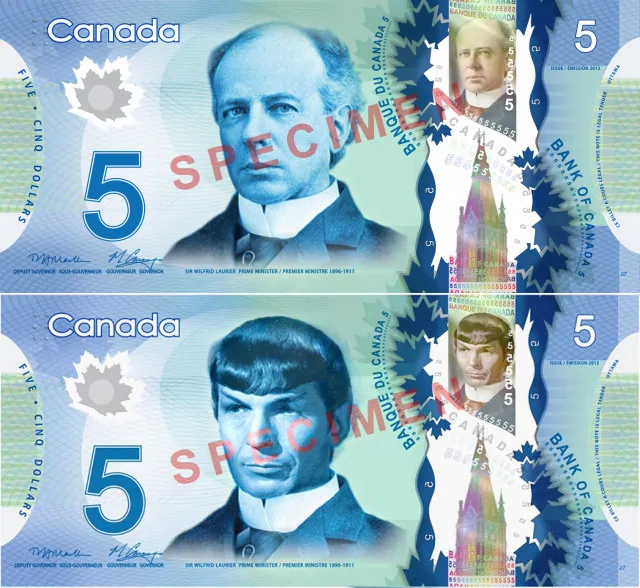
Polymer Notes: The Anti-Spocking Technology
2011 Frontiers series makes defacement harder, not impossible
When Canada introduced polymer $5 notes in 2013 (Frontiers series), the slippery plastic substrate made permanent ink markings significantly more difficult. Ballpoint pens smudge, pencils don’t adhere, and even permanent markers can be wiped off before drying. However, determined Spockers adapted: fine-tip Sharpies applied carefully can still create lasting modifications, and some use engraving tools for tactile alterations.[web:445]
• Smooth non-porous surface repels most inks
• Transparent windows eliminate prime “canvas” areas
• Enhanced security features distract from portrait focus
• Durability means notes stay pristine longer in circulation
The Bank of Canada’s 2019 anti-Spocking statement coincided with polymer adoption, suggesting technological discouragement rather than legal enforcement. Yet paper $5 notes from 2002-2013 remain legal tender and prime Spocking targets for collectors seeking authentic “vintage” Spocked bills.[web:444][web:445]
February 2015: Spocking as National Mourning Ritual
Leonard Nimoy’s death transforms meme into memorial
When Leonard Nimoy died on February 27, 2015, at age 83, Canadians transformed Spocking from playful defacement into commemoration. Social media exploded with tributes showing freshly Spocked $5 bills accompanied by “LLAP” (Live Long and Prosper) messages. Banks reported unusual requests for crisp $5 notes specifically for tribute Spocking, and online communities organized Spocking meetups to honor Nimoy’s legacy as both Hollywood icon and proud Canadian connection (Nimoy’s Star Trek co-star William Shatner is also Canadian).[web:441][web:444]
The 2015 surge demonstrated Spocking’s evolution from internet joke to genuine cultural expression—a grassroots method for Canadians to claim Nimoy as “one of their own” through currency-based folk art.
Spocked Bills as Collectibles: The Novelty Currency Market
Defaced notes fetch premiums from Star Trek fans
| Spocked Note Type | Market Value (USD) |
|---|---|
| Common ballpoint Spocking | $5-8 |
| Professional marker art Spocking | $15-30 |
| 2015 Nimoy tribute inscriptions | $20-50 |
| Early 2008-era social media Spocks | $25-60 |
| Severus Snape variants | $10-25 |
eBay and novelty currency dealers sell authenticated Spocked bills to Star Trek collectors who prize them as cultural artifacts. Most valuable: early 2008 examples with Twitter handles/dates written on margins, and 2015 Nimoy memorial notes with LLAP inscriptions.[web:441]
The End of an Era: Terry Fox Replaces Laurier in 2027+
New $5 portrait ends Spocking tradition—or creates new canvas?
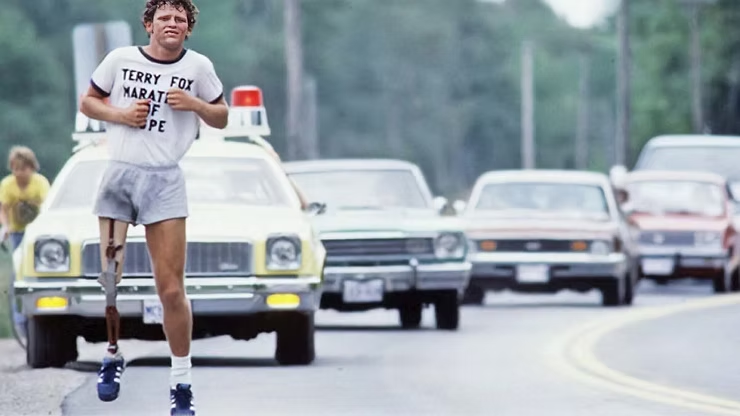
With the Bank of Canada announcing Terry Fox will replace Wilfrid Laurier on the next vertical $5 polymer note (post-2027 launch), the Spocking phenomenon faces extinction. Fox’s athletic portrait and vertical format eliminate the Laurier-Spock resemblance that sparked 20+ years of viral defacement. However, internet creativity knows no bounds: early speculation suggests Fox’s determined running pose might invite superhero cape drawings or marathon route doodles.[web:443]
Collectors anticipate a final surge in pre-Fox Laurier $5 Spocking as nostalgic tributes before the portrait disappears forever. Last-edition Spocked Laurier notes from 2026-2027 will likely command premium collector prices as “end of an era” artifacts commemorating Canada’s most beloved currency meme.[web:443]
FAQ — Canada Spocking Phenomenon
Is Spocking banknotes illegal in Canada?
No. Drawing on currency is not prosecuted in Canada as long as the note remains usable. The Bank of Canada discourages but cannot penalize.
When did Spocking start?
2002, when the Canadian Journey series introduced Laurier’s three-quarter profile resembling Spock. Peak virality: 2008 (Twitter) and 2015 (Nimoy tribute).
Can you Spock polymer $5 notes?
Difficult but possible. Polymer’s slippery surface repels most inks, requiring fine-tip permanent markers applied carefully.
Will Spocking continue after Terry Fox replaces Laurier?
Unlikely. Fox’s portrait lacks Spock resemblance. Final Laurier $5 notes (2026-27) will see nostalgic Spocking surge.
Are Spocked bills worth more than face value?
To collectors, yes. Well-executed Spockings fetch $15-50 USD, especially 2015 Nimoy tributes and early 2008 examples.
Did Leonard Nimoy know about Spocking?
Yes. Nimoy acknowledged the phenomenon with humor, considering it a Canadian tribute to his Vulcan legacy.
Sources & Verification
- Panorama: Canada $5 Spock Tribute[web:441]
- Wikipedia: Canadian Dollar History[web:445]
- Facebook: Bank of Canada Spocking Statement[web:444]
- Reddit: Terry Fox $5 Discussion[web:443]
- Numista: Canadian $5 Note Catalog[web:437]
Cross-verified with Bank of Canada archives and social media documentation.