
India’s long-running conversation about polymer money has finally acquired something more substantial than a conference-room nod: a procurement number. On 17 July 2026, Bharatiya Reserve Bank Note Mudran Private Limited, the Reserve Bank of India’s banknote-printing subsidiary, opened a global Expression of Interest for security-featured polymer substrate intended for Indian banknotes. This is not yet a circulation launch, and no finished banknote design was published with the tender, but it is the clearest operational step so far towards a real-world polymer trial.
Quick Facts
Important: India has not announced the withdrawal or demonetisation of existing paper banknotes. The procurement concerns a proposed trial, not an immediate nationwide replacement.
Collect banknotes related to this article
Explore authentic world banknotes connected to this country, region or collecting theme.
From Preliminary Discussion to an Actual Tender
Only a few weeks before the tender appeared, RBI Governor Sanjay Malhotra described polymer banknotes as a proposal still under consideration. The central bank was examining their advantages, disadvantages and overall feasibility, rather than announcing a final decision.
The new procurement notice moves the project one level deeper into reality. The official BRBNMPL tender invites eligible manufacturers and suppliers to compete for the production of opacified polymer substrate sheets suitable for Indian banknotes.
The distinction matters. An Expression of Interest is not a banknote launch, nor is it proof that polymer rupees will immediately enter every wallet from Mumbai to Mysuru. It is a supplier-selection and technical-evaluation stage. Samples must be tested, manufacturing capacity must be assessed and security requirements must be satisfied before any field trial can begin.
A trial built around two denominations
The indicative order covers 68,000 reams, divided equally between two denominations. Since each ream contains 500 sheets, the total represents approximately 34 million substrate sheets, with about 17 million sheets allocated to each denomination.
That does not mean 34 million finished banknotes. Printing sheets normally contain multiple banknotes, and the final number of notes depends on sheet dimensions, printing layouts, spoilage rates and production specifications that have not been publicly detailed.
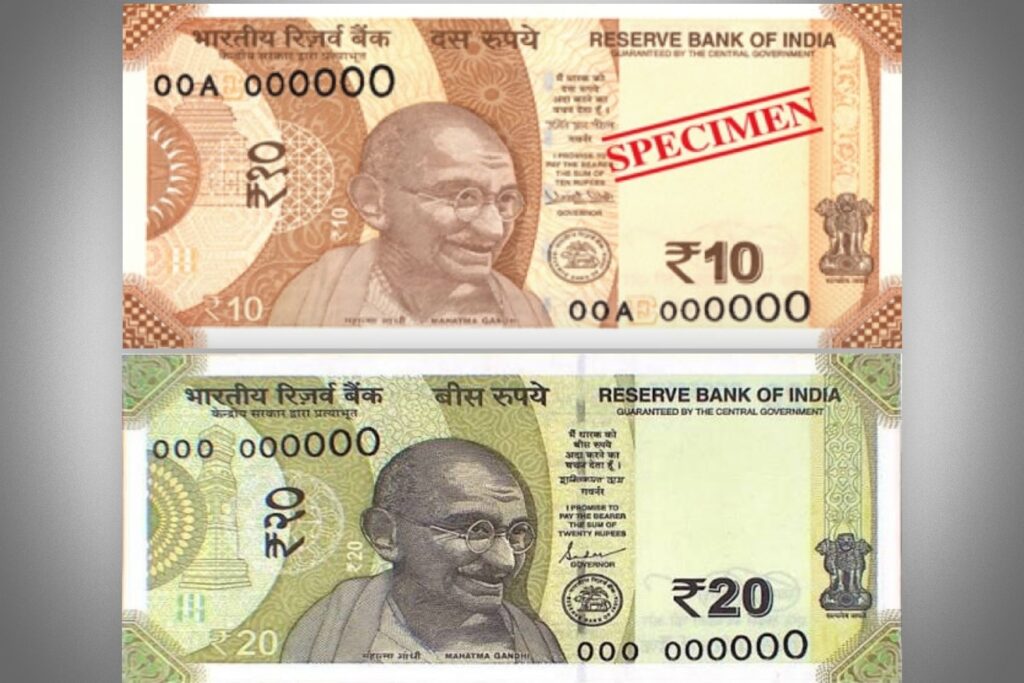
Reports citing officials and people familiar with the process identify ₹10 and ₹20 as the likely starting denominations. They would be logical candidates because low-value notes pass through more hands, suffer heavier wear and provide a demanding test of substrate durability. However, the tender itself identifies only two denominations and does not formally name them.
What BRBNMPL Is Looking For
| Substrate | Biaxially Oriented Polypropylene-based opacified polymer substrate |
|---|---|
| Indicative volume | 68,000 reams, each containing 500 sheets |
| Allocation | 34,000 reams for each of two denominations |
| Printing compatibility | Suitable for BRBNMPL and Security Printing and Minting Corporation of India presses |
| Clear window | A transparent security window incorporating a portrait |
| Optical elements | Metallic numeral, shadow image and iridescent pattern |
| Machine-readable feature | Magnetic pseudo thread |
| Supplier experience | At least three years supplying security-featured polymer substrate to a central bank or security-printing organisation |
| Minimum supply capacity | 20,400 reams, equal to 30 per cent of the indicative requirement |
| Laboratory samples | At least ten sample polymer sheets for testing |
| Tender deadline | 18 August 2026 |
The tender also contains strict supply-chain and personnel restrictions connected with China and Pakistan. Materials for the India-specific substrate cannot be sourced from either country under the reported eligibility conditions.
What Polymer Would Change in an Indian Banknote
A polymer banknote is not simply a familiar paper design printed on transparent plastic. The substrate is engineered as part of the security system. Transparent windows, optical elements, opacifying layers and machine-readable components can be integrated into the material before conventional banknote printing is completed.
Longer circulation life
Polymer notes can remain usable several times longer than conventional paper notes, although the actual advantage depends on climate, denomination and handling intensity.
Resistance to moisture
The non-porous surface resists water, dirt and absorbed oils better than traditional cotton-based banknote material.
Transparent security windows
Complex clear windows are difficult to reproduce convincingly with standard paper, printers or domestic copying equipment.
Reduced replacement frequency
A longer circulation life can reduce the number of replacement notes that must be printed, transported, processed and destroyed.
Polymer is not indestructible. Notes can still acquire hard folds, scratches, ink abrasion, cloudy windows and heat damage. A polymer note may survive a washing machine and then lose an argument with a hot iron, a dashboard in summer or an enthusiastic laminating machine.
The economic case therefore depends on the complete lifecycle. The substrate may cost more initially, but the investment becomes attractive when a note remains fit for circulation long enough to offset higher production costs.
Why Is India Revisiting Polymer Banknotes?
India’s digital-payment growth has not eliminated the enormous physical infrastructure behind the rupee. Cash remains heavily used, and maintaining billions of circulating banknotes requires continuous printing, sorting, transportation and destruction of notes that are no longer fit for use.
These figures explain why durability is not a decorative extra. Even a modest extension in the average lifespan of heavily used denominations could affect printing volumes and replacement costs on an industrial scale.
Security is the other half of the equation. Polymer windows and integrated optical effects create authentication features that are immediately visible to the public but substantially harder to simulate on ordinary paper. They do not make counterfeiting impossible, but they raise the technical fence.
Impact on the World of Banknote Collecting
For collectors, the importance of the project goes beyond whether polymer survives a monsoon, a trouser pocket or the mysterious ecosystem beneath a shop counter. A confirmed trial would introduce a new substrate category into modern Indian banknotes and could produce several distinct collectible varieties from the beginning.
A new type for Indian collections
Collectors who organise Indian currency by series, denomination, signature, prefix or substrate would need to add a separate polymer type. Even if the artwork remained close to the existing Mahatma Gandhi New Series, a polymer version would not be merely another date or signature variety. Its manufacturing process, window technology and physical characteristics would make it a distinct issue.
What collectors are likely to watch
- First prefixes and the earliest confirmed serial-number ranges
- Low serial numbers and visually distinctive number combinations
- Replacement or star notes, should the RBI use them for the polymer issue
- Differences between suppliers, print works or production batches
- Window, opacity, registration and ink-application errors
- Specimen, presentation or institutional test notes, if officially released
- Notes distributed through the earliest pilot locations
Trial scarcity can be deceptive
A geographically limited pilot could create a temporary shortage outside the test areas. Early online offers might therefore carry inflated prices before the true print quantity and distribution pattern are understood. A note offered at a spectacular premium during its first week is not automatically rare. Sometimes it is simply new, difficult to obtain and surrounded by sellers equipped with optimistic calculators.
Condition grading will require different eyes
Polymer notes often retain a crisp overall appearance even when they have meaningful surface damage. Collectors should examine transparent windows, printed opacity layers and reflective features under angled light rather than judging condition only by the absence of soft paper folds.
Important defects may include scratches, ink scuffing, cloudy windows, permanent creases, edge splits and heat deformation. Storage in inert, PVC-free sleeves remains essential. Heavy pressure, adhesive holders and excessive heat should be avoided.
Existing paper rupees will not become rare overnight
The tender does not announce the replacement or demonetisation of current paper notes. Even if polymer versions are eventually introduced, paper and polymer notes could circulate together for a substantial period. Current ₹10 and ₹20 notes will become numismatically interesting through genuine scarcity, varieties and condition, not merely because a tender document used the word polymer.
What Happens Next?
Media reports suggest that a pilot involving ₹10 and ₹20 notes could begin in 2027. That date should be treated as an informed projection rather than a formal launch schedule. The RBI has not yet published a release date, final design, distribution plan or confirmation of the denominations.
India is therefore not carrying polymer rupees yet. It has, however, moved beyond vague possibility and into the far more serious territory of samples, production capacity, security clearances and millions of sheets. For collectors, that is the point at which a rumour starts becoming a catalogue entry in waiting.
Explore Indian Banknotes and Market Values
Discover Indian rupee issues, catalogue varieties, collector information and GlobeNote market-value references. Future polymer notes will be added once officially issued and documented.
Open the India Banknote CatalogueFrequently Asked Questions
Are polymer rupee banknotes already circulating in India?
No. BRBNMPL has opened a global Expression of Interest for polymer substrate, but the RBI has not announced that polymer rupee notes are already in circulation.
Which Indian banknote denominations will be tested on polymer?
The tender confirms that two denominations are planned. Reports citing officials identify ₹10 and ₹20 as the likely denominations, but the RBI has not formally confirmed them.
When could India’s polymer banknotes be introduced?
Media reports suggest that a pilot could begin in 2027. The actual schedule will depend on supplier selection, laboratory testing, production and field-trial results. No official circulation date has been announced.
What material would be used for the polymer rupee notes?
The tender seeks Biaxially Oriented Polypropylene-based opacified polymer substrate incorporating specialised banknote security features.
What security features could the new notes include?
Reported specifications include a clear window with a portrait, a metallic numeral, a magnetic pseudo thread, a shadow image and an iridescent pattern.
Will existing Indian paper notes become invalid?
No such decision has been announced. The tender concerns a polymer trial and does not withdraw or demonetise any existing paper denomination.
Why is the RBI considering polymer banknotes?
Polymer notes can offer a longer circulation life, better resistance to moisture and dirt, more complex public security features and lower replacement costs over their complete lifecycle.
Could the first Indian polymer notes become collectible?
Yes. Collectors are likely to seek first prefixes, low serial numbers, replacement notes, early pilot issues and genuine printing errors. Their long-term value will depend on rarity, demand, distribution and condition.
How should collectors grade a polymer banknote?
Collectors should inspect the note for scratches, ink loss, cloudy windows, permanent creases, edge splits, heat damage and print-registration defects. A crisp feel alone does not guarantee an uncirculated grade.
References
- BRBNMPL: Global EOI to Manufacture and Supply Opacified Polymer Substrate Sheets with Security Features, official tender EOI/04/CO/2026-27, 17 July 2026.
- Bloomberg: RBI Currency Printer Seeks Bids for Polymer Banknote Material, 18 July 2026.
- The Indian Express: RBI to Trial Polymer Currency Notes, Subsidiary Floats Global Tender, 17 July 2026.
- India Today: India May Get ₹10 and ₹20 Polymer Currency Notes from Next Year, 18 July 2026.
- ANI: RBI’s Currency Printing Arm Invites Global Bids for Polymer Banknote Substrate, 17 July 2026.
- Deccan Herald: RBI Prepares for Plastic Banknotes as Subsidiary Floats Global Tender, July 2026.
- ETBFSI: BRBNMPL Seeks Global Suppliers for Secured Polymer Banknote Substrates, 17 July 2026.
- MRI Bankers’ Guide to Foreign Currency: India Calls for Bids for Polymer Substrate, 17 July 2026.
Information current as of 18 July 2026. The reported ₹10 and ₹20 denominations and a possible 2027 pilot remain provisional until formally confirmed by the Reserve Bank of India.