
UNESCO World Heritage sites grace banknotes across every continent, transforming everyday currency into portable showcases of human history and natural beauty. From ancient architectural wonders to pristine ecosystems, central banks frequently feature landmarks certified by UNESCO to celebrate national identity and global cultural heritage on physical paper and polymer cash.
Natural UNESCO Sites on Banknotes
However, not every site is explicitly named on the note. In many cases, the design simply shows the landscape or the iconic species linked to the World Heritage property.
Collect banknotes related to this article
Explore authentic world banknotes connected to this country, region or collecting theme.
Natural Wonders on Paper Money
Paper money collectors often focus on a single country or a specific series. However, there is another popular approach. Many collectors build thematic sets based on a common element, such as animals, architecture or natural wonders.
Since 1978, UNESCO has named more than 1,200 World Heritage Sites, including over 260 natural and mixed properties. These places play a major role in the global ecosystem. Moreover, they often appear on banknotes as symbols of national pride.
As a result, banknotes offer a unique way to explore the world’s natural heritage. From volcanoes to reefs, from rainforests to waterfalls, these notes tell stories of biodiversity and conservation.
Africa: Mountains, Falls and Endangered Wildlife


Africa offers some of the strongest natural World Heritage themes found on banknotes. Tanzania is a clear example. Its 2,000-shilling note features Mount Kilimanjaro, the highest mountain in Africa. Kilimanjaro National Park was inscribed on the UNESCO World Heritage List in 1987.
Zambia adds another landmark of global importance. Victoria Falls, also known as Mosi-oa-Tunya, lies on the border with Zimbabwe and became a UNESCO World Heritage Site in 1989. Because of its scale and visual drama, it remains one of the most compelling waterfall themes in world paper money.
The Democratic Republic of the Congo brings a different tone to the theme. Its 5-franc note is tied to Garamba National Park, a site known for rare large mammals and long-term conservation pressure. As a result, the African section combines scenic beauty, iconic geography and a powerful environmental message.
Asia: Komodo Dragons, Island Landscapes and Heritage Symbolism


Asia offers a rich mix of wildlife and landscape themes on paper money. The clearest natural UNESCO example in this group is Indonesia. On the 50,000-rupiah note, collectors encounter imagery tied to Komodo National Park, which UNESCO lists as a natural World Heritage Site. The park was inscribed in 1991 and is globally known as the only natural habitat of the Komodo dragon.
That makes the Indonesian note especially strong from a thematic point of view. It is not just visually striking. It also connects directly to one of the most distinctive protected environments in the world. As UNESCO explains, the park includes volcanic islands, unique terrestrial habitats and exceptionally rich marine ecosystems, so the note can be read as a compact symbol of biodiversity as well as national identity.
Japan adds a related but slightly different case. The 1951 500-yen note features Mount Fuji, and the mountain was later added to the UNESCO list in 2013 under the title Fujisan, sacred place and source of artistic inspiration. However, Fuji was inscribed as a cultural World Heritage Site rather than a natural one, which is why it works best here as a heritage-symbolism comparison within the Asian section rather than as a pure natural-site example.
For collectors, this contrast is useful. Indonesia shows a direct natural-heritage link, while Japan shows how a banknote can gain new thematic relevance when a featured landscape later receives UNESCO recognition. Together, the two notes make the Asian section more nuanced and far more interesting than a single-example approach.
The Americas: Islands, Rainforests and Butterfly Migration


The Americas offer one of the richest groups of natural heritage banknotes. Ecuador is an excellent starting point. Its 5,000-sucres note highlights the Galápagos Islands, a UNESCO World Heritage Site since 1978. PMG’s feature on the note and additional catalogue descriptions both confirm the reverse imagery of Galápagos wildlife, including the tortoise, penguin and other island species through the broader PMG article on the Ecuador 5,000 Sucres and the matching Numista entry.
Mexico contributes one of the strongest modern examples. The 2020 100-peso polymer note shows the temperate forest ecosystem of the Monarch Butterfly Biosphere Reserve on the reverse. Even better, the official description from Banco de México explicitly states that the reserve has been recognised by UNESCO as a natural World Heritage Site. That makes this note especially valuable for a collection built around clearly documented UNESCO themes.
Belize and Brazil expand the section in two different directions. In Belize, PMG links a 1990 note to the Belize Barrier Reef Reserve System, where coral and marine life reinforce the underwater focus of the design. In Brazil, the same PMG survey connects the 1997 10-reais note to the Central Amazon Conservation Complex, including Jaú National Park, using the macaw as a visual shorthand for one of the planet’s most biodiverse environments.
Taken together, these four notes show why the Americas are ideal for this collecting theme. They cover islands, reef systems, migration landscapes and rainforest biodiversity, yet each one remains easy to recognise visually. For readers and collectors alike, that combination makes the regional section both educational and immediately engaging.
Europe: A Geological Wonder on a Northern Ireland Banknote
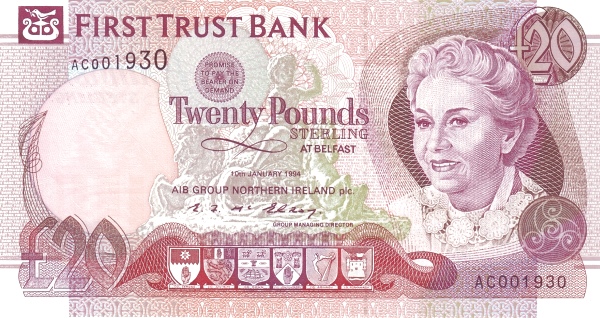
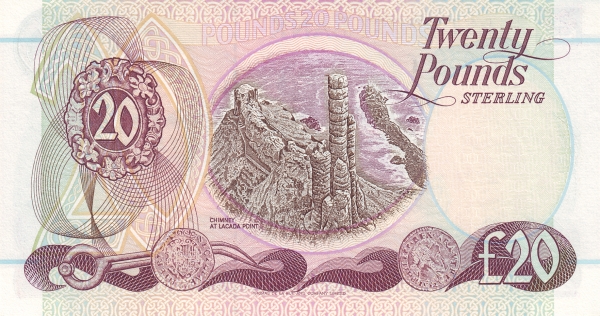
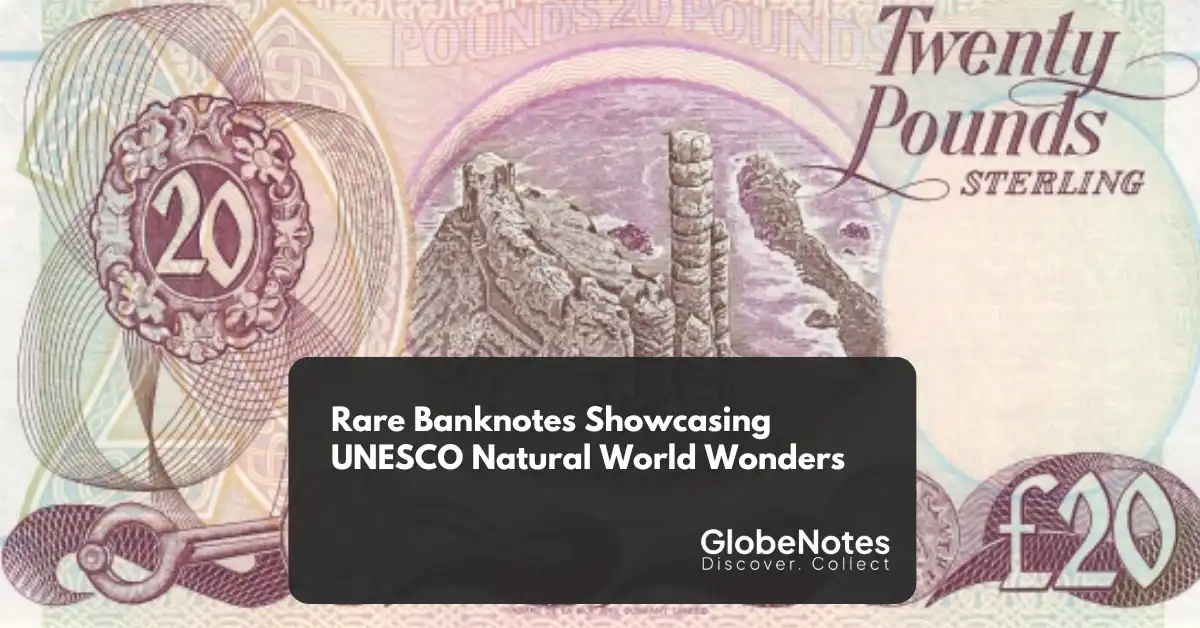
Europe offers fewer obvious examples of natural UNESCO themes on banknotes, but one of them is especially strong. The 1998 £20 note from First Trust Bank in Northern Ireland shows the Giant’s Causeway and Causeway Coast on the reverse. PMG included this note in its survey of natural World Heritage Sites on banknotes, making it one of the clearest European cases.
The site itself is exceptional from a geological point of view. According to UNESCO, the Giant’s Causeway consists of about 40,000 interlocking basalt columns formed by ancient volcanic activity. The UNESCO UK description also confirms that it was inscribed in 1986 as a natural World Heritage Site.
From a numismatic point of view, the note is equally interesting. Reference material on Northern Ireland banknotes identifies the First Trust £20 as the issue featuring Giant’s Causeway imagery, linked to the County Antrim coast and the story of the wreck of the Girona. That combination of geology, landscape and regional identity makes it one of the most distinctive natural-site banknotes in Europe.
For collectors, this note works because the design is immediately recognisable. Unlike notes that rely mainly on fauna or symbolic vegetation, this one presents a dramatic rock formation that carries the entire theme on its own. As a result, it gives the European section a precise and memorable conclusion.
Explore More World Banknotes in the GlobeNote Catalogue
Natural UNESCO sites are only one of the many collecting paths hidden in world paper money. Browse GlobeNote’s catalogue to discover banknotes by country, theme, denomination and design, and continue building your collection with notes linked to wildlife, landscapes, history and national identity.
Browse the GlobeNote CatalogueFrequently Asked Questions
What are UNESCO Natural World Heritage Sites?
UNESCO Natural World Heritage Sites are natural areas of outstanding universal value. They are recognised for their exceptional beauty, biodiversity or geological importance.
Why do countries put natural sites on banknotes?
Countries use banknotes to celebrate national pride and natural heritage. Moreover, these designs promote environmental awareness and conservation efforts.
Which natural sites appear on banknotes?
Examples include Mount Kilimanjaro, Victoria Falls, the Great Barrier Reef, Mount Fuji, the Galápagos Islands and the Monarch Butterfly Reserve. In addition, many rainforests and national parks are also featured.
Can I collect only natural heritage notes?
Yes. Many collectors build thematic sets based on natural World Heritage Sites. This approach allows you to explore geography, ecology and numismatics at the same time.
Are these notes still legal tender?
Most of them are. However, some older notes may have been withdrawn from circulation. In those cases, they remain valuable to collectors.
References
- PMG: Collection Inspiration – Natural World Heritage Sites, article on banknotes featuring natural UNESCO sites.
- UNESCO World Heritage Centre: Natural World Heritage List, official list of natural and mixed sites.
- CoinBooks: UNESCO World Heritage Banknotes Catalog, 2024 research on heritage sites on banknotes.
- Paper Money Forum: UNESCO Natural World Heritage Sites Discussion, collector insights and additional examples.
- CashEssentials: World Tourism Day – Travel Through Banknotes, examples of natural sites on global notes.
- Currency Den: UNESCO World Heritage Sites on World Banknotes, comprehensive list of sites on banknotes.
- Times of India: UNESCO Sites on Indian Rupee Notes, examples from India’s new series.
- Reserve Bank of Australia: Banknotes, official information on Australian notes.
- Linn’s Stamp News: Iguazu Falls on Stamps and Currency, examples from Argentina and Brazil.
- OnlineCoin.club: Great Barrier Reef on Australian One Dollar Coin, additional example of natural heritage on currency.
Information current as of August 2026. This article focuses on natural UNESCO World Heritage Sites featured on banknotes. For cultural sites, see the related GlobeNote article on cultural heritage.
Related Posts

Singapore’s Defaced S$10 Note: When Genuine Money Looks Counterfeit
A Singapore S$10 note looked fake because someone had scraped away Yusof Ishak’s moustache and altered his eyes.…

Hungary’s Gold Train, Hyperinflation and the Birth of the Forint
In 1944, Hungary sent its gold reserves, banknotes and financial records west aboard a train to keep them…

Secrets Inside Italy’s Underground Counterfeit Money Empire
Italian investigators uncovered two clandestine banknote print shops producing not only counterfeit euros, but also Tanzanian, Ugandan and…