
Imagine pulling $20 out of an ATM… and finding a banana sticker inside your cash.
No, you’re not hallucinating. Meet the Del Monte Note — the most ridiculous, delicious, and expensive printing error in the history of American money.
Sold at auction for a juicy $396,000, this twenty-dollar bill managed to do what most modern currency can’t: actually be worth something.
🧃 Sticker shock, American edition
Back in 2004, a student in Ohio withdrew some cash and noticed something odd. On his $20 bill, sitting proudly on top of the Treasury seal, was a Del Monte banana sticker. The kind you find on your morning fruit.
Except this sticker wasn’t just stuck on by accident.
It was printed over.
Right under the serial numbers.
Inside the bill.
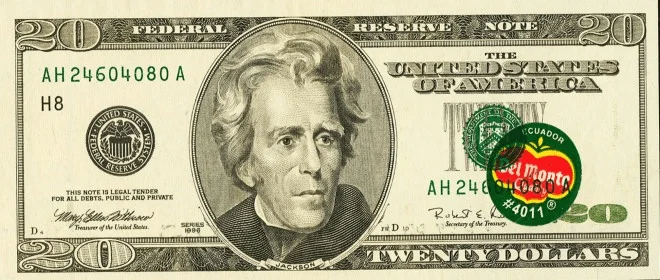
Which means someone — somewhere inside the Bureau of Engraving and Printing — slipped a banana label onto a blank sheet of currency, and the machines just kept on going.
Whether it was a prank, a dare, or a snack gone rogue… no one knows.
But what we do know is that it passed quality control.
And that today, it’s worth more than a brand-new Porsche 911.
🏁 The Auction of a Fruitful Lifetime
Fast forward to January 2020. Heritage Auctions is holding court. Bidders on phones, bidders online, probably a few chimpanzees cheering in the background.
The Del Monte Note — already sold twice before — hits the block.
Cue bidding war.
And boom: $396,000.
For a banana sticker. On a twenty.
We’re not kidding.
💡 Why is it worth so much?
Because:
- The error is genuine and verifiable: the sticker was there before the final print.
- The placement is artful. It’s practically currency modern art.
- It’s now famous. Like, celebrity-status famous. The Beyoncé of error notes.
Collectors love a good backstory. This one has it all: randomness, rarity, mystery fruit.
📣 Final Thoughts
Forget crypto. Want real value?
Find a $20 bill with a banana sticker on it.
It might just be the most a piece of fruit has ever been worth — without even being edible.
🟨 GlobeNote.net – Where mistakes make history (and fruit becomes financial folklore).