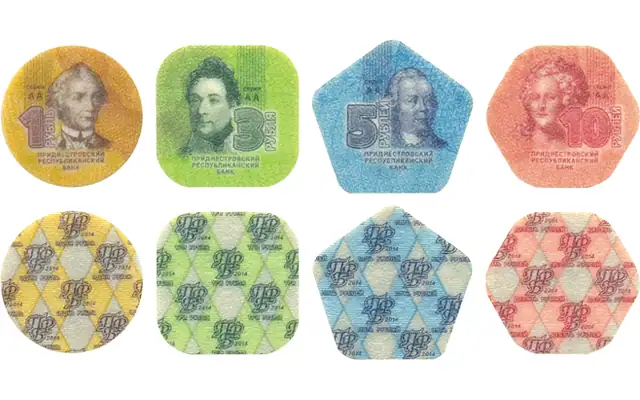
They’re plastic. They’re coins. They’re technically banknotes. And they’re from a country that officially doesn’t exist. Buckle up: this one’s wild.
🎭 The Currency That Time—and Recognition—Forgot
You’ve probably never been to Transnistria. Most people haven’t. It’s a narrow strip of land wedged between Moldova and Ukraine, frozen in time somewhere around 1983 and proudly unrecognized by nearly every other nation on Earth.
But let’s not talk geopolitics. Let’s talk plastic coins that act like banknotes.
Yes, you read that right.
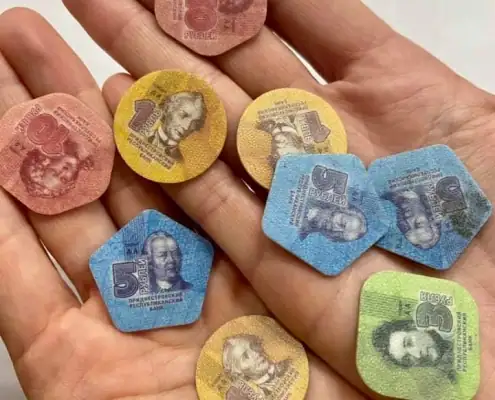
These little pieces of colored polymer are officially worth 1, 3, 5 and 10 Transnistrian rubles, and unlike novelty tokens or arcade money, they’re real legal tender. You can use them to buy bread, beer, or maybe a government-approved fridge magnet.
And here’s the kicker: they’re the only plastic coins in active circulation in the world. Let that sink in.
🧬 Design: Soviet Nostalgia Meets Sci-Fi Casino
Each coin comes in a different shape and color, just to make things extra fun for vending machines and collectors alike. You’ve got:
- A red square for 1 ruble
- A green triangle for 3 rubles (yes, a triangle)
- A blue pentagon for 5 rubles
- A purple circle for 10 rubles
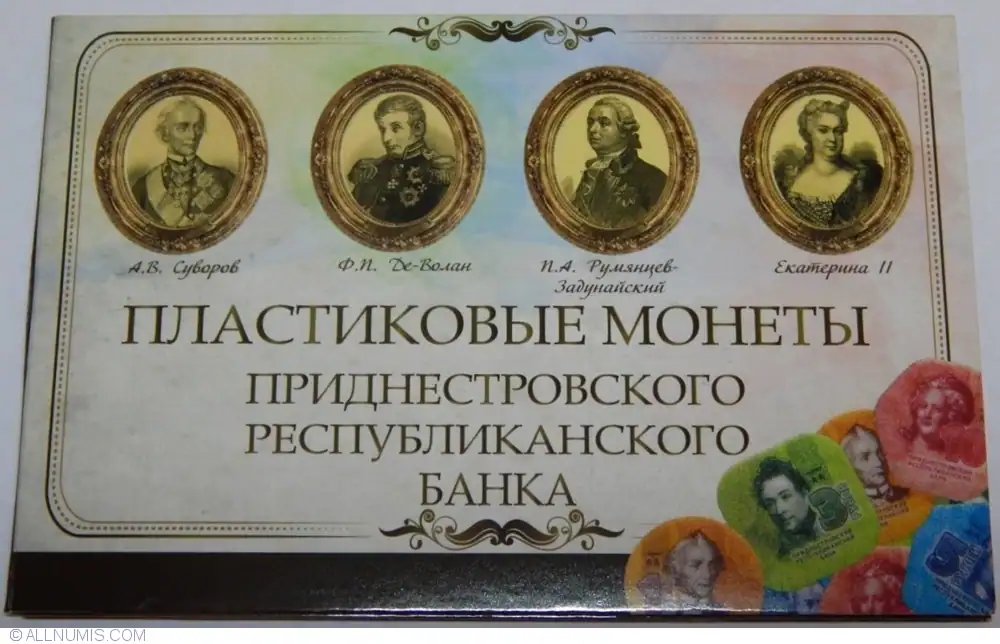
On them? Soviet military leaders. 18th-century royalty. Patriotic lions. It’s a micro-museum of Russian imperial nostalgia, shrink-wrapped in semi-transparent plastic.
Honestly, they look like something between currency, toy tokens, and avant-garde board game pieces. And yet—they work.
💡 Why This Makes Sense (Sort of)
In a region where inflation, supply issues, and international isolation are part of the daily routine, these plastic coins are surprisingly practical:
- They don’t rust
- They don’t crumple
- They don’t tear
- And, let’s be real: they survive being stuffed in the back of a dusty Lada glovebox during a border checkpoint
The durability factor is no joke. You can wash them, drop them, chew them (not recommended)—and they still look mint.
🪙 Are They Coins or Bills? The Great Debate
Technically, they’re coins. But functionally? They replace low-denomination banknotes.
So in practice, they’re what would happen if your 1-euro coin and your old 5-euro note had a futuristic baby… born in a country with a flag you can’t find in most atlases.
🔥 Why Collectors Love Them (and You Should Too)
At GlobeNote.net, we live for this kind of beautifully bizarre monetary experiment.
These plastic rubles are:
- Ridiculously rare outside of Transnistria
- Politically and culturally fascinating
- Exactly the kind of story-stuffed collectible that sparks hours of conversation at any currency fair or nerdy dinner party
And let’s face it—how many people can say they own a triangle coin from a breakaway state?
🏁 Final Verdict
Plastic coins that behave like bills, from a country that technically isn’t real, designed like Cold War currency meets kid’s toy: this is the stuff collectors dream of.
Forget metal and paper. The future (or the past?) is plastic.
📌 Inspired by field reports, collector insights, and this amazing YouTube short
🔍 Curated with unconventional joy by GlobeNote.net – where the weirder the note, the higher the value (in conversation, at least).