
It started, like all the best mistakes do, on a damp morning in Lisbon. The Atlantic breeze was sticking my shirt to my back, the air smelled of grilled sardines, and I was just trying to mind my own business when I saw it—a violet banknote behind scratched Plexiglas, with a smug “0” staring back at me like it knew something I didn’t.
“Zero euros,” the seller said, eyebrows raised.
“How much?” I asked.
“Three euros,” he replied.
Now, I’ve made worse decisions for more money, so I handed over the coins and pocketed my worthless prize, feeling oddly triumphant. Later that night, in a cheap Airbnb with the smell of bleach in the air, I Googled “zero euro banknote.” And down the rabbit hole I went.
📜 The Wild Origin of the Zero Euro Banknote
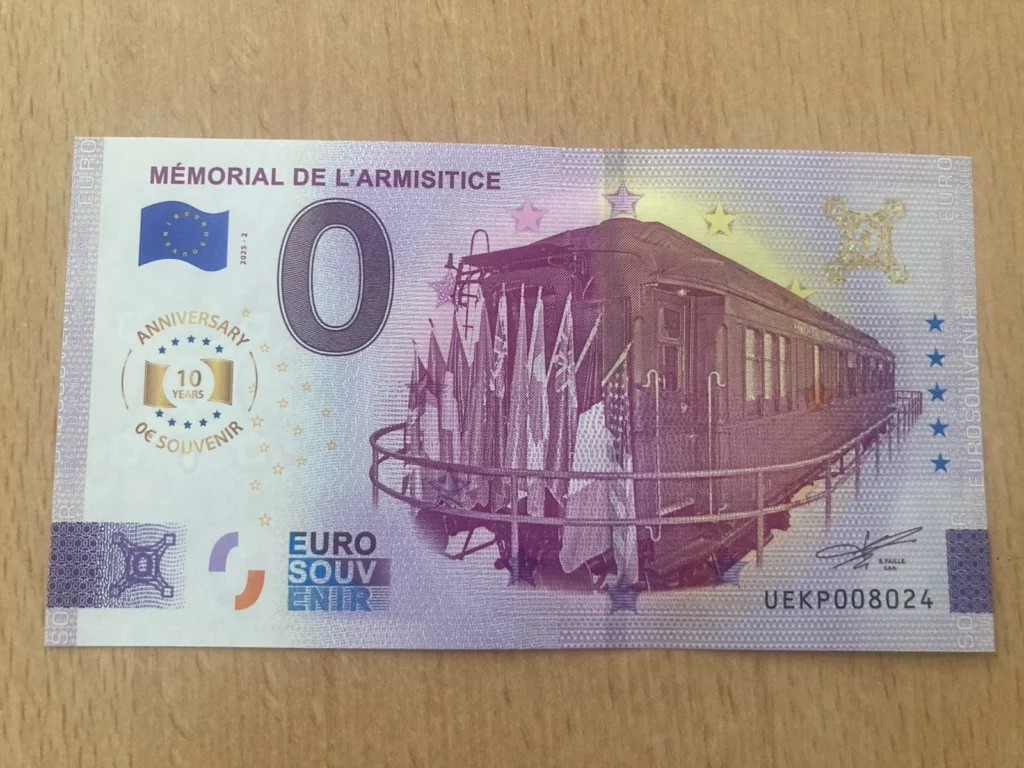
Turns out, this wasn’t just a tourist trap—this was an entire universe. Born in France in 2015 when a genius (or madman) named Richard Faille decided the world needed a souvenir that looks and feels like real money but does absolutely nothing. Printed by Oberthur Fiduciaire—yes, the same facility that prints actual euro currency, using the exact same secret processes—they’re made with 100% cotton banknote paper, custom watermarks, security stripes, microprint, tactile printing, iridescent inks, and even holographic patches.
In other words, it’s everything a real banknote is—except legal tender. It’s like having a Ferrari that can only stay in your living room but somehow makes you feel better every time you look at it.
💰 Collectible, Scarce, and Rising in Value
Each zero euro banknote is a limited-edition collectible, printed in runs of 5,000–10,000, and once they’re gone, they’re gone. They feature tourist sites, cultural landmarks, and motifs that celebrate the beauty of Ireland, Germany, France, and wherever else they pop up, from medieval castles to Oktoberfest beer mugs.
At launch, you’ll pay €2–5. Later? On platforms like eBay and Delcampe, you’ll find them for €10, €50, even €300 if you’re looking at rare first editions or error prints that collectors drool over.
The 2015 Tour Eiffel note? Sells for €100–200 in pristine condition. The 2018 Pope Francis note from the Vatican? Expect €50–120. Oktoberfest editions? Over €50, because who doesn’t want a beer-themed zero-value collectible? The Trains series for the nostalgic, the rare misprints for the perfectionists—they’re all out there waiting for someone like you who knows that value isn’t about what you can buy, but what makes you smile.
🛡️ All the Security, None of the Spending Power
These notes aren’t printed on flimsy souvenir paper. They are made with the same 100% cotton paper as euro bills, with custom watermarks, UV-sensitive inks, microprinting, holographic patches, tactile printing for that crisp feel, and incremental serial numbering that makes each note unique. Run them under UV light, and they glow like a nightclub dancefloor. Hold them up to the light, and the watermark reveals itself like a secret handshake.
It’s the kind of over-engineering that would make a German car company proud—high security, beautiful detail, and entirely unnecessary for something that can’t even buy you a coffee. Which is exactly why you want it.
🔍 How to Spot a Fake Zero Euro Banknote
And yes, believe it or not, people counterfeit these zero-value notes because they’ve become so collectible. Before you drop your cash, learn to check the hologram, watermark, microprint, and UV features. Don’t want the hassle? We’ve already done the homework for you:
👉 How to spot counterfeit zero euro banknotes
Or skip the worry and get your collection started the safe way:
👉 Browse Zero Euro Banknotes on GlobeNote
✈️ Why You Should Collect Zero Euro Notes
Because every note is a story. A place you’ve been, or a place you want to go. A moment captured, a piece of history, a symbol of a memory. Because it’s beautifully crafted and pointlessly perfect. Because when someone asks, “How much is it worth?” you can say with a grin:
“Zero euros. But to me? Priceless.”
And mean it.
Collecting zero euro banknotes is an act of joyful rebellion against utility, a wink at the absurdity of value, and a testament to the fact that the best things in life are often the most unnecessary.
🚀 Ready to Start?
You could spend €3 on a bad airport coffee. Or you could get your first zero euro note and join the collectors who understand that sometimes, the most worthless things hold the most value.
👉 Start your Zero Euro Banknote collection on GlobeNote today
What is a Zero Euro Banknote?
A Zero Euro Banknote is a collectible souvenir note printed with the same security features as real Euro bills but holds no monetary value.
Is the Zero Euro Banknote legal tender?
No, the Zero Euro Banknote is not legal tender. It is a collectible souvenir approved for production but cannot be used for transactions.
Why do people collect Zero Euro Banknotes?
Collectors appreciate them for their high-quality design, unique themes, limited editions, and the stories and travel memories they represent.
How much is a Zero Euro Banknote worth?
While issued at €2–5, rare editions can sell for €50–300 on platforms like eBay and Delcampe, depending on condition and rarity.