When the European Central Bank unveiled plans for the new Marie Curie euro banknote as part of its “European Culture” theme, they probably didn’t expect it to spark a full-on diplomatic feud between France and Poland. Yet here we are…
Nearly a hundred years after her death, Marie Curie—or should we say Maria Skłodowska-Curie, depending on which side of this particular fence you’re sitting on—has managed to become the unlikely catalyst for a fresh bout of Franco-Polish diplomatic theater. Because apparently, in 2025, we still haven’t figured out how to put a Nobel Prize winner’s name on money without starting an international incident.
The Radium Queen’s Identity Crisis: Why the Marie Curie Euro Banknote Matters
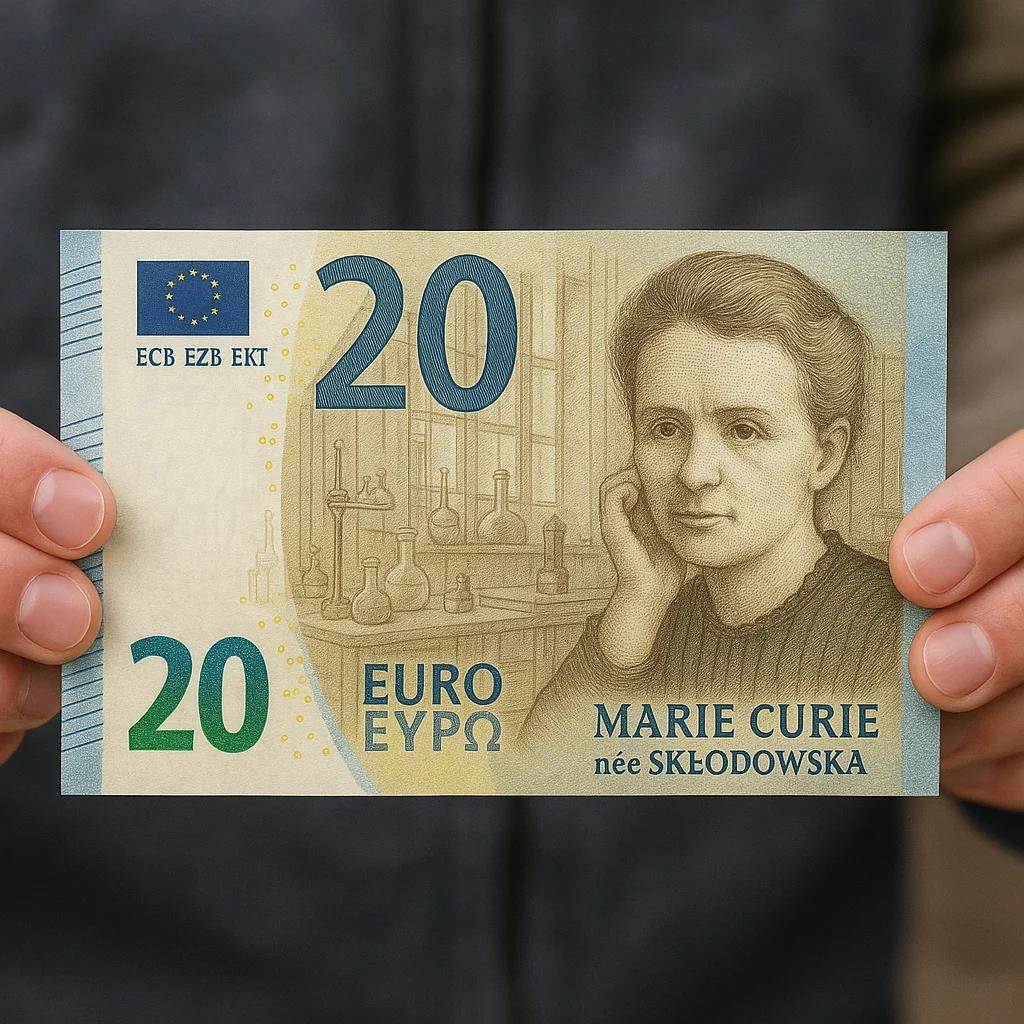
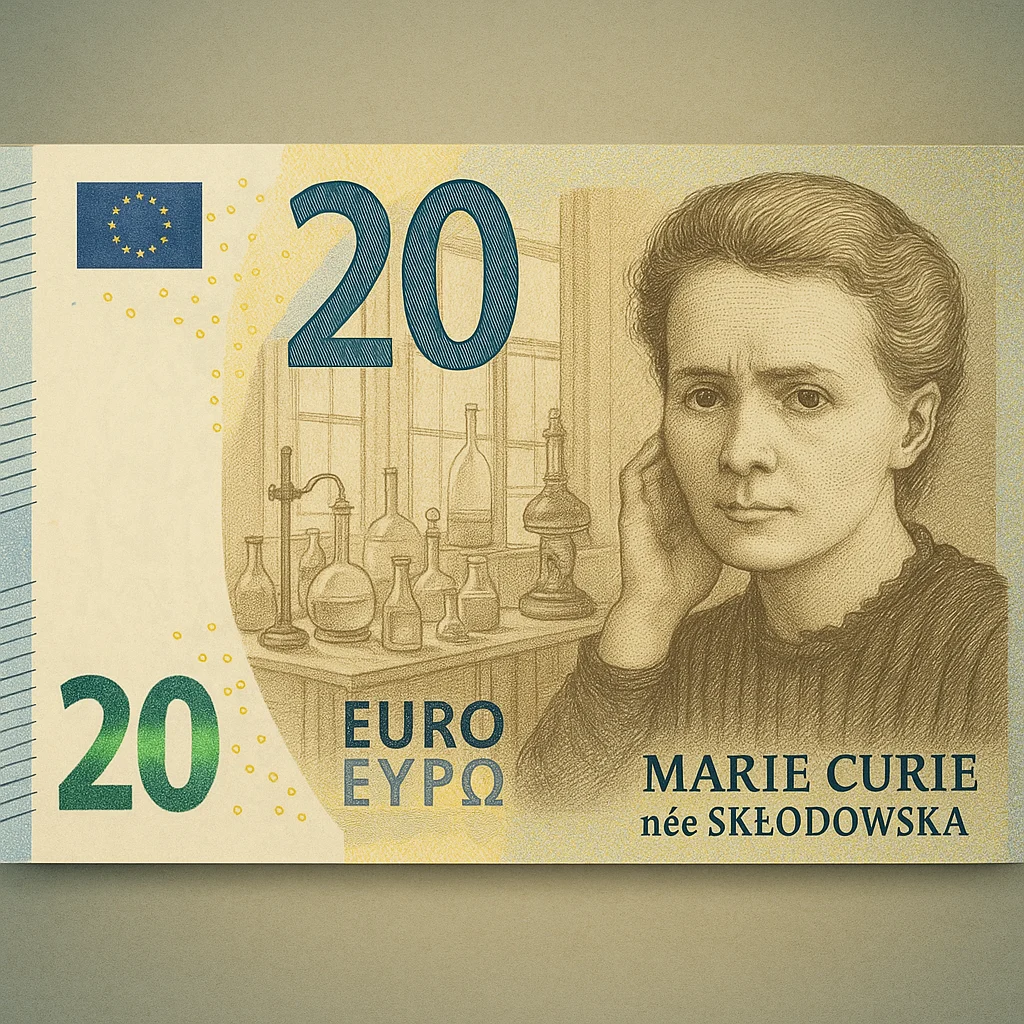
The controversy centers around the European Central Bank’s (ECB) proposed €20 banknote design, which features the two-time Nobel laureate as part of their “European Culture” theme. The design shows her lecturing in a room full of books—a fitting tribute to a woman who literally glowed from her groundbreaking research (and, tragically, from radiation exposure, but let’s not dwell on that).
The Polish Nobel Prize-winning scientist was born in Warsaw with the surname Skłodowska, before later marrying the Frenchman Pierre Curie. However, the ECB’s working design refers to her as “Marie Curie (born Skłodowska),” a notation that has Polish commentators seeing red faster than radium under ultraviolet light.
Poland Enters the Chat Over the Marie Curie Euro Banknote
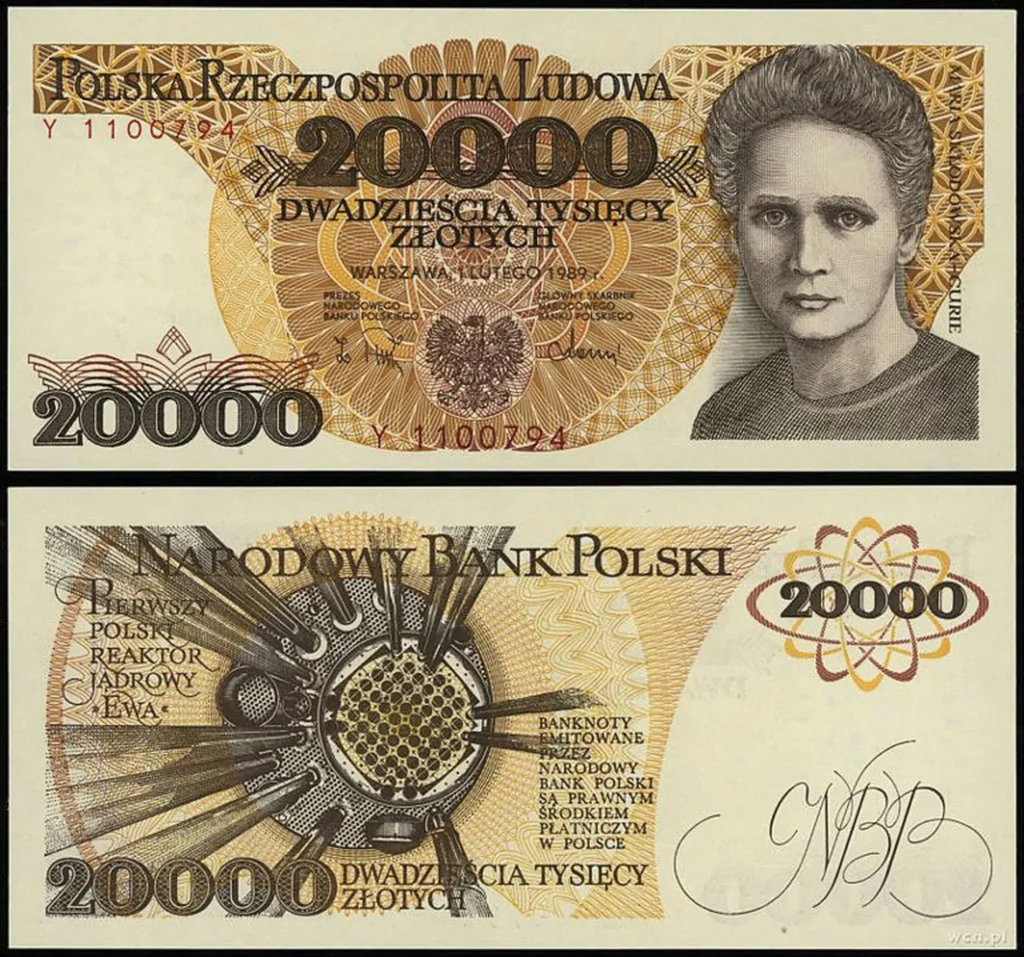
For Poland, this isn’t merely a matter of typographical preference—it’s a full-blown national pride issue. Polish media and citizens have criticized what they see as the systematic erasure of their compatriot’s Polish heritage, with her maiden name relegated to parenthetical afterthought status. It’s as if the ECB looked at one of history’s most accomplished women and said, “Let’s make sure everyone knows she’s mainly famous for marrying a Frenchman.”
For many Polish citizens, the omission of the Nobel Prize winner’s maiden name — or the replacement of the Polish name by its French version — is not just a formal issue, but a symbolic one. It is a reminder of the underestimation of Poland’s contribution to European history, they feel.
Polish critics have pointed out a particularly galling inconsistency: other historical figures — including Miguel de Cervantes or Ludwig van Beethoven — retained their original names in each language version. Apparently, Spanish and German naming conventions are sacred, but Polish ones? Well, those can go in brackets.
The Name Game: A Historical Perspective
To be fair to our long-deceased protagonist, she herself seemed somewhat ambivalent about the whole naming situation. She herself used different versions of her surname over the years — during her husband’s lifetime, she signed her name as Skłodowska-Curie, but later increasingly as M. Curie. One might imagine that if Marie/Maria were alive today, she’d probably be more concerned with advancing scientific research than with getting her name right on currency, but that’s neither here nor there.
The scientist’s remarkable achievements speak for themselves: she became the first woman to win a Nobel Prize, when she was honoured with the much-coveted award in 1903 for physics with her husband Pierre. The acclaimed scientist also received the Nobel Prize for chemistry eight years later, making her the only person to win Nobels in two separate scientific fields. She remains the only person to have won Nobel Prizes in two different scientific disciplines—a feat that presumably transcends national boundaries and naming conventions.
The ECB’s Diplomatic Dance Around the Marie Curie Euro Banknote
Faced with this unexpected controversy, the ECB has adopted the time-honored bureaucratic strategy of promising to “look into it.” “We are consulting various historical and linguistic sources to determine the most appropriate notation,” a spokesperson for the institution said. The working form ‘Marie Curie (née Skłodowska)’ is intended to reflect the dual identity of the Nobel Prize winner, he added.
One can almost picture the ECB officials frantically consulting style guides, historical documents, and possibly a Magic 8-Ball to determine the least offensive way to put a dead scientist’s name on legal tender. It’s the kind of problem that sounds ridiculous until you remember that currency design is serious business—these banknotes will potentially be in circulation for decades, handled by millions of Europeans who will either appreciate proper historical recognition or remain blissfully unaware of the diplomatic gymnastics required to get there.
The Broader Context: Culture Wars in Miniature
This dispute reflects broader tensions about historical recognition and national identity within the European Union. Poland has long felt that its contributions to European culture and history have been underappreciated, particularly given the country’s difficult 20th-century history of occupation and communist rule. For many Poles, ensuring that Skłodowska-Curie’s Polish heritage is properly acknowledged isn’t just about one scientist—it’s about securing recognition for Polish intellectual contributions to European civilization.
From the French perspective, Marie Curie conducted her groundbreaking research in Paris, at the Sorbonne, using French institutional resources. She became a naturalized French citizen and is buried in the Panthéon alongside other French luminaries. Her scientific legacy is inextricably linked to French academic institutions, making her as much a French cultural icon as a Polish one.
What Happens Next?
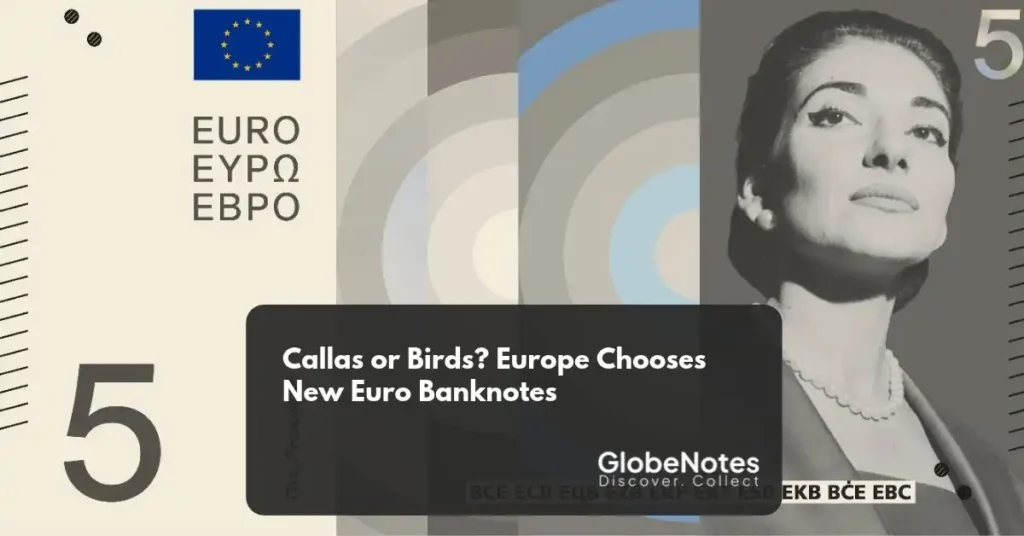
The ECB faces a decision that would make Solomon weep: how to honor a brilliant scientist without accidentally starting World War III over font choices. The ECB Governing Council announced in January that the two final themes for the planned banknotes were “Rivers and Birds” and “European Culture”. The design theme that receives the most support from the public and the jury will be put into circulation.
If the “European Culture” theme prevails, the Curie design could become reality, though the ECB Governing Council will select the best designs in 2026. After this decision, it will take several more years before the new banknotes can be put into circulation.
This timeline gives all parties several more years to argue about proper nomenclature, which they will undoubtedly do with the kind of passionate intensity typically reserved for sports rivalries and restaurant reviews.
Marie Curie Euro Banknote — Timeline
- Nov 30, 2023: ECB narrows themes to “European culture” vs “Rivers and birds”.
- Jan 31, 2025: ECB shares the motif shortlist (Curie, Beethoven, etc.).
- Jul 2025: Public design contest opens.
- Summer 2025: France–Poland name debate heats up.
- 2026: Final decision; circulation follows after production prep.
The Lesson Here
Perhaps the real story isn’t about national pride or diplomatic sensitivities—it’s about the enduring power of Marie Skłodowska-Curie’s legacy. Nearly a century after her death, she remains compelling enough to spark international debates, inspire currency designs, and remind us that brilliant people often transcend the narrow boundaries we try to put around them.
Whether she appears on the €20 note as Marie Curie, Maria Skłodowska-Curie, or some diplomatically negotiated compromise involving multiple hyphens and parenthetical clarifications, her scientific achievements will remain undimmed. She discovered two elements, pioneered research into radioactivity, and broke barriers for women in science—accomplishments that are impressive in any language.
Still, one can’t help but wonder what she would think of all this fuss. A woman who spent her career literally handling radioactive materials probably had a fairly high tolerance for things that could actually hurt you. A bureaucratic naming dispute? She might have just gotten back to work.
The new euro banknotes are expected to enter circulation by 2028, assuming European officials can reach consensus on proper historical attribution before then. Current euro banknotes will remain valid even after the new designs are introduced, giving everyone plenty of time to continue this delightfully absurd argument.
Beyond the Name: What’s Really at Stake
- Identity: The Marie Curie euro banknote would shift euros from abstract bridges to recognisable people.
- Usability: 350+ million users must read the note quickly. Design and typography carry real weight.
- Security & access: Tactile marks, holograms, microtext — all without turning the name into an eye chart.
In short: this isn’t just ink. It’s how Europe tells its story, one cash drawer at a time.
References
- European Central Bank – New Euro Banknotes
- Euronews – Marie Curie Euro Banknote Debate
- Politico – Franco-Polish Dispute Over Curie’s Name
Frequently Asked Questions — Marie Curie Euro Banknote
What is the Marie Curie euro banknote?
It’s the proposed €20 design in the “European culture” theme. It would feature Marie Curie on the front.
Why is there a name dispute?
France uses “Marie Curie.” Poland asks for “Maria Skłodowska-Curie” to reflect her Polish heritage. The ECB is reviewing the exact notation.
When will the decision be made?
In 2026. New notes will circulate later, after production ramps up.
Who else might feature in the series?
Beethoven, Leonardo da Vinci, Cervantes, Bertha von Suttner, and Maria Callas are among the suggested figures.
Will current euro banknotes remain valid?
Yes. Existing notes remain legal tender even after the new designs roll out.