

Maps printed on banknotes are rarely just background decoration. On 10 July 2026, the Bank of Russia placed a modified 100-ruble banknote into circulation. At first glance, it appears almost identical to the version introduced in 2022. The Moscow-themed front remains unchanged, as do the principal security features. The important difference is on the reverse, where the outline of the Russian Federation has been replaced by a map of the Central Federal District. For everyday users it is a subtle redesign, but for collectors it creates a clearly identifiable new variety.
Quick Facts
Important: the modified note does not replace or invalidate earlier 100-ruble banknotes. It circulates as legal tender alongside previous versions.
What Changed on the 2026 Banknote?
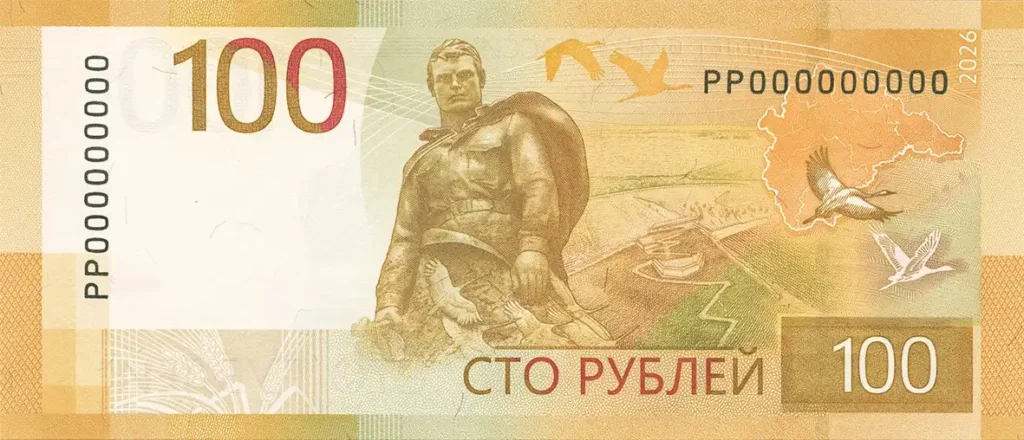
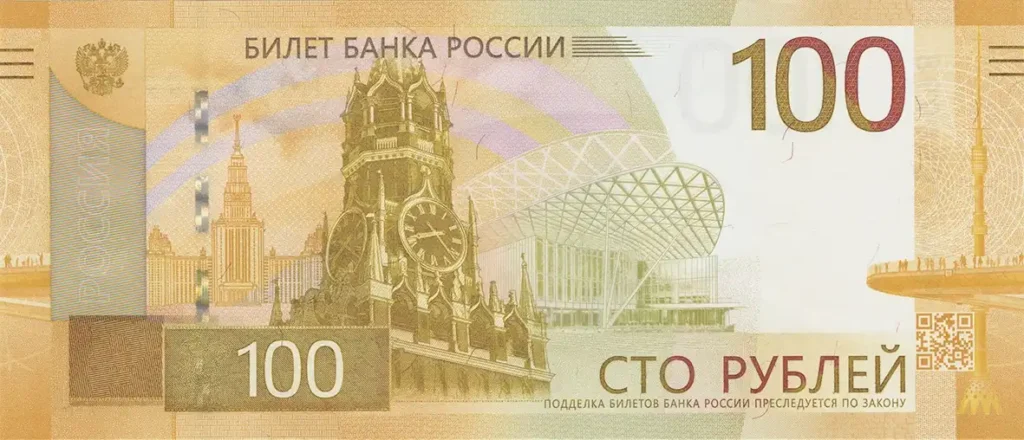
The 2026 issue is not a completely new design. It is a modified version of the modernised 100-ruble banknote introduced in June 2022. The front still combines several Moscow landmarks, including the Spasskaya Tower of the Kremlin, the main building of Moscow State University, Zaryadye Hall and its floating bridge, and the Ostankino television tower.
The reverse continues to feature the Rzhev Memorial to the Soviet Soldier, cranes in flight and a view of the surrounding landscape. The major alteration appears in the upper-right area of the note.
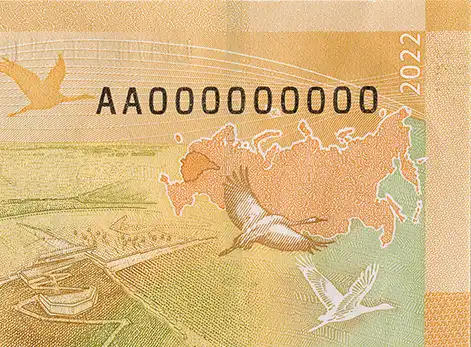
The 2022 map
The earlier version displayed the outline of the Russian Federation, with the Central Federal District highlighted inside it. The map reflected Russia’s territorial presentation, including Crimea, whose annexation by Russia in 2014 is not widely recognised internationally.
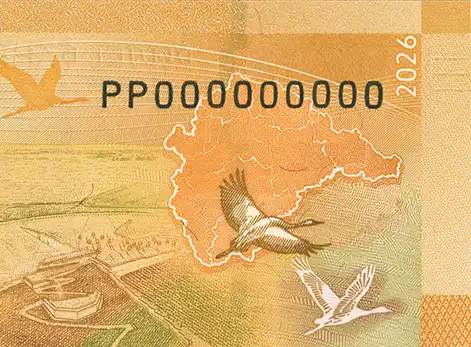
The 2026 map
The outline of the entire country has disappeared. In its place is a larger, stylised map showing only the Central Federal District. The year printed beside the map has also changed from 2022 to 2026.
This approach brings the 100-ruble note into line with the modernised 5,000-ruble banknote of 2023 and the 1,000-ruble banknote of 2025, both of which use maps of individual federal districts rather than an outline of the entire country.
2022 and 2026 Reverse Designs Compared
The principal monuments remain in place. The most visible difference is the map in the upper-right area of the reverse.
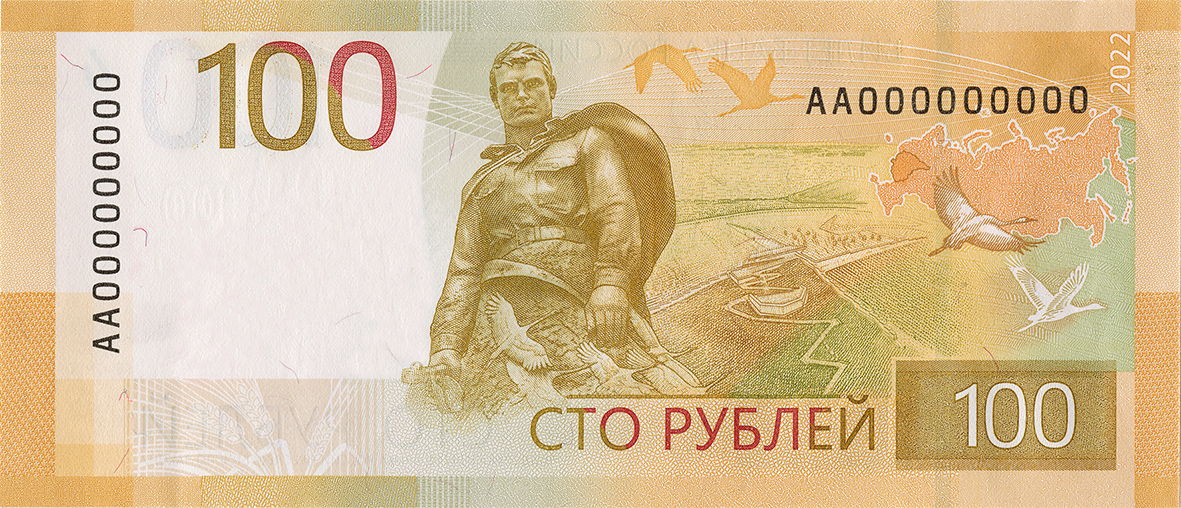
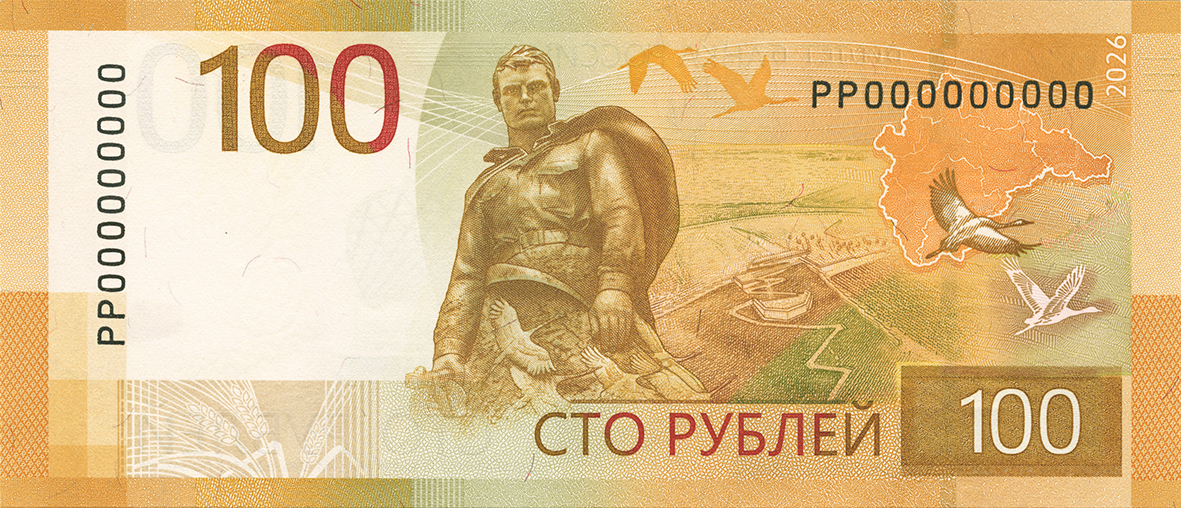
Images: Bank of Russia.
2022 vs 2026: Identification Guide
Design and Security Features
The Bank of Russia describes the 2026 note as retaining the front design and security system of the 2022 issue. The physical format also remains unchanged.
Cotton-based paper
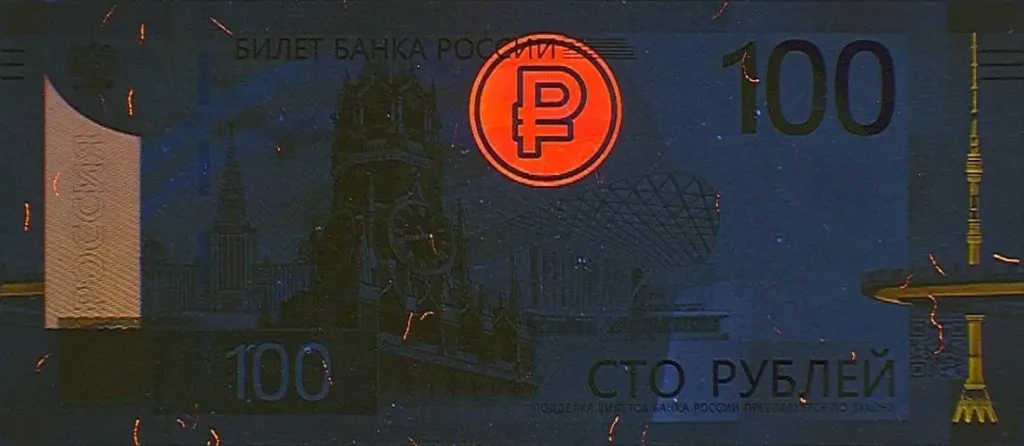
The note is printed on white cotton paper containing coloured and grey security fibres.
Windowed security thread
A 2 mm holographic thread appears at the surface in four sections and contains demetallised 100 numerals.
Combined watermark
The watermark combines part of the Spasskaya Tower with an electrotype-style numeral 100.
Two serial numbers
The reverse carries two serial numbers formed by a two-letter prefix followed by nine digits.
QR code
The QR code on the front links to the Bank of Russia page describing the banknote and its authentication features.
Tactile elements
Raised inscriptions, denomination numerals and edge marks assist authentication and accessibility.
The reverse map is built from tiny repeated illustrations and the number 100. On the 2026 issue, these micrographic motifs include a samovar, gingerbread, a warrior’s helmet and shield, a horseshoe and a traditional toy.
Why Did Russia Remove the National Map?
The map change attracted attention because the 2022 banknote showed the outline used by the Russian state, including Crimea. The replacement of that outline during the continuing war in Ukraine inevitably encouraged political interpretations.
The speculative explanation
Some online commentators suggested that the national outline was removed because of uncertainty surrounding territories occupied or claimed by Russia. No credible official source has confirmed this interpretation.
The design-system explanation
A more straightforward explanation is that the Bank of Russia is standardising its modernised banknotes. Under the current concept, each denomination is associated with a city on the front and a wider federal district on the reverse.
The 5,000-ruble note introduced in 2023 includes a map of the Ural Federal District. The revised 1,000-ruble banknote introduced in 2025 uses the Volga Federal District. The 2026 change gives the 100-ruble note the same visual grammar by showing only the Central Federal District.
Impact on the World of Banknote Collecting
The modification is small enough to escape casual attention but large enough to create a separate catalogue variety. That combination is collector catnip: two notes that look almost identical until the reverse map enters the conversation.
A natural two-note set
Collectors of modern Russian currency can display the 2022 and 2026 versions together as a design pair. The two notes document how a regional theme was gradually standardised across the modernised ruble series.
What collectors should look for
- The printed years 2022 and 2026
- The full national outline versus the Central Federal District map
- Early prefixes, including reported PP-prefix notes
- Low or unusual nine-digit serial numbers
- Replacement prefixes, if identified in circulation
- Map-registration, serial-number or cutting errors
- Differences between later production batches
Is B841a an official catalogue number?
No. B841a is a collector-catalogue designation reported by BanknoteNews. The Bank of Russia does not use commercial catalogue references when describing its banknotes.
Will the 2026 note become valuable?
Its long-term value will depend on print quantity, availability, prefix distribution, condition and demand. A modified circulating note is not automatically rare simply because its map attracted headlines.
Condition remains decisive
Collectors should inspect the wide pale area for folds and handling marks, the security thread for scratches, the edges for small tears and the reverse serial numbers for ink damage. Strong embossing, clean corners and an undisturbed surface will matter more than dramatic sales descriptions.
Explore Russian Banknotes and Market Values
Discover Russian ruble issues, catalogue varieties, collector information and GlobeNote market-value references. The 2026 map variety can be catalogued separately from the original 2022 issue.
Open the Russia Banknote CatalogueFrequently Asked Questions
When was the modified Russian 100-ruble banknote introduced?
The Bank of Russia placed the modified 100-ruble banknote into circulation on 10 July 2026.
What changed on the 2026 Russian 100-ruble note?
The outline of the Russian Federation on the reverse was replaced by a larger map showing only the Central Federal District. The printed year changed from 2022 to 2026.
Did the front of the 100-ruble banknote change?
No. The Bank of Russia states that the front design remains the same as that of the 2022 version.
Does the 2026 note have new security features?
The official Bank of Russia announcement says that the security features are the same as those of the 2022 banknote. The principal change is the reverse map design.
Why was the map of Russia removed?
The Bank of Russia did not provide a political explanation. The change is consistent with its current design system, in which each modernised denomination represents a particular federal district.
Was the map change connected with the war in Ukraine?
Some online commentators have proposed that interpretation, but no reliable source has confirmed it. Standardisation with other district-themed Russian banknotes is the better-supported explanation.
How can collectors distinguish the 2022 and 2026 versions?
Check the upper-right area of the reverse. The earlier note shows the outline of Russia and the year 2022. The modified note shows only the Central Federal District and the year 2026.
Are older Russian 100-ruble banknotes still valid?
Yes. The 2026 issue is legal tender alongside previous versions. No withdrawal of earlier 100-ruble banknotes was announced.
Is the 2026 Russian 100-ruble note rare?
It is too early to determine long-term rarity. Collector value will depend on production quantities, prefixes, serial numbers, condition and future availability.
References
- Bank of Russia: Bank of Russia 100-Ruble Banknote Modified in 2026, official press release, 10 July 2026.
- Bank of Russia: 100-Ruble Banknote, 2026 Issue, official design and security-feature description.
- Bank of Russia: 100-Ruble Banknote, 2022 Issue, official description of the previous version.
- Notafilia: Russia, Changes to the Banknote Design, Commentary, 13 July 2026.
- BanknoteNews: Russia New 100-Ruble Note Reportedly Introduced 10.07.2026, 14 July 2026.
Information current as of 18 July 2026. The political interpretations associated with the map change remain unconfirmed. The official explanation supports continuity with the federal-district design system used on other modernised Russian banknotes.