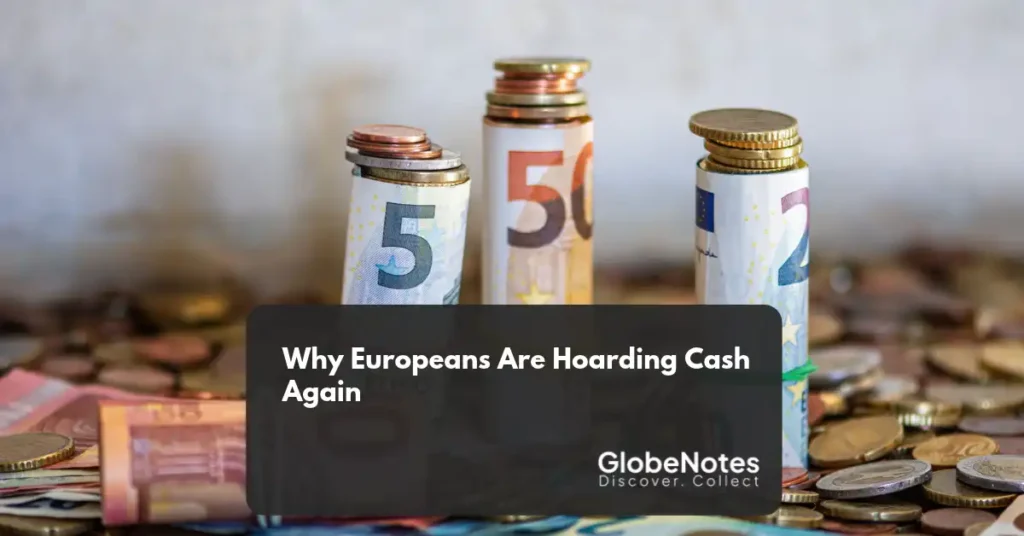

Europe’s next banknotes have moved from abstract debate to visible design. On 23 July 2026, the European Central Bank revealed ten complete proposals for the future series of €5, €10, €20, €50, €100 and €200 banknotes.
The shortlist offers two sharply different visions of Europe. One places Maria Callas, Ludwig van Beethoven, Marie Skłodowska-Curie, Miguel de Cervantes, Leonardo da Vinci and Bertha von Suttner at the centre of the currency. The other follows rivers from mountain springs to the sea, accompanied by wallcreepers, kingfishers, bee-eaters, storks, avocets and northern gannets.
These are not yet the final banknotes. They are ten competing design proposals, and Europeans have until 21 September 2026 to tell the ECB which ones they prefer.
Quick Facts
The European Central Bank has transformed the future of the euro from an abstract discussion into a visible design competition. Ten complete proposals are now competing to become the next common banknote series used across Europe.
Ten proposals, but only one will become the next euro banknote series
On 23 July 2026, the European Central Bank presented ten shortlisted proposals for the future €5, €10, €20, €50, €100 and €200 banknotes[cite: 1].
These are not isolated designs for a single denomination. Every finalist has created a complete visual system covering all six banknotes that would form the next euro series[cite: 1].
Five proposals interpret the theme European culture: shared cultural spaces. The other five follow Rivers and birds: resilience in diversity[cite: 1].
European culture
The cultural proposals place prominent European personalities on the front and shared cultural spaces on the reverse, including schools, libraries, public squares and performing arts[cite: 1].
Rivers and birds
The nature proposals follow water from mountain springs to the sea, connecting six European bird species, natural habitats and European Union institutions[cite: 1].
How the ECB selected the ten finalists
The shortlist is the result of a European Union-wide design competition[cite: 1]. More than 1,200 applications were submitted by graphic designers, and 25 participants were invited to develop complete proposals for one or both themes[cite: 1].
The entries were assessed anonymously by an independent jury composed of 21 experts nominated by euro-area national central banks[cite: 1]. The jury included specialists in fields such as graphic design, communication, neuroscience, history and visual perception[cite: 1].
The evaluation considered visual quality, originality, thematic coherence, accessibility and whether each concept could function across an entire family of banknotes rather than as a single attractive image[cite: 1].
European culture: the personalities proposed for the new euro
The cultural theme would mark a major break from the anonymous architectural styles used on current euro banknotes[cite: 1]. For the first time, identifiable historical personalities could appear across the complete common European banknote series[cite: 1].
| Value | Front | Shared cultural space on the reverse |
|---|---|---|
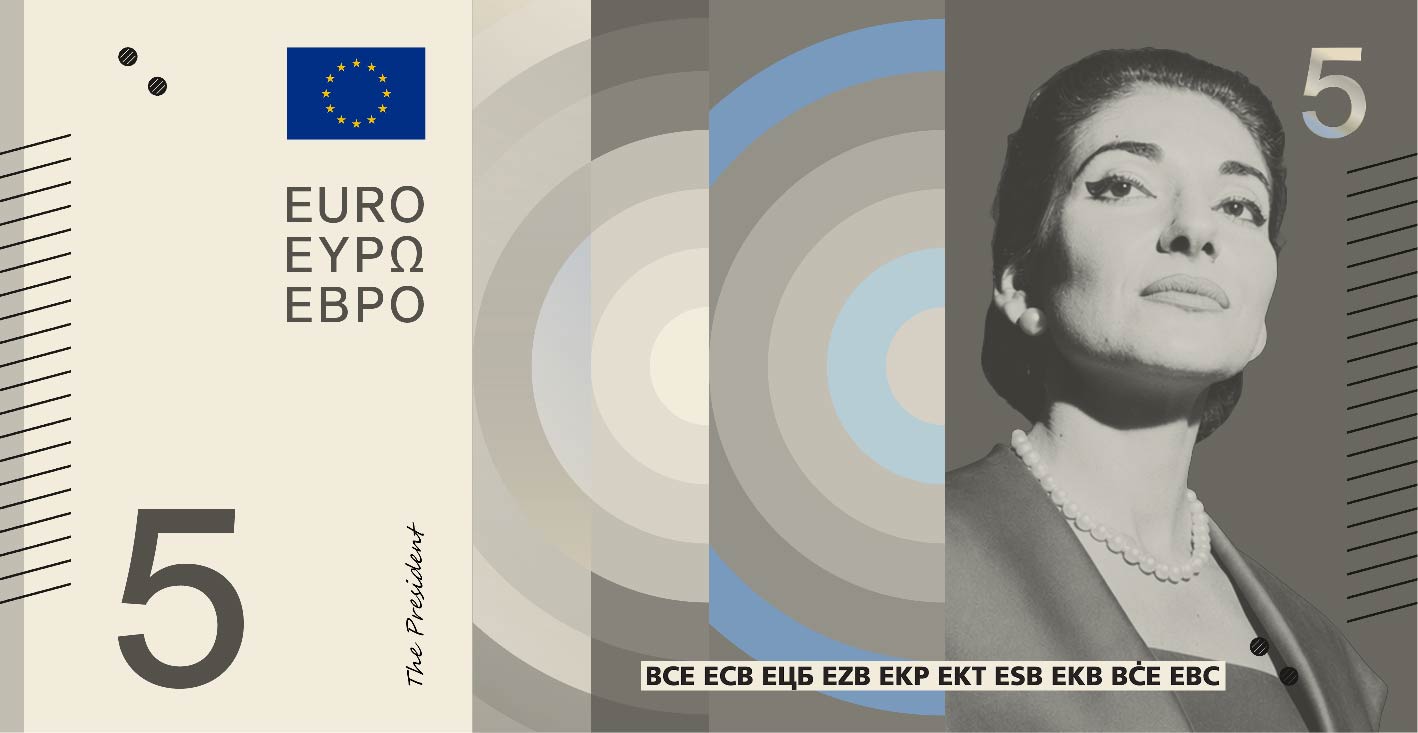
| €5 | Maria Callas and the performing arts[cite: 1] | Street performers entertaining passers-by through music, dance and theatre[cite: 1] |
| €10 | Ludwig van Beethoven and music[cite: 1] | A festival choir formed by children and young adults[cite: 1] |
| €20 | Marie Skłodowska-Curie and education[cite: 1] | A school or university classroom with students, books and notebooks[cite: 1] |
| €50 | Miguel de Cervantes and literature[cite: 1] | A library where adults and children access printed and digital books[cite: 1] |
| €100 | Leonardo da Vinci and visual culture[cite: 1] | Adults and children viewing contemporary art and street art[cite: 1] |
| €200 | Bertha von Suttner and civic life[cite: 1] | A tree-lined public square where people meet, talk, walk and play[cite: 1] |
Rivers and birds: a journey from mountain springs to the sea
The nature-based theme avoids portraits and creates a continuous ecological journey instead[cite: 1]. As the denomination rises, the river moves from its source through valleys, wetlands and estuaries until it finally reaches the ocean[cite: 1].
The birds provide a recognisable symbol for each environment, while the reverse sides connect the natural world with the institutions shared by European citizens[cite: 1].
| Value | River environment and bird | Institution on the reverse |
|---|---|---|
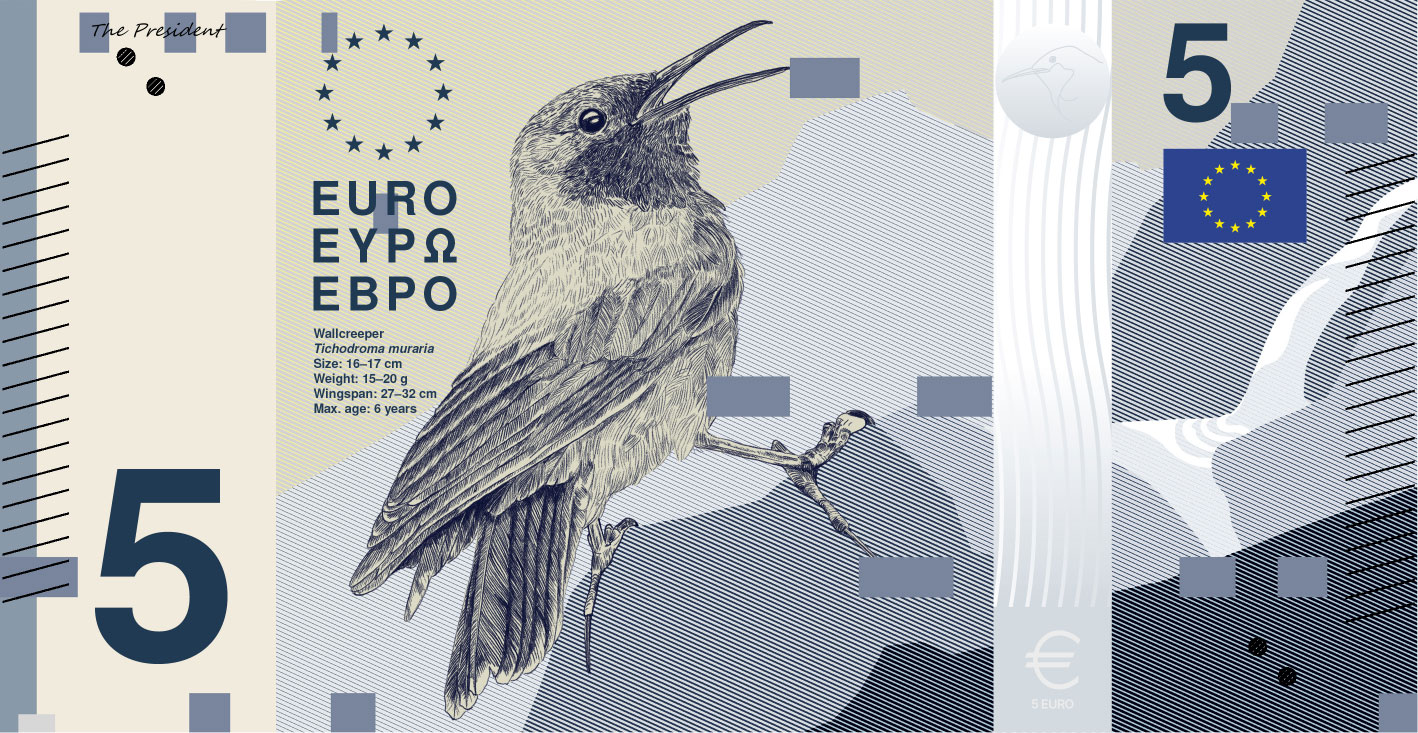
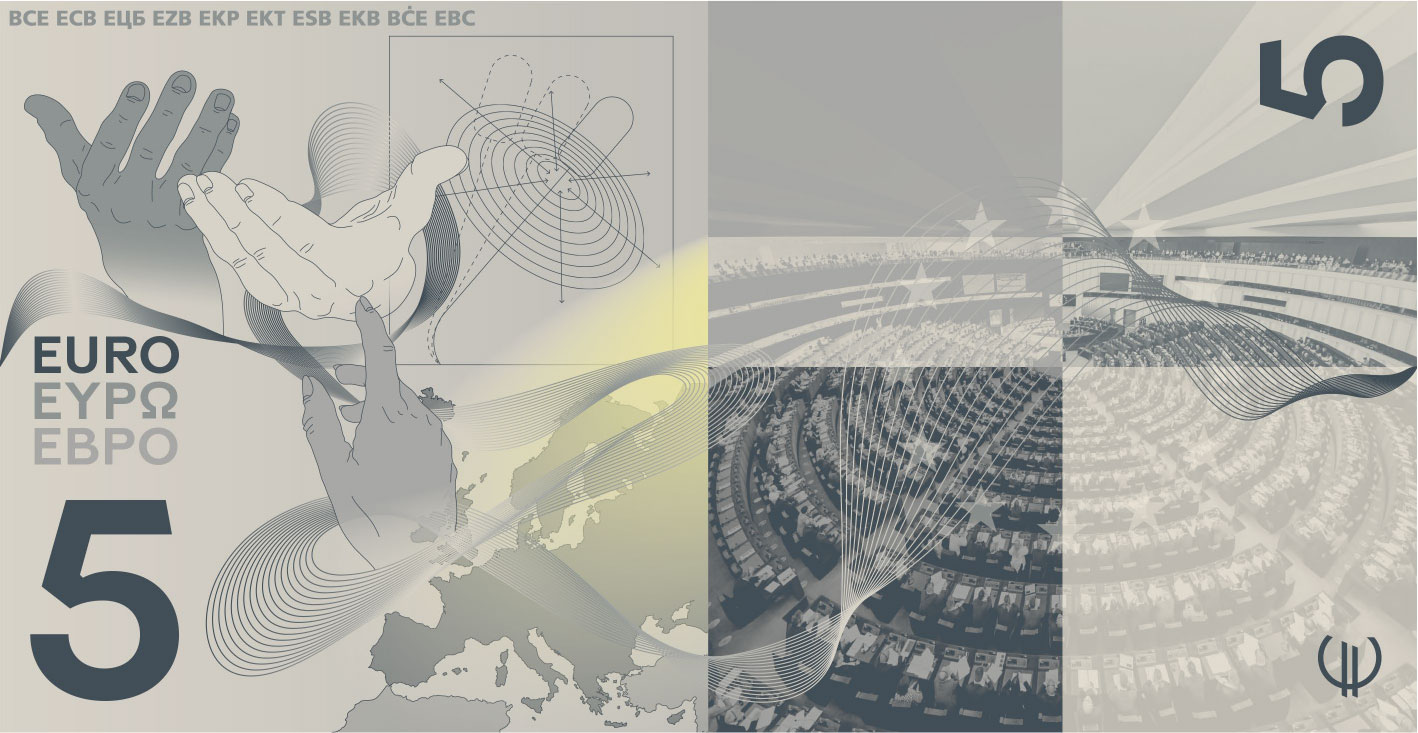
| €5 | Wallcreeper beside a mountain spring[cite: 1] | European Parliament[cite: 1] |
| €10 | Kingfisher near a waterfall or plunge pool[cite: 1] | European Commission[cite: 1] |
| €20 | Bee-eater colony beside a river valley[cite: 1] | European Central Bank[cite: 1] |
| €50 | White stork over a meandering river[cite: 1] | Court of Justice of the European Union[cite: 1] |
| €100 | Avocet above the mud flats of a river mouth[cite: 1] | European Council and Council of the European Union[cite: 1] |
| €200 | Northern gannet flying over large ocean waves[cite: 1] | European Court of Auditors[cite: 1] |
The ten shortlisted euro banknote designs
The gallery below compares all ten finalist projects[cite: 1]. To make the visual differences easy to recognise, each card shows the front and reverse of the proposed €5 banknote[cite: 1].


Studio Joost Grootens[cite: 1]
Cropped eyes and mouths turn portraits into symbols of observation, expression, dialogue and cultural exchange[cite: 1]. Contemporary public spaces on the reverse represent culture as a living shared process[cite: 1].

PunktFormStrich[cite: 1]
Each bird is connected with its habitat, flight speed and visualised call[cite: 1]. The series behaves partly like a compact illustrated guide to European biodiversity[cite: 1].

Neue Gestaltung GmbH[cite: 1]
Strong denomination colours combine historical personalities, European geography and modern cultural spaces[cite: 1]. Constellations evoke movement, orientation and travel across the continent[cite: 1].

Rudy Guedj and François Girard-Meunier[cite: 1]
Six birds inhabit abstract landscapes linked by a river travelling from a mountain source to a stormy sea[cite: 1]. Human gestures on the reverse express cooperation around European institutions[cite: 1].

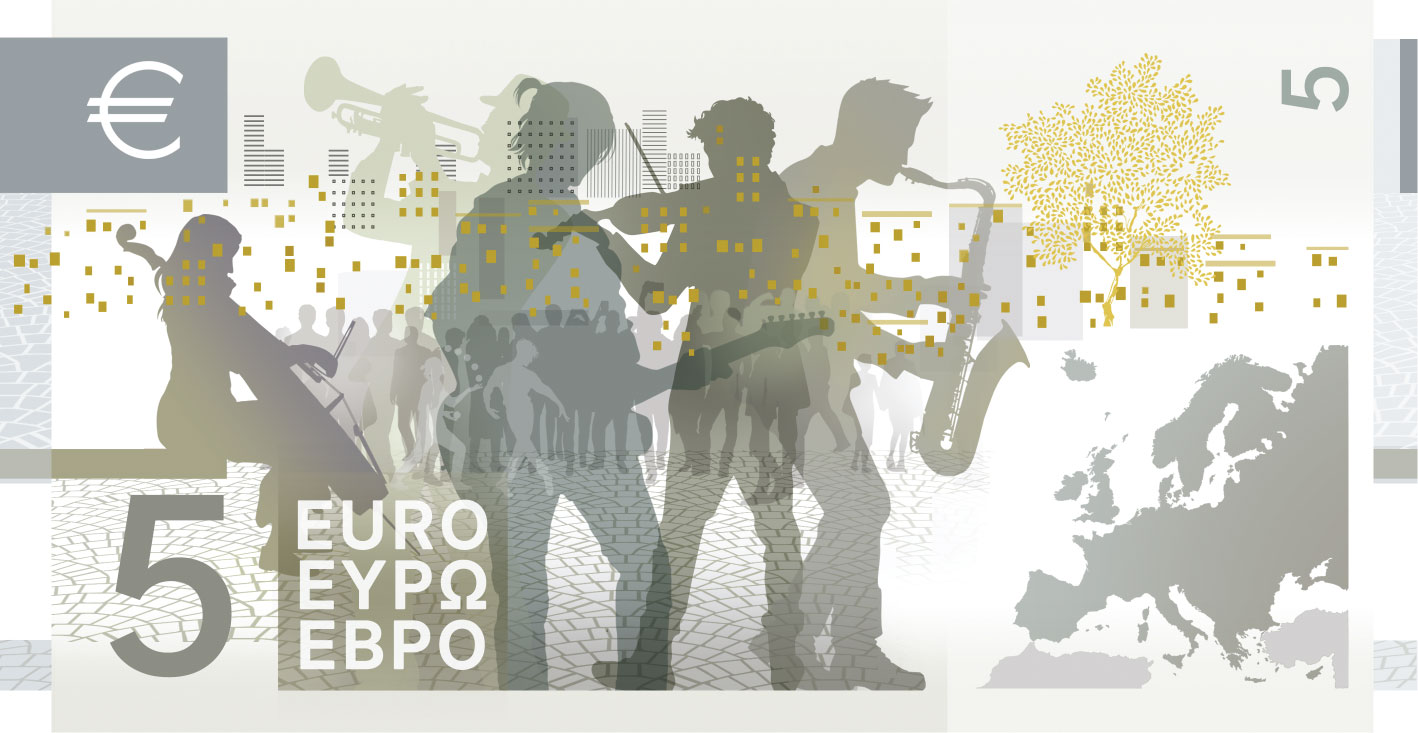
Myrsini Vardopoulou[cite: 1]
Circular structures and symbolic details focus attention on the universal value of each personality’s contribution rather than presenting a conventional historical portrait[cite: 1].
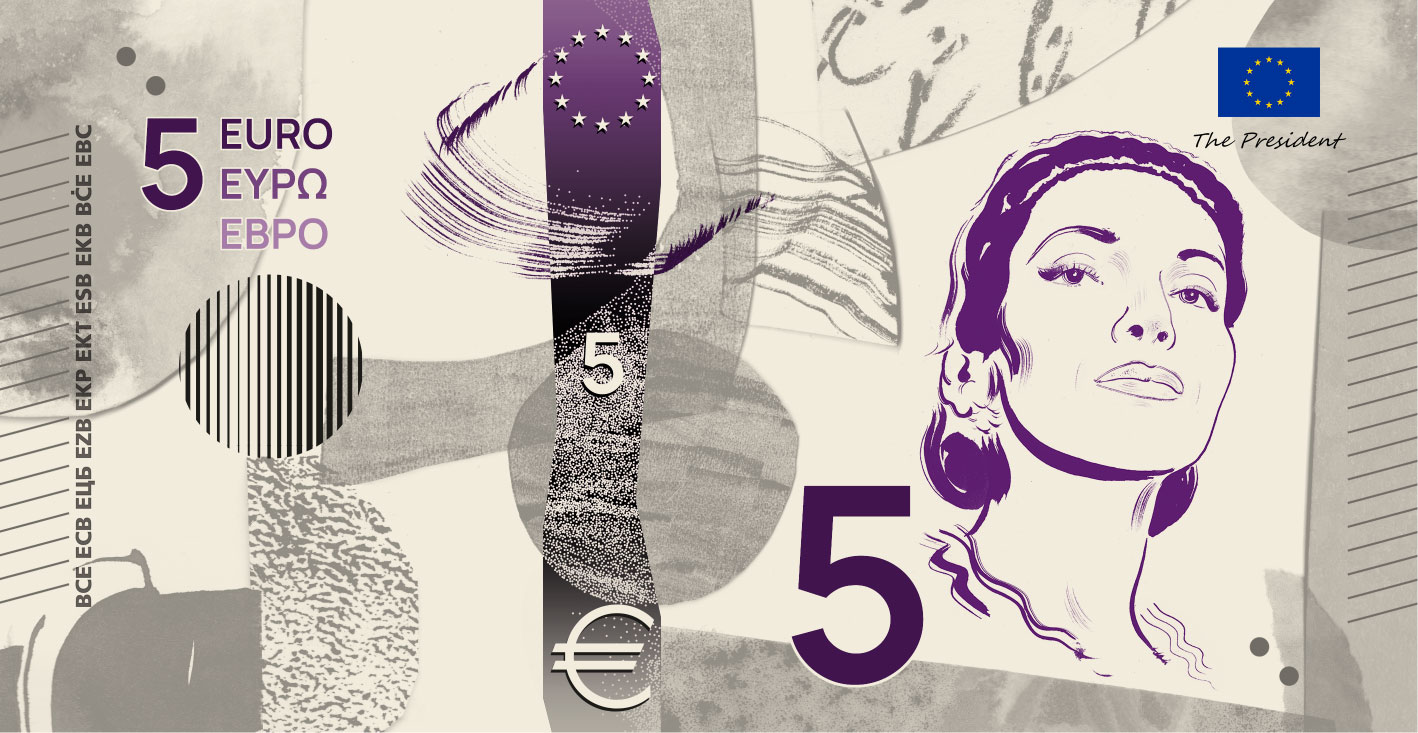

Jan Robert Dünnweller[cite: 1]
Hand-drawn portraits emerge from layered collages of forms, colours and textures[cite: 1]. The visual language interprets the European Union motto “United in diversity”[cite: 1].
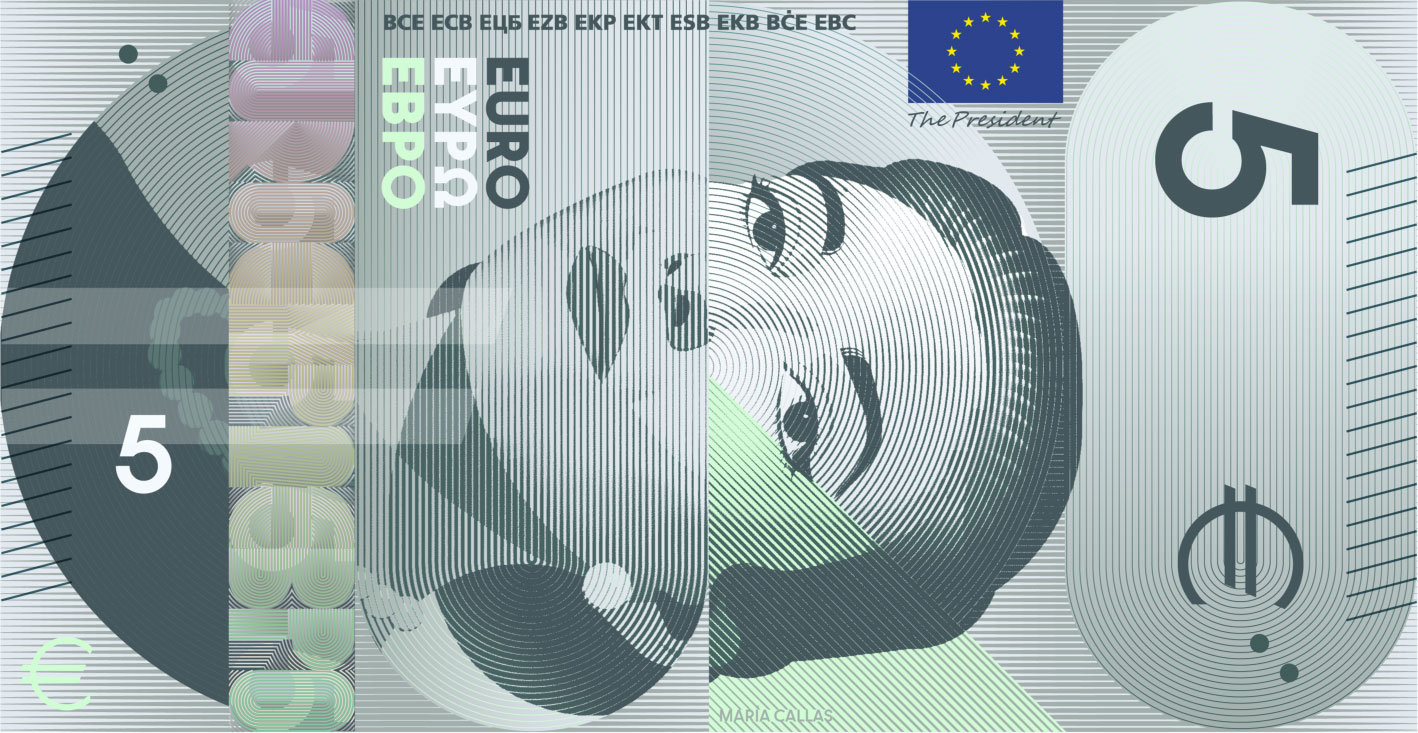
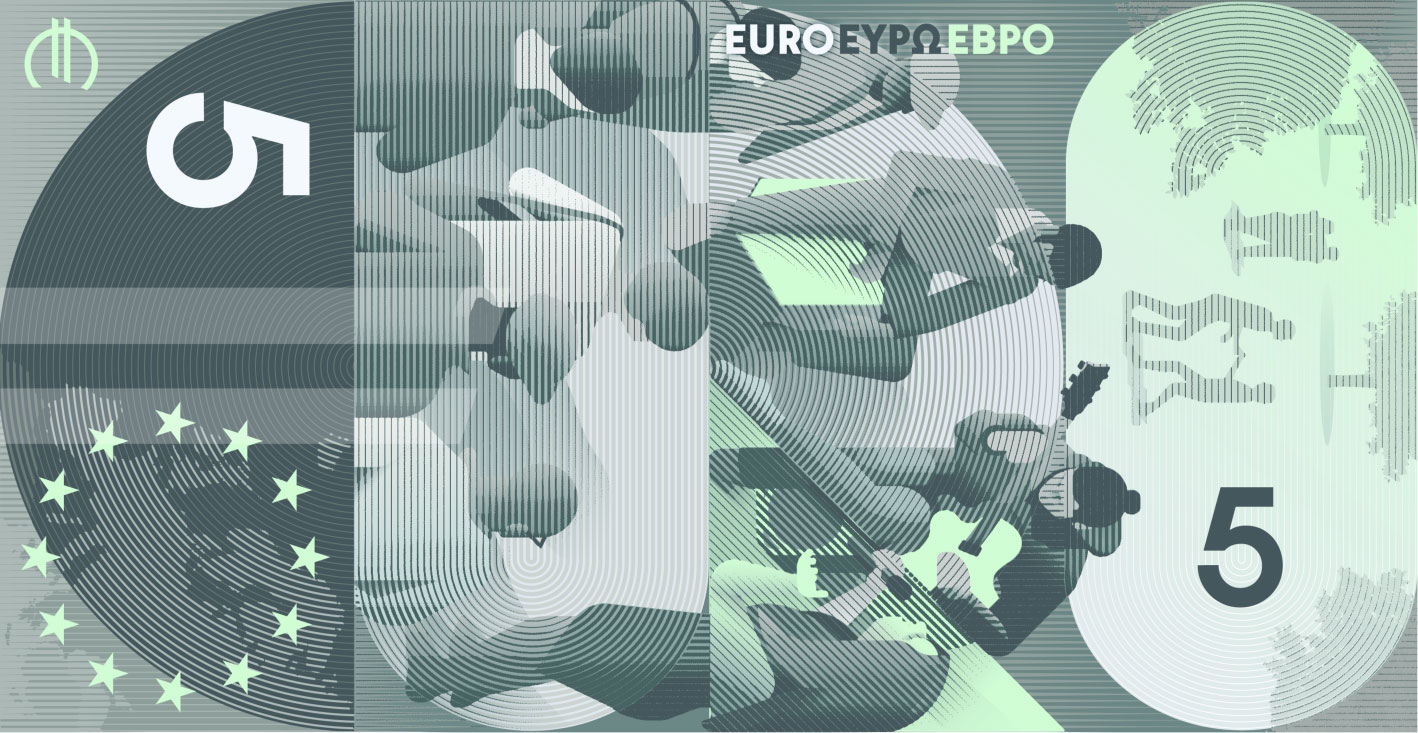
Rubio & del Amo and Cruz más Cruz[cite: 1]
Direct portrait gazes, dominant colours and linear textures create a bold graphic identity[cite: 1]. Four structural sections are inspired by the letters E, U, R and O[cite: 1].
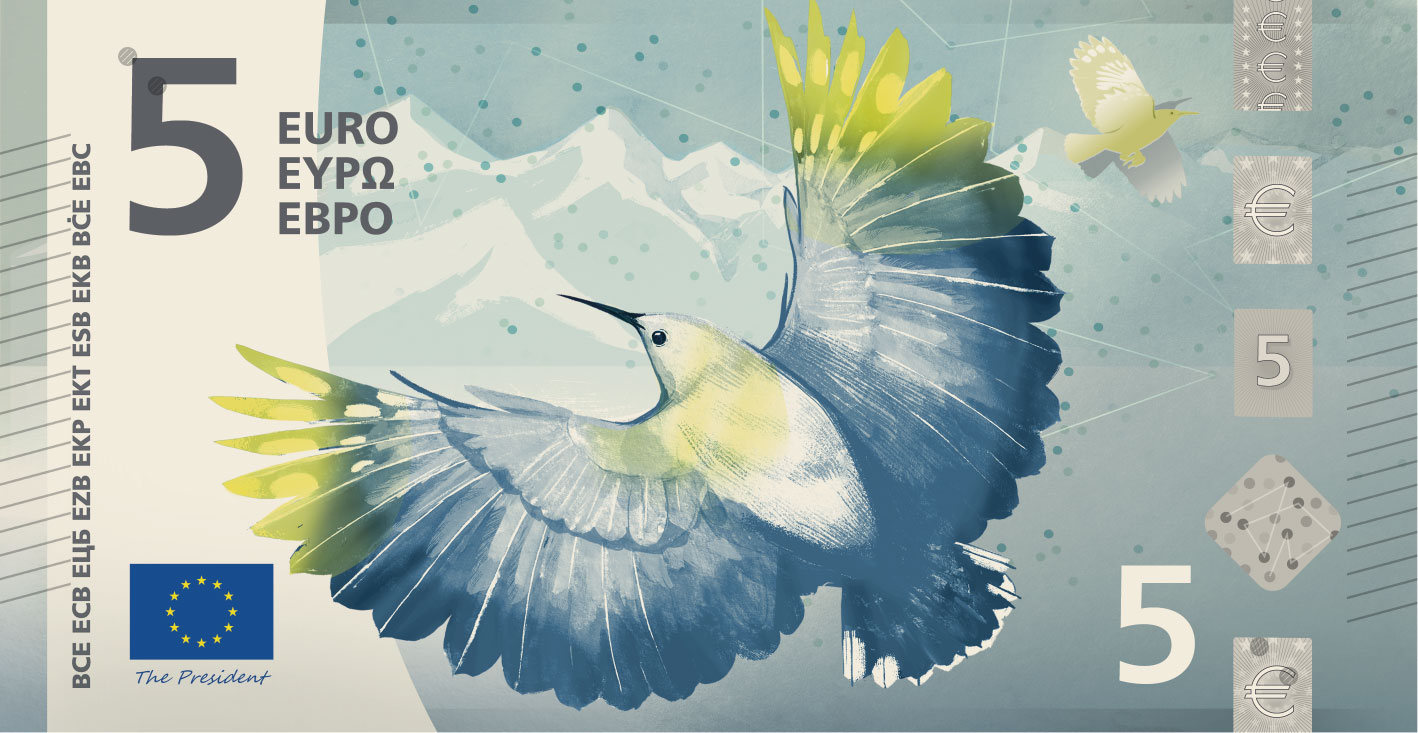
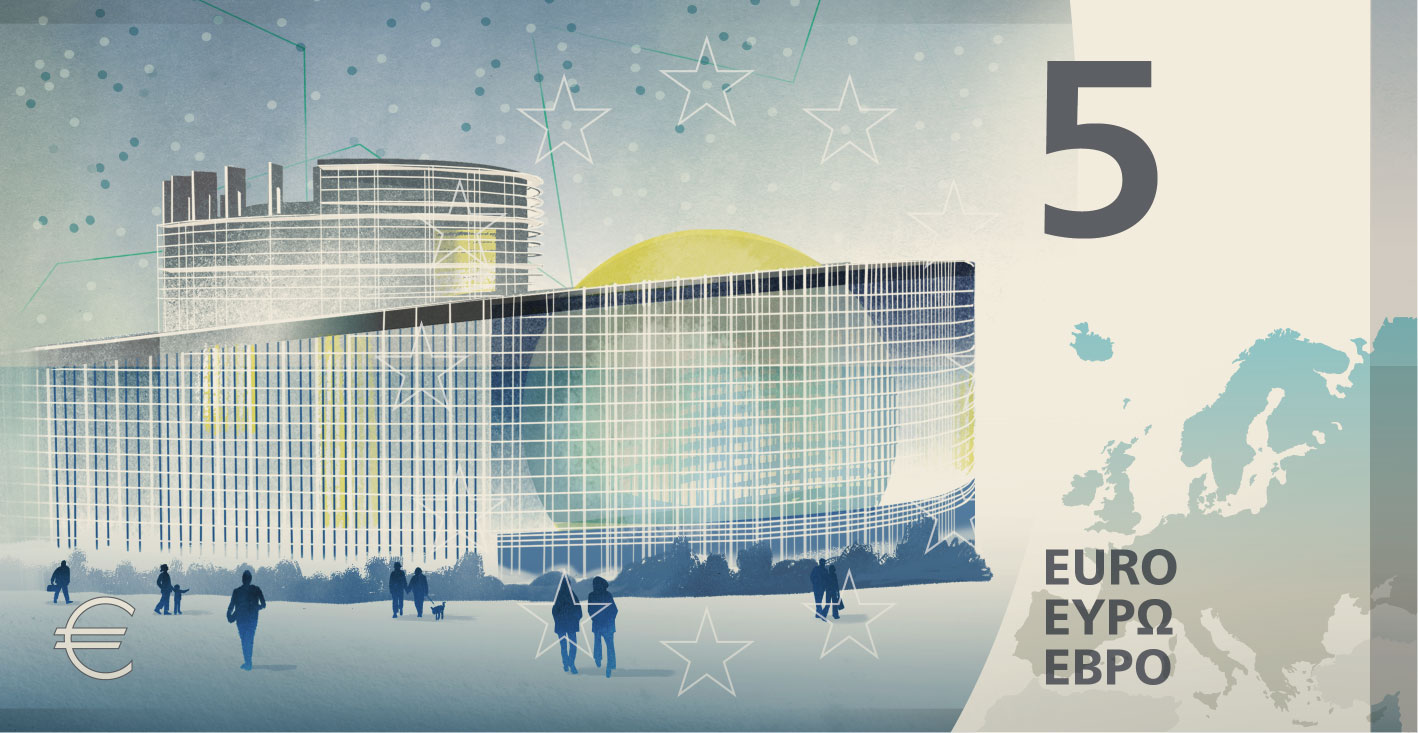
Atelier Goppel-Toperngpong[cite: 1]
Water becomes a metaphor for European cooperation[cite: 1]. A single drop may appear insignificant, while a shared current can gradually transform an entire landscape[cite: 1].
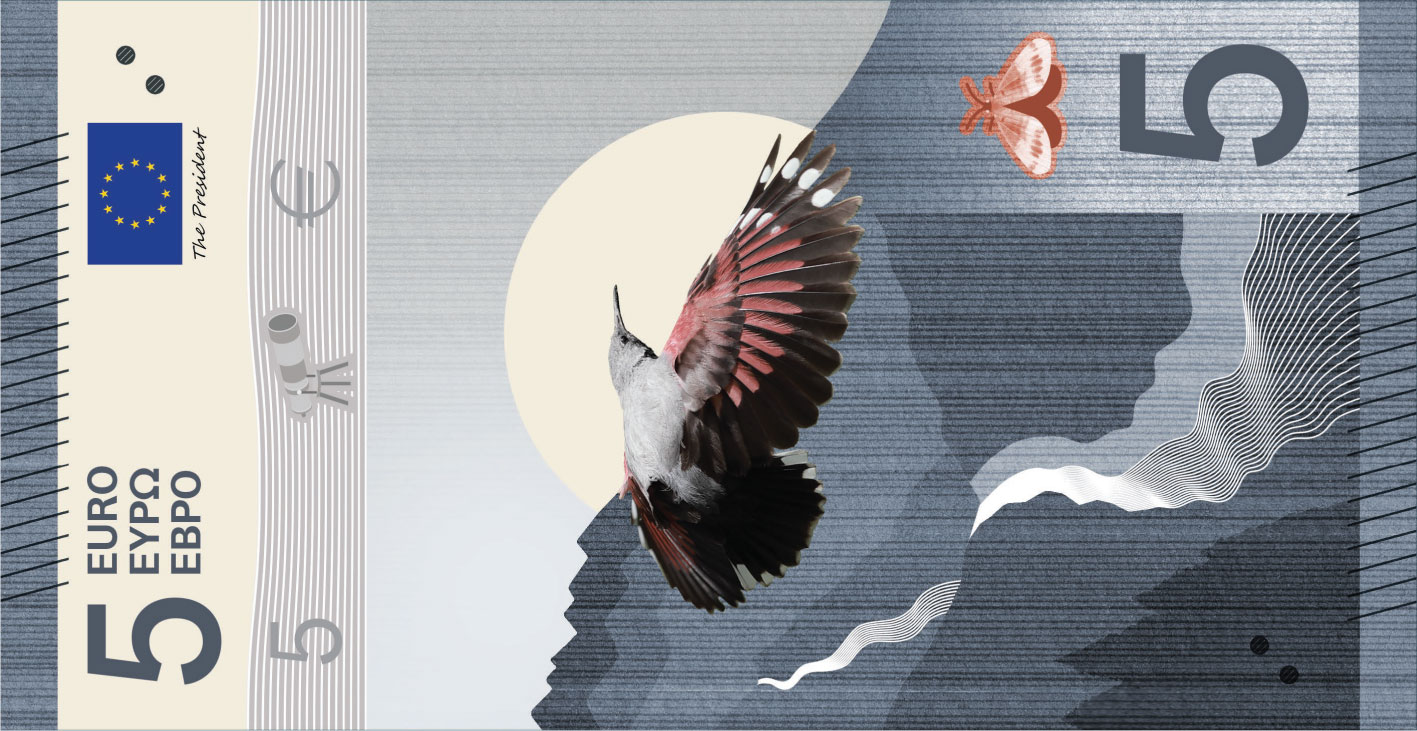
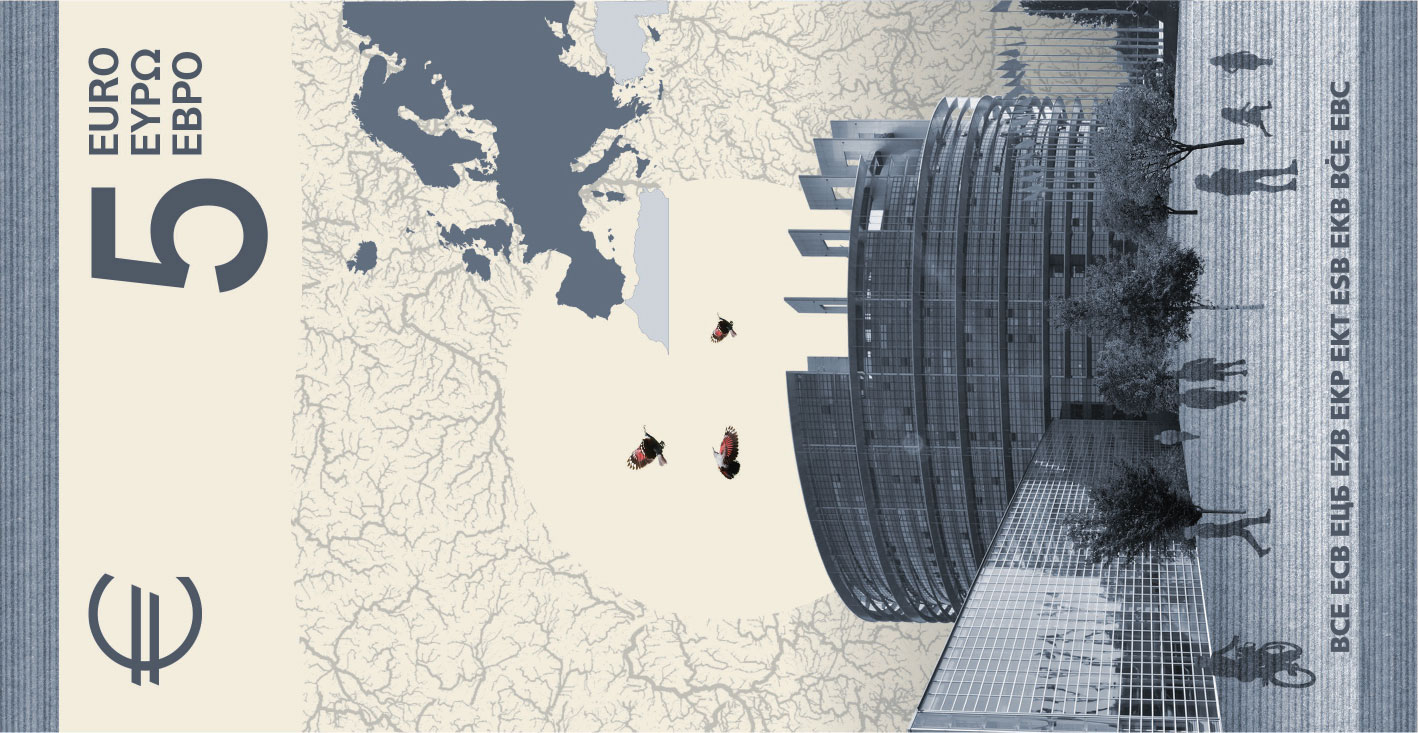
Isabelle Daëron[cite: 1]
Movement links wingbeats, river currents and European networks[cite: 1]. Hand-drawn marks and digital patterns are interwoven to represent cohesion through diversity[cite: 1].


Ville Tietäväinen[cite: 1]
The six denominations form a continuous visual story from mountain springs to the open sea[cite: 1]. Birds guide the journey, while security elements become part of the river narrative[cite: 1].
Why does the euro need another redesign?
The visual transformation is only one part of the project[cite: 1]. A new banknote series will allow the Eurosystem to introduce improved security features and respond to advances in printing, scanning and counterfeiting technology[cite: 1].
The ECB also intends to improve accessibility, including the ability of people with visual impairments to distinguish denominations more easily[cite: 1]. Dimensions, tactile elements, contrast, colours and machine-readable features will be examined during technical development[cite: 1].
Durability and environmental impact are also part of the redesign[cite: 1]. Longer-lasting banknotes require fewer replacements, while new materials and production methods could reduce the environmental footprint of the series[cite: 1].
Direct answer: the new banknotes are not being created because current euro notes are suddenly unsafe or invalid[cite: 1]. The redesign is a long-term project intended to improve security, accessibility, sustainability and public identification with the currency[cite: 1].
How and when can Europeans vote?
The public survey opened on 23 July 2026 and will remain available until 21 September 2026[cite: 1]. Participants can review the ten proposals and indicate which designs they prefer[cite: 1].
A second survey containing the same questions is being conducted among a representative sample of euro-area residents by an independent research organisation[cite: 1].
The Governing Council will consider the public responses together with the conclusions of the design jury and a technical assessment before selecting the winning proposal[cite: 1].
Choose your favourite euro banknote designs[cite: 1]
Compare all ten shortlisted projects and submit your preferences directly through the European Central Bank survey before 21 September 2026[cite: 1].
View the designs and vote[cite: 1]When will the new euro banknotes enter circulation?
Selecting the design will not immediately place the new notes into wallets, bank branches or cash machines[cite: 1]. A complete banknote series must pass through years of development, testing and industrial preparation[cite: 1].
- 23 July 2026 The ECB presents the ten shortlisted design proposals and opens the European public survey[cite: 1].
- 21 September 2026 The online public consultation closes[cite: 1].
- Around the end of 2026 The Governing Council is expected to choose the final design proposal[cite: 1].
- After the final decision The selected concept enters technical development, including security, accessibility, durability and production testing[cite: 1].
- Subsequent years Production, distribution and the gradual introduction of the new banknotes can begin[cite: 1].
Will current euro banknotes become invalid?
No[cite: 1]. The ECB has stated that euro banknotes from the existing series will retain their value and continue circulating alongside the future series[cite: 1].
The publication of the new designs therefore creates no deadline for spending, exchanging or depositing existing €5, €10, €20, €50, €100 or €200 banknotes[cite: 1].
Any future decision to withdraw a particular series would require a separate official announcement and a clearly communicated exchange process[cite: 1].
What does the redesign mean for banknote collectors?
For collectors, the design competition is historically important, but it is essential to distinguish published artwork from actual numismatic material[cite: 1].
These are not specimens
The digital images are design proposals[cite: 1]. They are not proofs, specimens, test notes or officially issued varieties[cite: 1].
Printed copies have no official status
Printing an ECB image does not create a collectible euro banknote or an item issued by the Eurosystem[cite: 1].
Final technical details will matter
Signatures, printer codes, serial-number structures, security variations and issue dates will only become known later[cite: 1].
From a historical perspective, the losing proposals may eventually become valuable documentation of how Europe considered representing itself in the 2020s[cite: 1]. Their importance, however, will remain documentary rather than monetary unless authentic official material from the development process is lawfully released[cite: 1].
Existing Europa-series banknotes may eventually become a closed catalogue series, but ordinary circulated examples will not automatically become rare simply because a replacement has been announced[cite: 1].
Condition, signatures, printer combinations, serial numbers, genuine scarcity and documented varieties will remain considerably more important than temporary online excitement[cite: 1].
A choice between European faces and shared ecosystems
The shortlist presents a remarkably clear choice[cite: 1]. The cultural proposals would give euro banknotes identifiable human faces and connect each denomination with a different form of artistic, scientific, literary or civic life[cite: 1].
The Rivers and birds proposals would maintain a more geographically neutral currency, using water and wildlife to build a continuous narrative across all six denominations[cite: 1].
Whichever project wins, the next euro banknotes will look very different from the architectural windows, gateways and bridges used since 2002[cite: 1].
The consultation is therefore more than a decorative exercise[cite: 1]. It is a public decision about how Europe wishes to represent its identity through the most physical and frequently exchanged form of common money[cite: 1].
AI Reader Summary
On 23 July 2026, the European Central Bank presented ten shortlisted designs for the next complete series of euro banknotes. Five proposals use the theme European culture, while five use Rivers and birds. Europeans can submit feedback until 21 September 2026. The winning proposal is expected to be selected around the end of 2026, but the new notes will require several more years of development and production.
- Primary entity
- European Central Bank
- Event
- Publication of ten shortlisted euro banknote design proposals
- Announcement date
- 23 July 2026
- Number of designs
- 10 complete series
- Themes
- European culture; Rivers and birds
- Public consultation
- Open until 21 September 2026
- Expected final decision
- Around the end of 2026
- Legal status
- Design proposals only, not issued banknotes or legal tender
- Existing euro banknotes
- Remain valid and will continue to circulate
Identify, catalogue or value a banknote
Search more than 10,000 world banknotes by country, denomination, year and Pick number, or upload photographs of your own banknote for a free collector valuation.
Frequently Asked Questions
Key answers about the proposed new euro banknotes, public voting and the future of the current series.
Has the final design of the new euro banknotes been chosen?
No. The ECB has published ten shortlisted proposals. The final design is expected to be selected around the end of 2026 after public feedback and technical evaluation.
What are the two themes for the future euro banknotes?
The themes are European culture: shared cultural spaces, and Rivers and birds: resilience in diversity.
How many new euro banknote designs are being considered?
Ten complete design proposals have been shortlisted. Five use the European culture theme and five use Rivers and birds.
Which denominations are included in the redesign?
The proposals cover the €5, €10, €20, €50, €100 and €200 banknotes. No new €500 design is included.
Who appears on the cultural euro banknote proposals?
The selected personalities are Maria Callas, Ludwig van Beethoven, Marie Skłodowska-Curie, Miguel de Cervantes, Leonardo da Vinci and Bertha von Suttner.
How long can Europeans vote on the designs?
The ECB public survey opened on 23 July 2026 and will remain available until 21 September 2026.
When will the new euro banknotes enter circulation?
No exact date has been announced. The selected series must undergo development, security integration, testing and production, so circulation is expected several years after the final decision.
Will existing euro banknotes lose their value?
No. The ECB has confirmed that banknotes from the existing series will retain their value and continue to circulate alongside the future series.
Are the shortlisted images collectible banknotes or specimens?
No. They are digital design proposals and are not issued banknotes, specimens, proofs or legal tender.
References
- European Central Bank, ECB reveals shortlisted designs for new banknotes and launches public survey , 23 July 2026.
- European Central Bank, Future euro banknote design proposals .
- European Central Bank, Report of the Design Contest Jury on the winning design proposals , July 2026.
- European Central Bank, ECB selects motifs for future euro banknotes , 31 January 2025.
- European Central Bank Multimedia Portal, Images and multimedia for the new euro banknote design proposals .
- Il Sole 24 Ore English, Take a look at the new euro banknotes and vote for your favourites , 23 July 2026.
- Il Sole 24 Ore, Lagarde views the proposed designs for the new euro banknotes , 23 July 2026.