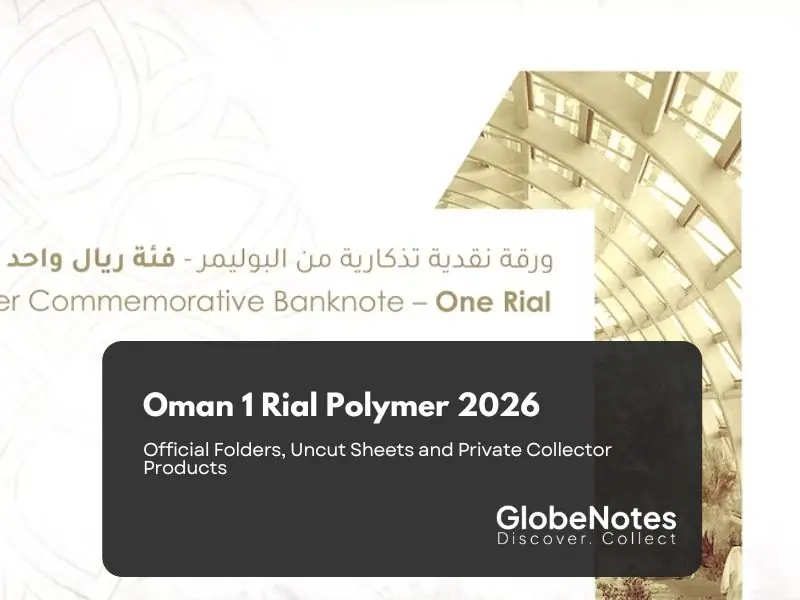
Oman 1 Rial Polymer 2026: Official Folders, Uncut Sheets and Private Collector Products
Oman’s first polymer banknote is not just a new 1 rial note. It is a small numismatic theatre: official folders, uncut sheets, private presentations, and the kind of collector confusion that usually arrives wearing a velvet jacket and asking twice the price.
The Central Bank of Oman released the commemorative polymer note for circulation on 11 January 2026. Official collector formats were limited, while private market products quickly appeared after some uncut sheets were reportedly cut into two-note blocks and inserted into unofficial folders.
For collectors, the key is not simply whether the note is genuine. The real question is provenance: official Central Bank folder, uncut sheet, normal circulation note, or private aftermarket assembly.
| Specification | Details |
|---|---|
| Issuer | Central Bank of Oman |
| Denomination | 1 Rial Omani |
| Release Date | 11 January 2026 |
| Substrate | GUARDIAN polymer |
| Status | Legal tender, circulating alongside existing notes |
| Official Collector Formats | 10,000 individually packaged notes; 1,000 uncut sheets |
| Theme | National Day commemorative issue and Oman’s first polymer banknote |
| Main Collector Risk | Confusing official presentation folders with private aftermarket folders |
Official Issue vs Collector Market Confusion
The article’s real SEO strength is the distinction between legal tender, official collector packaging and private market presentation products. That is the part buyers actually need before they spend money.
The official release
The official note is a Central Bank of Oman issue, not fantasy money, not a souvenir coupon and not a private commemorative. It circulates at face value and belongs in any modern polymer collection.
The official collector formats were intentionally limited: individually packaged notes and uncut sheets. That gives the issue a clean two-tier market: normal notes for currency collectors, and official packaging for provenance collectors.
The private folder problem
After the uncut sheets entered the market, private sellers reportedly cut sheets into two-note blocks and placed them into their own folders. The notes may be genuine, but the packaging is not the Central Bank presentation product.
That difference matters because numismatics is a business of paper, ink and tiny details that become expensive when everyone pretends they are obvious.
How to describe it correctly
A good listing should say exactly what the buyer is receiving: official CBO folder, uncut sheet, single note, or private two-note folder. Anything else is fog, and fog is where bad premiums breed.


Obverse Design Elements
The front of the note connects modern polymer technology with Omani state identity. It uses the portrait tradition, architectural forms and a crisp commemorative tone rather than a wild redesign.
Primary Visual Elements
- Portrait and national identity: The portrait of Sultan Haitham bin Tariq anchors the note in the familiar visual language of Omani currency, making the polymer change feel official rather than experimental.
- Polymer window and clarity: The transparent polymer elements give the note immediate modernity and allow collectors to see, literally, the difference between this issue and earlier cotton-based notes.
- Warm colour palette: The note leans into gold, beige and soft architectural tones, which works well for a commemorative issue: ceremonial without becoming noisy.
- Official packaging design: The presentation folder uses a pale, premium visual style with the Central Bank of Oman seal and bilingual text, making it an important part of the official collectible package.

Reverse Design and Presentation Materials
For this article, the presentation materials are almost as important as the banknote itself. The folder, sleeve and uncut sheet tell the market story.
Collector Product Types
- Official packaged note: The official folder is the clean provenance object. It says: this is not just a note, this is a note as presented by the issuer.
- Uncut sheet of 40: The uncut sheet is the big beast of the release, visually impressive and naturally limited. It also created the raw material for later private products.
- Private two-note folders: Private folders may look interesting, but they should never be marketed as official Central Bank products. Their value depends on note authenticity, presentation quality and buyer taste.
- Condition sensitivity: Folders crease, sleeves scuff and polymer notes show handling differently from paper. UNC buyers will care about the whole package, not only the banknote.
Security Features & Polymer Technology
A first polymer issue carries two layers of collector interest: the specific design, and the technical transition from paper to polymer.
Polymer substrate
GUARDIAN polymer gives the note durability, resistance to moisture and a modern tactile profile that paper cannot imitate.
Transparent security elements
Polymer windows provide instantly visible anti-counterfeiting features and strong visual appeal for collectors.
High-quality printing
The note combines portrait work, fine line patterns and security printing that feels closer to a flagship commemorative than a minor denomination.
Packaging as authentication aid
For the official folder, packaging is not a security feature in the strict sense, but it does add provenance and reduces ambiguity in the collector market.
Market Context: Why Provenance Is the Price
The Oman note is not a hyperinflation story. It is a provenance story: same genuine note, very different market meaning depending on how it is packaged.
| Format | Status | Collector Note |
|---|---|---|
| Single 1 rial polymer note | Official legal tender | Core modern Oman type note |
| Official presentation folder | Official collector product | Best provenance for packaged-note collectors |
| Uncut sheet of 40 | Official collector product | Most visually dramatic and naturally scarcer |
| Private two-note folder | Aftermarket product | Can be collectible, but must be described accurately |
Official product premium
Official folders and uncut sheets deserve a premium because the issuer created them as collector products. That is clean provenance, and clean provenance travels well through future resale.
Private product caution
Private two-note folders can be fun curiosities, but the price should not pretend they are official Central Bank material. This is where collector education prevents expensive confusion.
GlobeNote strategy
This article should link strongly to the New Banknotes 2026 guide and to modern polymer collecting resources, because the intent is partly informational and partly buyer-safety oriented.
Collector Market Analysis
This issue is attractive because it sits where modern polymer collecting, official presentation material and market confusion all collide. It is the sort of note that becomes a lesson as much as a collectible.
Best buying strategy
Prioritise official folders first, then uncut sheets if the budget allows. Single notes are still worth collecting, but they will be easier to find than intact official presentations.
What to avoid
Avoid listings that blur the line between official and private folders. If the description refuses to explain the packaging, the seller is already waving a small red flag with excellent wrist action.
Long-term appeal
First polymer issues tend to age well in collections because they mark a technological milestone. Add limited official packaging and the note becomes more than a type example.
Sources & Further Research
This article was built from checked source URLs, issuer information, numismatic reporting and GlobeNote internal resources. The list below is deliberately conservative: links were selected only when they resolved during research and did not lead to an obvious 404.
- Geldscheine-Online: Collector products analysis — Explains the official folder, 10,000 packaged notes, 1,000 uncut sheets and the privately made two-note folders.
- MRI Guide: Oman new polymer banknote — Reports the 11 January 2026 issue date and collector-sale formats.
- International Association of Currency Affairs: First polymer OMR1 banknote — Confirms legal tender status, GUARDIAN substrate, project team and limited official products.
- GlobeNote: New Banknotes 2026 — Internal pillar page for modern 2026 currency releases.
- GlobeNote: Banknote collecting guide — Internal collecting guide for provenance, preservation and collecting basics.
Browse authentic world banknotes and collecting guides on GlobeNote Shop.
Frequently Asked Questions
Is the Oman 1 rial 2026 note official currency?
Yes. The 1 rial polymer commemorative note was issued by the Central Bank of Oman, circulates alongside existing notes and remains legal tender at face value.
How many official collector products were released?
Reported collector formats include 10,000 individually packaged notes and 1,000 uncut sheets, released from 11 January 2026.
Why does the official folder matter?
The official folder provides issuer provenance. A genuine note placed in a private folder may still be real, but the folder itself is not the same thing as an official Central Bank product.
Is the private two-note folder fake?
Not necessarily. The notes can be genuine material cut from uncut sheets, but the private presentation should be described separately and priced with caution.
What makes the note collectible?
It is Oman’s first polymer banknote, a National Day commemorative issue and a visually rich modern note tied to limited official presentation formats.
This article belongs in our New Banknotes 2026 guide, where GlobeNote tracks fresh world currency releases.
For collectors comparing materials, pair this issue with modern polymer notes such as the Solomon Islands 5 Dollars 2019 polymer note.
New collectors should also read the GlobeNote collecting guide before buying premium folders and special presentations.