

Syria’s Currency Transition
Reported restrictions on carrying Syrian currency across the border had not yet been formally published by the Central Bank when this article was prepared.
Collect banknotes related to this article
Explore authentic world banknotes connected to this country, region or collecting theme.

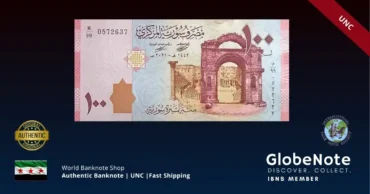
Syria is preparing to close one of the most important chapters in its modern monetary history. From July 31, 2026, banknotes belonging to the former Syrian pound will no longer be accepted as legal tender, bringing the extended national currency exchange period to an end.
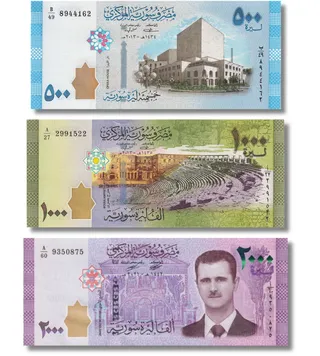
The decision affects the old banknote series associated with decades of rule by the Assad family, including notes carrying the portraits of Hafez al-Assad and Bashar al-Assad. Their withdrawal is both a practical monetary measure and a powerful symbolic break with Syria’s recent past.
However, changing the pictures and numbers printed on banknotes cannot repair an economy by itself. The success of the new Syrian pound will depend on inflation, public confidence, monetary discipline, access to banking services and the country’s wider economic recovery.
Old Syrian Pounds Become Invalid After July 31
On July 26, the Central Bank of Syria rejected speculation that the exchange period might be extended again. It confirmed that the old currency would cease to have legal tender status once the final July deadline expired.
Consequently, the expression “Syrian pound” in official transactions will refer exclusively to the new currency. Old notes may remain historically interesting or collectible, but they will no longer be valid for ordinary payments inside Syria.
Syria began the nationwide replacement process on January 1, 2026. Exchanges were carried out through licensed banks, money-transfer companies and authorised exchange institutions. Official conversion operations were not subject to commissions, taxes, penalties or additional fees.
A Deadline Extended More Than Once
The original transition was expected to last around 90 days. Yet the authorities later extended the exchange period to give residents more time to deposit or replace the large amount of cash circulating outside the formal banking system.
Presidential Decree No. 293 establishes the new currency and the removal of two zeros.
The national exchange process begins and the new banknotes enter circulation.
The Central Bank reports that approximately 56% of the old currency has been replaced.
Replacement exceeds 63%, while the final deadline is extended to July 31.
Old Syrian banknotes lose legal tender status and become invalid for financial transactions.
The extensions illustrate the scale of the operation. A significant part of Syria’s money supply had long circulated as physical cash, including savings kept outside banks because of conflict, sanctions, institutional weakness and widespread distrust of the financial system.
What Happened to Prices, Salaries and Contracts?
The redenomination applies to much more than the banknotes held in wallets. Under the presidential decree, prices, salaries, wages, taxes, debts, contracts and other financial obligations must all follow the same 100-to-1 conversion rate.
During the transition period, public authorities and private businesses were required to display amounts in both old and new pounds. This dual pricing system was intended to reduce confusion and make fraudulent price increases easier to identify.
Bank balances were also converted according to the official rate. Importantly, the Central Bank stated that the redenomination would not increase or reduce the total value of the money supply. It changed the numerical unit used to express that value.
Removing zeros does not create new wealth
A redenomination can make cash payments, accounting systems and price labels easier to manage. For example, an amount previously expressed as 100,000 old pounds becomes 1,000 new pounds. Nevertheless, the holder has not become richer because the prices of goods and services are converted at the same rate.
Therefore, lasting currency stability requires more than redesigned notes. It also depends on controlled money creation, stronger production, sustainable public finances, functioning banks and public confidence that the pound will retain its value.
From the “Assad Pound” to a New National Symbol
The withdrawn banknote family contained some of the most recognisable political imagery in the Middle East. The 2,000-pound note featured Bashar al-Assad, while earlier Syrian notes also displayed his father, Hafez al-Assad.
The new series abandons presidential portraits. Instead, its designs focus on plants, agricultural products, wildlife and elements connected with Syria’s natural and cultural identity. Roses, cotton, wheat, olives, citrus fruit and mulberries appear among the visual themes reported for the new denominations.
This design language shifts attention away from individual rulers. Currency becomes a canvas for the country itself rather than a portable portrait gallery for political power.
For collectors, that contrast will make the two currency families particularly significant. The former series documents the visual language of the Assad period, while the 2026 notes represent an attempt to construct a different national narrative.
Can the New Pound Restore Public Trust?
Trust is the most valuable security feature a banknote can possess. Watermarks, security threads and colour-shifting elements can deter counterfeiters, but they cannot prevent inflation or persuade people to save in a currency they expect to lose value.
Before the political transition, the Syrian pound had lost more than 99% of its value compared with its pre-war level. Years of conflict, sanctions, economic fragmentation and deficit financing pushed many Syrians toward the US dollar, Turkish lira or other stores of value.
The new currency may improve the practical handling of cash and give the Central Bank a clearer picture of the money circulating in the economy. Bringing cash into licensed institutions could also support banking oversight and reduce the size of the informal monetary system.
Still, the conversion alone cannot guarantee a stronger exchange rate. Public confidence will depend on whether inflation falls, commercial activity recovers and the Central Bank demonstrates credible monetary discipline.
New Rules for Carrying Syrian Currency Across the Border
A separate report has raised questions for travellers, traders and currency dealers. According to information attributed to instructions received at Syrian border crossings with Lebanon, authorities may allow the import or export of no more than 20,000 new Syrian pounds or one million old Syrian pounds.
Amounts above the stated limits could reportedly be seized. However, these instructions had not been formally published by the Central Bank when the information became available.
The two reported figures also appear unusual when compared through the official 100-to-1 conversion rate. One million old pounds would convert to 10,000 new pounds, not 20,000. This difference may reflect separate administrative thresholds, an incomplete instruction or a reporting inconsistency. Until an official notice is published, the rule should be treated cautiously.
What the Deadline Means for Banknote Collectors
Demonisation does not make a banknote disappear. Instead, it changes its function. A piece of paper once used to buy food or pay a bill becomes a historical object whose value depends on scarcity, condition, demand and cultural importance.
Large quantities of the former Syrian series may initially remain available, particularly common denominations that circulated heavily. Consequently, most used examples may not become rare simply because they have lost legal tender status.
Collector interest may be stronger for uncirculated notes, replacement notes, unusual serial numbers, scarce varieties, complete sets and denominations connected with major political imagery. Notes featuring Bashar al-Assad are also likely to remain important documentary pieces from a clearly defined historical period.
The July 31 deadline gives the old Syrian pound a precise endpoint. That date will become part of how collectors catalogue and interpret the withdrawn series: no longer current money, but evidence of a monetary system, a political era and a society reshaped by conflict.
A Monetary Reform Still Being Tested
Syria’s currency replacement is one of the most ambitious monetary operations undertaken by the country in decades. It simplifies nominal values, removes the former regime’s portraits and gives the authorities an opportunity to reconnect cash circulation with regulated financial institutions.
Nevertheless, July 31 is not the end of the story. It is merely the moment when the old pound leaves daily circulation. The more difficult test begins afterward: whether the new currency can earn the confidence that its predecessor gradually lost.
Syria’s Old and New Pound Explained
When do old Syrian banknotes become invalid?
Old Syrian banknotes lose their legal tender status after July 31, 2026. From that point, they can no longer be used for ordinary payments or official financial transactions.
What is the conversion rate between the old and new Syrian pound?
The official conversion rate is 100 old Syrian pounds for one new Syrian pound. The reform removes two zeros from the nominal value of the currency.
Does removing two zeros increase purchasing power?
No. Prices, salaries, bank balances, contracts and debts are converted using the same rate. Redenomination simplifies the numbers used in transactions but does not create new purchasing power by itself.
Why were the old Syrian banknotes replaced?
The replacement aims to simplify cash transactions, improve oversight of currency circulation, reduce the practical effects of large nominal values and symbolically separate the new monetary system from the Assad era.
Do the new Syrian banknotes feature Bashar al-Assad?
No. The new banknote designs abandon portraits of former Syrian leaders and instead use national, agricultural and natural imagery.
Can old Syrian pounds still have collector value?
Yes. A banknote can retain historical or numismatic value after losing legal tender status. Its collector value depends on condition, scarcity, serial number, variety, denomination and market demand.
How much Syrian currency can be carried across the border?
Reports have mentioned limits of 20,000 new Syrian pounds or one million old pounds at crossings with Lebanon. However, the instructions had not yet been formally published by the Central Bank. Travellers should verify the current rules with the relevant authorities.
References
- Enab Baladi – Syrian Central Bank Ends Debate: Old Pound Invalid After July
- The Media Line – Syria Closes the Chapter on the “Assad Pound”
- MRI Bankers’ Guide to Foreign Currency – Syria Has New Currency Import/Export Rules
- Syrian Arab News Agency – Presidential Decree Launches New Syrian Currency Starting 2026
- Syrian Arab News Agency – Syria Announces New Currency Framework and Two-Zero Redenomination
- Syrian Arab News Agency – Central Bank Reports 56% of Old Currency Replaced
- Syrian Arab News Agency – Syria Completes More Than 63% of Currency Replacement
- Reuters – Syria to Revalue Currency by Dropping Two Zeros
- Reuters – Syria to Start Currency Swap on January 1
- Associated Press – Syria Begins Circulating New Post-Assad Currency Bills
Information concerning cross-border cash limits was reported as an informal instruction and had not been formally published by the Central Bank of Syria at the time of writing.
Identify and Value Syrian Banknotes
Explore Syrian pound issues, denominations, Pick references, historical series and available market information in the GlobeNote World Banknote Catalogue.
Syria’s Old and New Pound Explained
When do old Syrian banknotes become invalid?
Old Syrian banknotes lose their legal tender status after July 31, 2026. From that point, they can no longer be used for ordinary payments or official financial transactions.
What is the conversion rate between the old and new Syrian pound?
The official conversion rate is 100 old Syrian pounds for one new Syrian pound. The reform removes two zeros from the nominal value of the currency.
Does removing two zeros increase purchasing power?
No. Prices, salaries, bank balances, contracts and debts are converted using the same rate. Redenomination simplifies the numbers used in transactions but does not create new purchasing power by itself.
Why were the old Syrian banknotes replaced?
The replacement aims to simplify cash transactions, improve oversight of currency circulation, reduce the practical effects of large nominal values and symbolically separate the new monetary system from the Assad era.
Do the new Syrian banknotes feature Bashar al-Assad?
No. The new banknote designs abandon portraits of former Syrian leaders and instead use national, agricultural and natural imagery.
Can old Syrian pounds still have collector value?
Yes. A banknote can retain historical or numismatic value after losing legal tender status. Its collector value depends on condition, scarcity, serial number, variety, denomination and market demand.
How much Syrian currency can be carried across the border?
Reports have mentioned limits of 20,000 new Syrian pounds or one million old pounds at crossings with Lebanon. However, the instructions had not yet been formally published by the Central Bank. Travellers should verify the current rules with the relevant authorities.
References
- Enab Baladi – Syrian Central Bank Ends Debate: Old Pound Invalid After July
- The Media Line – Syria Closes the Chapter on the “Assad Pound”
- MRI Bankers’ Guide to Foreign Currency – Syria Has New Currency Import/Export Rules
- Syrian Arab News Agency – Presidential Decree Launches New Syrian Currency Starting 2026
- Syrian Arab News Agency – Syria Announces New Currency Framework and Two-Zero Redenomination
- Syrian Arab News Agency – Central Bank Reports 56% of Old Currency Replaced
- Syrian Arab News Agency – Syria Completes More Than 63% of Currency Replacement
- Reuters – Syria to Revalue Currency by Dropping Two Zeros
- Reuters – Syria to Start Currency Swap on January 1
- Associated Press – Syria Begins Circulating New Post-Assad Currency Bills
Information concerning cross-border cash limits was reported as an informal instruction and had not been formally published by the Central Bank of Syria at the time of writing.