
Polymer Banknotes: Complete Collector Guide and Country List
Discover how polymer banknotes are made, why countries use them, which nations adopted them first and which modern plastic currency notes matter most to collectors.
Quick answer: Polymer banknotes are currency notes printed on a durable polypropylene-based substrate instead of traditional cotton paper. They support transparent windows and advanced security features while resisting moisture, dirt and circulation wear. Australia issued the world's first modern polymer banknote in 1988 and completed the first full polymer series between 1992 and 1996.
Polymer banknotes are the part of numismatics where traditional paper money meets engineering, transparent windows, anti-counterfeiting wizardry and the occasional design decision that looks suspiciously expensive. They are modern, resilient, often spectacular to look at, and highly attractive for collectors who enjoy currency with technology under the bonnet.
 Fiji 2026: a complete five-note polymer family
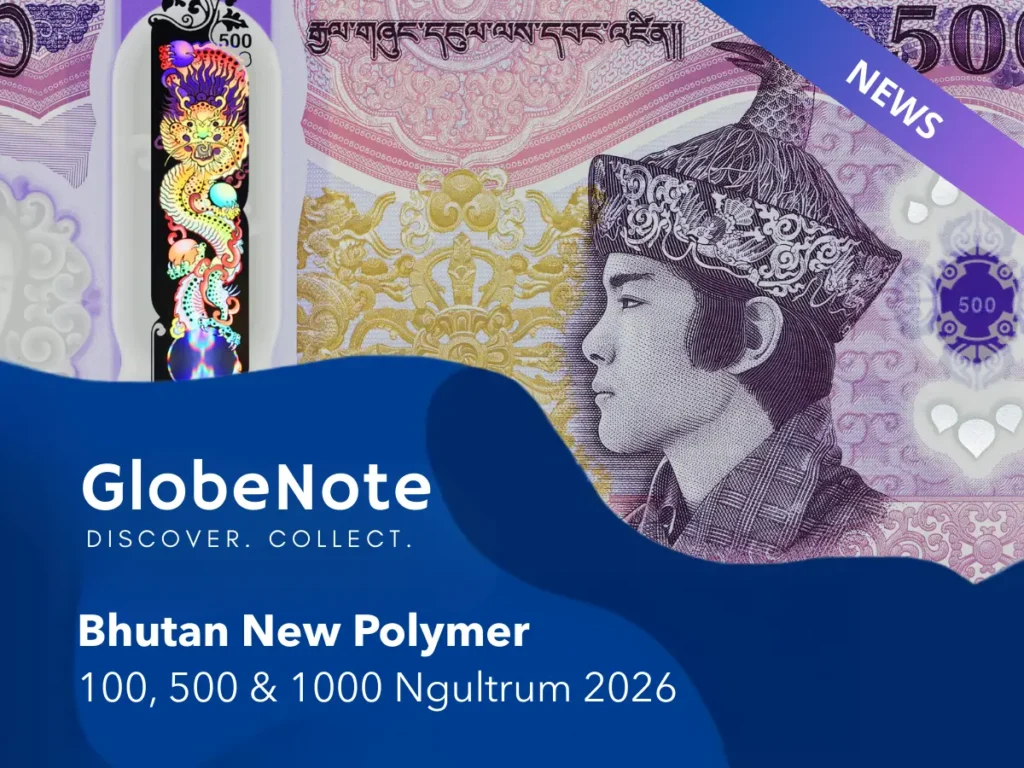 Bhutan: royal imagery on modern polymer
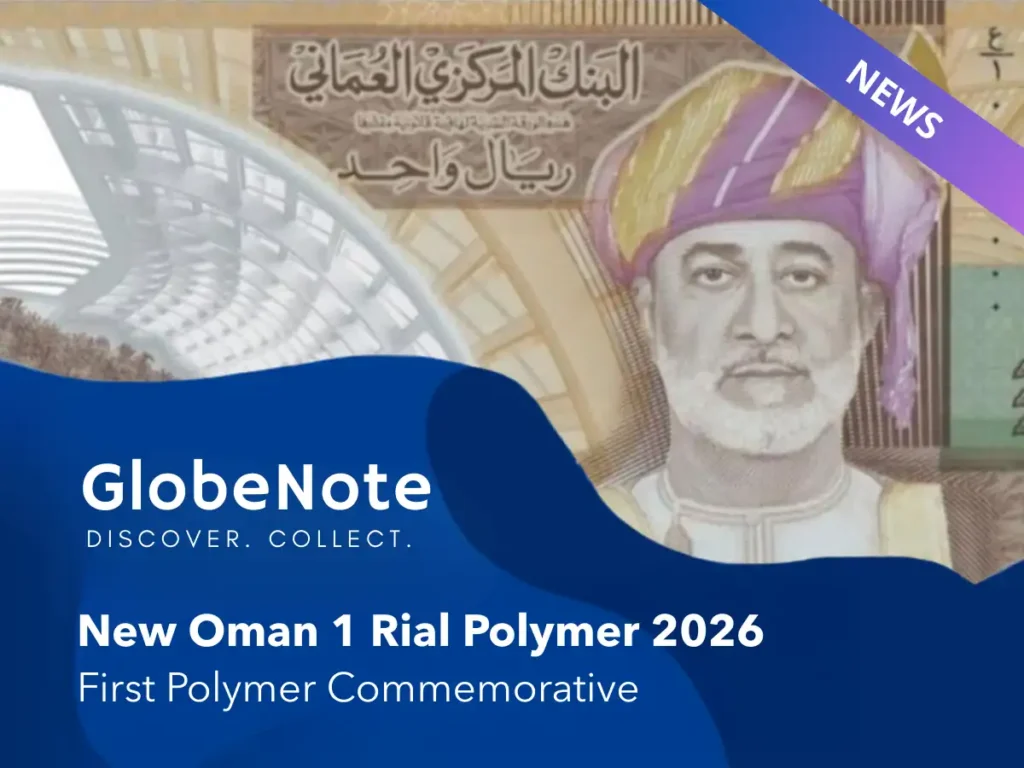 Oman: its first polymer banknote
What Are Polymer Banknotes?
Polymer banknotes are currency notes printed on a flexible plastic substrate instead of traditional cotton-based paper. To the average person, that means a note that lasts longer in circulation and handles daily abuse better. To collectors, it means something far more interesting: transparent windows, sharper colours, advanced security features and a very modern collecting field.
They are often called plastic banknotes, although that makes them sound like something from a toy cash register. In reality, polymer notes are sophisticated monetary objects designed to resist moisture, wear, dirt and counterfeiting. Some are elegant. Some are loud. Some appear to have swallowed a whole graphic design department and emerged victorious.

Modern Substrate
Polymer replaces traditional paper with a durable plastic-based material designed for longer circulation life and advanced security design.
Collector Appeal
Many polymer notes are collected in UNC condition because they often retain crispness, colour and technical details beautifully.
How Are Polymer Banknotes Made?
Most polymer banknotes begin with a biaxially oriented polypropylene film, commonly shortened to BOPP. The clear film is coated with opaque layers that accept inks while selected areas remain transparent. Printers then add offset colours, intaglio elements, serial numbers, tactile marks and optically variable security devices.
Transparent Polymer Film
A strong plastic film provides the transparent base and gives the finished note resistance to moisture and everyday handling.
Print-Ready Surface
White or coloured opacifying layers are applied while clear areas are reserved for windows and see-through security devices.
Ink, Texture and Authentication
Offset, intaglio, microprinting, holographic features, UV elements and unique serial numbers complete the banknote.
Polymer Banknote Security Features
Polymer does not automatically make a banknote impossible to counterfeit. Its advantage is that it allows security features that are difficult to reproduce convincingly with ordinary printing equipment.
Transparent Windows
Clear areas may contain portraits, metallic elements, diffraction effects or complex images visible from both sides.
Raised and Tactile Printing
Intaglio texture and denomination marks help with authentication and accessibility.
Optically Variable Features
Holograms, colour changes and moving effects alter appearance as the banknote is tilted.
UV and Microprinting
Fluorescent elements and extremely small text provide further checks for collectors, retailers and cash handlers.
Polymer Banknote History
Modern polymer money began in Australia after cooperation between the Reserve Bank of Australia and the Commonwealth Scientific and Industrial Research Organisation. Australia released a commemorative 10 dollar polymer note on 26 January 1988. The successful trial led to the world's first complete polymer series, issued between 1992 and 1996.
| Year | Milestone | Why It Matters |
|---|---|---|
| 1988 | Australia releases the commemorative 10 dollar note. | First modern banknote on polymer with an integrated optically variable device. |
| 1992-1996 | Australia completes its first polymer family. | First country to convert an entire national banknote series to polymer. |
| 1999 | New Zealand and Romania introduce important polymer programmes. | Polymer moves beyond its Australian birthplace. |
| 2011-2013 | Canada issues its complete Frontier polymer series. | Transparent windows and holography reach a major global currency. |
| 2016 | The Bank of England introduces the polymer 5 pound note. | Polymer becomes the standard for the current Bank of England family. |
| 2026 | Bhutan, Fiji and Oman add major new polymer issues. | The substrate continues expanding through Asia, the Pacific and the Middle East. |
The 1988 and 1992-1996 milestones are documented by the Reserve Bank of Australia Museum.
Which Countries Use Polymer Banknotes?
Dozens of countries and monetary authorities have issued at least one polymer note. Some converted their complete banknote families; others use polymer only for selected denominations or commemorative issues. The table highlights important milestones rather than pretending that every experimental note deserves its own diplomatic summit.
| Country | First Important Polymer Issue | Collector Milestone |
|---|---|---|
| Australia | 1988 | World first modern polymer note; first complete family by 1996. |
| New Zealand | 1999 | Complete circulation family converted to polymer. |
| Romania | 1999 | Early European adopter and later complete polymer family. |
| Mexico | 2002 | 20 pesos became an important early Latin American polymer issue. |
| Vietnam | 2003 | Large multi-denomination polymer programme. |
| Nigeria | 2007 | 20 naira introduced polymer into Nigeria's circulating currency. |
| Canada | 2011 | 100 dollar note began the Frontier Series, completed in 2013. |
| United Kingdom | 2016 | Bank of England polymer 5 pound note began the present family. |
| Samoa | 2019 | Commemorative beginning followed by full-family transition completed in 2025. |
| Egypt | 2022 | 10 pounds launched Egypt's polymer era. |
| United Arab Emirates | 2021-2022 | Commemorative 50 dirhams followed by circulation denominations. |
| Bhutan | 2026 | 100, 500 and 1,000 ngultrum released on polymer. |
| Fiji | 2013 / 2026 | First polymer 5 dollars followed by a complete polymer family in 2026. |
| Oman | 2026 | First Omani polymer note: the commemorative 1 rial. |
Important: using polymer for one denomination does not necessarily mean that a country's entire currency is polymer. Series and legal-tender status should always be checked note by note.
Why Collect Polymer Banknotes?
Polymer banknotes are one of the most exciting areas of modern notaphily because they combine history, design and technology. They are not dusty relics hiding in a drawer. They are the current evolution of money, complete with transparent windows, tactile marks, colour-shifting elements and the sort of security details that make counterfeiters sigh heavily.
They Are Built to Last
Polymer notes are designed to survive longer than traditional paper notes, making them attractive for collectors who care about condition.
They Show Modern Printing Technology
Transparent windows, complex layers, tactile features and hidden details make polymer banknotes excellent examples of modern currency engineering.
They Often Look Spectacular
Many polymer notes use brighter colours, cleaner layouts and ambitious design concepts that stand out immediately in a world banknote collection.
They Are Great for Modern Sets
Polymer issues are often collected as complete modern sets, especially when a country updates several denominations at once.
They Mark Monetary Change
A country’s first polymer note, or first full polymer family, can become a useful milestone for collectors of modern currency.
They Connect to Strong Topics
Polymer notes often feature wildlife, national heroes, architecture, anniversaries and security innovations, making them perfect for thematic collecting.
Famous Polymer Banknotes Around the World
Polymer banknotes can be collected in several ways. Some collectors focus on countries that adopted polymer early. Others chase first polymer issues, commemorative polymer notes, complete denomination sets or wildlife-themed designs printed on modern substrate.
| Collecting Angle | Why It Matters | Best For |
|---|---|---|
| First polymer notes | They mark the first time a country moved from traditional paper to polymer. | Milestone collectors |
| Complete polymer families | A full redesign across multiple denominations creates a natural and attractive set. | Set builders |
| Commemorative polymer banknotes | They combine special events, limited themes and modern substrate technology. | Modern issue collectors |
| Wildlife polymer notes | Polymer’s colour and windows often work beautifully with animals, birds and marine life. | Theme collectors |
| UNC polymer notes | Crisp polymer banknotes display design and security features at their best. | Condition-focused collectors |
New Polymer Banknotes in 2026
Confirmed 2026 releases include Bhutan's new ngultrum denominations, Fiji's complete five-note family and Oman's first polymer banknote. The Cayman Islands programme remains planned without a confirmed circulation date, while Samoa is included as a recent 2025 transition milestone.
Bhutan Polymer 100, 500 and 1000 Ngultrum
A royal commemorative polymer release with strong appeal for collectors of Asian banknotes, monarchy themes and modern security design.
Read the Bhutan polymer guideFiji Polymer Banknotes 2026
Fiji’s new polymer family creates a complete modern collecting set, with Pacific identity, wildlife and technical design working together.
Read the Fiji polymer guideOman 1 Rial Polymer Commemorative
A compact but important release for collectors interested in first polymer commemorative issues and national currency milestones.
Read the Oman polymer guide
King Charles III Polymer Transition
A modern transition connected to royal succession, public design interest and the move from traditional notes toward polymer currency.
Read the Cayman Islands guideSamoa 50 and 100 Tala Polymer Notes
Samoa’s new higher denominations complete an important polymer journey and strengthen the country’s modern currency identity.
Read the Samoa polymer guideNew Banknotes 2026
Follow the wider collecting season, including polymer releases, commemorative banknotes and redesigned world currency notes.
Explore New Banknotes 2026How to Store and Protect Polymer Banknotes
Polymer is tougher than paper in circulation, but collector-grade condition is still easy to ruin with heat, scratches, pressure marks or unsuitable plastics. Durable does not mean indestructible; it merely means the note is less likely to surrender after meeting a wet pocket.
Use Archive-Safe Sleeves
Choose inert, PVC-free holders made for banknotes. Store each note flat and avoid sleeves that grip, cloud or transfer plasticisers.
Avoid Heat and Sunlight
Keep notes away from radiators, hot cars, direct sunlight and strong UV exposure, which can distort polymer or fade printed details.
Do Not Iron or Laminate
Heat can permanently warp the substrate and damage windows or holographic features. Lamination destroys numismatic integrity.
Handle by the Edges
Clean, dry hands and minimal handling reduce fingerprints, surface scratches and pressure marks on transparent areas.
Flattening advice: never use an iron or hair dryer. A gently curved note may be stored flat inside an archive-safe sleeve between two clean, rigid boards under light, even pressure. Sharp creases usually cannot be removed without leaving evidence.
Are Polymer Banknotes Valuable?
Polymer alone does not make a banknote rare or valuable. Most circulating polymer notes remain inexpensive. Premiums usually develop when polymer is combined with scarcity, historical importance, exceptional condition or strong collector demand.
National Milestones
A country's first polymer denomination or first complete family can attract type and milestone collectors.
Low and Fancy Serials
Low numbers, radars, ladders, solids and documented replacement prefixes may command premiums.
True UNC Examples
Clear windows make scratches and handling marks easy to see, so genuinely pristine examples deserve careful inspection.
Commemoratives and Short Runs
Restricted distribution, presentation folders and small print runs can increase collector interest.
Authenticated Production Errors
Misprints and substrate errors may be valuable when genuine, clearly documented and not post-production damage.
Matching Modern Families
Complete denomination sets in consistent UNC condition are often more attractive than isolated common notes.
Polymer vs Paper Banknotes
Paper banknotes are still magnificent, especially for historical collecting. Polymer banknotes, however, represent the modern chapter: cleaner durability, bold windows, advanced printing and a very different feel in hand.
| Feature | Polymer Banknotes | Paper Banknotes |
|---|---|---|
| Durability | Generally more resistant to moisture, dirt and wear. | More vulnerable to folds, stains and handling damage. |
| Security | Allows transparent windows and advanced layered features. | Uses watermarks, threads, intaglio printing and traditional security tools. |
| Moisture | Resists water and humidity better, though printed surfaces can still be damaged. | Absorbs moisture more readily and may stain, soften or deform. |
| Heat | Can warp or shrink when exposed to excessive heat. | May scorch or become brittle but does not behave like thermoplastic film. |
| Collector Damage | Windows reveal scratches, pressure marks and surface abrasion very clearly. | More prone to folds, foxing, stains, tears and paper deterioration. |
| Collector Feel | Modern, smooth and technically impressive. | Classic, tactile and often more historically atmospheric. |
| Best Collecting Use | Modern sets, first issues, commemoratives and UNC examples. | Historical notes, older series, emergency issues and traditional collections. |
Polymer Banknotes for a Modern Collection
A polymer collection does not need to begin with a rare Australian milestone or an expensive presentation issue. Modern circulation notes offer transparent windows, wildlife, architecture and national symbolism at accessible prices.


Shop Polymer Banknotes
Explore modern polymer banknotes, UNC notes, new releases and collectible plastic currency from the GlobeNote catalogue.
Official Polymer Banknote Sources
Historical dates, material characteristics and major national transitions should be checked against issuing authorities rather than repeated from anonymous marketplace listings. GlobeNote uses the following official resources as primary references.
- Reserve Bank of Australia Museum: invention, 1988 commemorative issue and first complete polymer family.
- Bank of England: durability, transparent windows and anti-counterfeiting benefits.
- Bank of Canada: launch of the Frontier polymer series.
- Reserve Bank of New Zealand: polymer material and national banknotes.
- GlobeNote New Banknotes 2026: current releases, announcements and collector guides.
This guide was last reviewed on . Release status is updated when an issuing authority confirms circulation or changes its timetable.
Polymer Banknotes FAQ
What are polymer banknotes?
Polymer banknotes are currency notes printed on a polypropylene-based plastic substrate instead of traditional cotton paper. They are designed for durability and can incorporate transparent windows and advanced security features.
What was the first polymer banknote?
Australia's commemorative 10 dollar note, released on 26 January 1988, was the first modern polymer banknote with an integrated optically variable security device. Australia then completed the first full polymer family between 1992 and 1996.
Are polymer banknotes waterproof?
They resist water and moisture much better than paper notes, but they are not immune to damage. Ink, coatings, windows and security devices can still be scratched, stained or affected by chemicals and heat.
Can a bent polymer banknote be ironed?
No. Heat may warp, shrink or permanently damage the polymer substrate and its security features. Store a gently curved note flat in an archive-safe sleeve under light, even pressure instead.
Which countries use polymer banknotes?
Countries using at least some polymer currency include Australia, New Zealand, Romania, Mexico, Vietnam, Nigeria, Canada, the United Kingdom, Samoa, Egypt, the United Arab Emirates, Bhutan, Fiji and Oman. Some use polymer for a complete family; others use it only for selected denominations.
Are polymer banknotes collectible?
Yes. Polymer banknotes are popular with collectors because they are modern, colourful, durable and often linked to first issues, commemorative releases or complete currency redesigns.
Are polymer banknotes better than paper banknotes?
Polymer banknotes are usually more durable and can include advanced security features. Paper banknotes remain important for historical collecting, older series and traditional paper money collections.
What does UNC mean for polymer banknotes?
UNC means uncirculated. A UNC polymer banknote has not been used in everyday circulation and should retain its original surface, colour, windows and corners without handling marks.
Are polymer banknotes valuable?
Some are, but polymer alone does not create value. Scarcity, first-issue status, print run, condition, serial number, documented errors and collector demand usually matter more than the substrate itself.
Where can I buy polymer banknotes?
You can explore collectible polymer banknotes in the GlobeNote shop, including modern issues, UNC notes and new world currency releases.
Polymer Banknotes: Complete Collector Guide and Country List
Discover how polymer banknotes are made, why countries use them, which nations adopted them first and which modern plastic currency notes matter most to collectors.
Quick answer: Polymer banknotes are currency notes printed on a durable polypropylene-based substrate instead of traditional cotton paper. They support transparent windows and advanced security features while resisting moisture, dirt and circulation wear. Australia issued the world's first modern polymer banknote in 1988 and completed the first full polymer series between 1992 and 1996.
Polymer banknotes are the part of numismatics where traditional paper money meets engineering, transparent windows, anti-counterfeiting wizardry and the occasional design decision that looks suspiciously expensive. They are modern, resilient, often spectacular to look at, and highly attractive for collectors who enjoy currency with technology under the bonnet.
Fiji 2026: a complete five-note polymer family
Bhutan: royal imagery on modern polymer
Oman: its first polymer banknote
What Are Polymer Banknotes?
Polymer banknotes are currency notes printed on a flexible plastic substrate instead of traditional cotton-based paper. To the average person, that means a note that lasts longer in circulation and handles daily abuse better. To collectors, it means something far more interesting: transparent windows, sharper colours, advanced security features and a very modern collecting field.
They are often called plastic banknotes, although that makes them sound like something from a toy cash register. In reality, polymer notes are sophisticated monetary objects designed to resist moisture, wear, dirt and counterfeiting. Some are elegant. Some are loud. Some appear to have swallowed a whole graphic design department and emerged victorious.
Modern Substrate
Polymer replaces traditional paper with a durable plastic-based material designed for longer circulation life and advanced security design.
Collector Appeal
Many polymer notes are collected in UNC condition because they often retain crispness, colour and technical details beautifully.
How Are Polymer Banknotes Made?
Most polymer banknotes begin with a biaxially oriented polypropylene film, commonly shortened to BOPP. The clear film is coated with opaque layers that accept inks while selected areas remain transparent. Printers then add offset colours, intaglio elements, serial numbers, tactile marks and optically variable security devices.
Transparent Polymer Film
A strong plastic film provides the transparent base and gives the finished note resistance to moisture and everyday handling.
Print-Ready Surface
White or coloured opacifying layers are applied while clear areas are reserved for windows and see-through security devices.
Ink, Texture and Authentication
Offset, intaglio, microprinting, holographic features, UV elements and unique serial numbers complete the banknote.
Polymer Banknote Security Features
Polymer does not automatically make a banknote impossible to counterfeit. Its advantage is that it allows security features that are difficult to reproduce convincingly with ordinary printing equipment.
Transparent Windows
Clear areas may contain portraits, metallic elements, diffraction effects or complex images visible from both sides.
Raised and Tactile Printing
Intaglio texture and denomination marks help with authentication and accessibility.
Optically Variable Features
Holograms, colour changes and moving effects alter appearance as the banknote is tilted.
UV and Microprinting
Fluorescent elements and extremely small text provide further checks for collectors, retailers and cash handlers.
Polymer Banknote History
Modern polymer money began in Australia after cooperation between the Reserve Bank of Australia and the Commonwealth Scientific and Industrial Research Organisation. Australia released a commemorative 10 dollar polymer note on 26 January 1988. The successful trial led to the world's first complete polymer series, issued between 1992 and 1996.
| Year | Milestone | Why It Matters |
|---|---|---|
| 1988 | Australia releases the commemorative 10 dollar note. | First modern banknote on polymer with an integrated optically variable device. |
| 1992-1996 | Australia completes its first polymer family. | First country to convert an entire national banknote series to polymer. |
| 1999 | New Zealand and Romania introduce important polymer programmes. | Polymer moves beyond its Australian birthplace. |
| 2011-2013 | Canada issues its complete Frontier polymer series. | Transparent windows and holography reach a major global currency. |
| 2016 | The Bank of England introduces the polymer 5 pound note. | Polymer becomes the standard for the current Bank of England family. |
| 2026 | Bhutan, Fiji and Oman add major new polymer issues. | The substrate continues expanding through Asia, the Pacific and the Middle East. |
The 1988 and 1992-1996 milestones are documented by the Reserve Bank of Australia Museum.
Which Countries Use Polymer Banknotes?
Dozens of countries and monetary authorities have issued at least one polymer note. Some converted their complete banknote families; others use polymer only for selected denominations or commemorative issues. The table highlights important milestones rather than pretending that every experimental note deserves its own diplomatic summit.
| Country | First Important Polymer Issue | Collector Milestone |
|---|---|---|
| Australia | 1988 | World first modern polymer note; first complete family by 1996. |
| New Zealand | 1999 | Complete circulation family converted to polymer. |
| Romania | 1999 | Early European adopter and later complete polymer family. |
| Mexico | 2002 | 20 pesos became an important early Latin American polymer issue. |
| Vietnam | 2003 | Large multi-denomination polymer programme. |
| Nigeria | 2007 | 20 naira introduced polymer into Nigeria's circulating currency. |
| Canada | 2011 | 100 dollar note began the Frontier Series, completed in 2013. |
| United Kingdom | 2016 | Bank of England polymer 5 pound note began the present family. |
| Samoa | 2019 | Commemorative beginning followed by full-family transition completed in 2025. |
| Egypt | 2022 | 10 pounds launched Egypt's polymer era. |
| United Arab Emirates | 2021-2022 | Commemorative 50 dirhams followed by circulation denominations. |
| Bhutan | 2026 | 100, 500 and 1,000 ngultrum released on polymer. |
| Fiji | 2013 / 2026 | First polymer 5 dollars followed by a complete polymer family in 2026. |
| Oman | 2026 | First Omani polymer note: the commemorative 1 rial. |
Important: using polymer for one denomination does not necessarily mean that a country's entire currency is polymer. Series and legal-tender status should always be checked note by note.
Why Collect Polymer Banknotes?
Polymer banknotes are one of the most exciting areas of modern notaphily because they combine history, design and technology. They are not dusty relics hiding in a drawer. They are the current evolution of money, complete with transparent windows, tactile marks, colour-shifting elements and the sort of security details that make counterfeiters sigh heavily.
They Are Built to Last
Polymer notes are designed to survive longer than traditional paper notes, making them attractive for collectors who care about condition.
They Show Modern Printing Technology
Transparent windows, complex layers, tactile features and hidden details make polymer banknotes excellent examples of modern currency engineering.
They Often Look Spectacular
Many polymer notes use brighter colours, cleaner layouts and ambitious design concepts that stand out immediately in a world banknote collection.
They Are Great for Modern Sets
Polymer issues are often collected as complete modern sets, especially when a country updates several denominations at once.
They Mark Monetary Change
A country’s first polymer note, or first full polymer family, can become a useful milestone for collectors of modern currency.
They Connect to Strong Topics
Polymer notes often feature wildlife, national heroes, architecture, anniversaries and security innovations, making them perfect for thematic collecting.
Famous Polymer Banknotes Around the World
Polymer banknotes can be collected in several ways. Some collectors focus on countries that adopted polymer early. Others chase first polymer issues, commemorative polymer notes, complete denomination sets or wildlife-themed designs printed on modern substrate.
| Collecting Angle | Why It Matters | Best For |
|---|---|---|
| First polymer notes | They mark the first time a country moved from traditional paper to polymer. | Milestone collectors |
| Complete polymer families | A full redesign across multiple denominations creates a natural and attractive set. | Set builders |
| Commemorative polymer banknotes | They combine special events, limited themes and modern substrate technology. | Modern issue collectors |
| Wildlife polymer notes | Polymer’s colour and windows often work beautifully with animals, birds and marine life. | Theme collectors |
| UNC polymer notes | Crisp polymer banknotes display design and security features at their best. | Condition-focused collectors |
New Polymer Banknotes in 2026
Confirmed 2026 releases include Bhutan's new ngultrum denominations, Fiji's complete five-note family and Oman's first polymer banknote. The Cayman Islands programme remains planned without a confirmed circulation date, while Samoa is included as a recent 2025 transition milestone.
Bhutan Polymer 100, 500 and 1000 Ngultrum
A royal commemorative polymer release with strong appeal for collectors of Asian banknotes, monarchy themes and modern security design.
Read the Bhutan polymer guideFiji Polymer Banknotes 2026
Fiji’s new polymer family creates a complete modern collecting set, with Pacific identity, wildlife and technical design working together.
Read the Fiji polymer guideOman 1 Rial Polymer Commemorative
A compact but important release for collectors interested in first polymer commemorative issues and national currency milestones.
Read the Oman polymer guideKing Charles III Polymer Transition
A modern transition connected to royal succession, public design interest and the move from traditional notes toward polymer currency.
Read the Cayman Islands guideSamoa 50 and 100 Tala Polymer Notes
Samoa’s new higher denominations complete an important polymer journey and strengthen the country’s modern currency identity.
Read the Samoa polymer guideNew Banknotes 2026
Follow the wider collecting season, including polymer releases, commemorative banknotes and redesigned world currency notes.
Explore New Banknotes 2026How to Store and Protect Polymer Banknotes
Polymer is tougher than paper in circulation, but collector-grade condition is still easy to ruin with heat, scratches, pressure marks or unsuitable plastics. Durable does not mean indestructible; it merely means the note is less likely to surrender after meeting a wet pocket.
Use Archive-Safe Sleeves
Choose inert, PVC-free holders made for banknotes. Store each note flat and avoid sleeves that grip, cloud or transfer plasticisers.
Avoid Heat and Sunlight
Keep notes away from radiators, hot cars, direct sunlight and strong UV exposure, which can distort polymer or fade printed details.
Do Not Iron or Laminate
Heat can permanently warp the substrate and damage windows or holographic features. Lamination destroys numismatic integrity.
Handle by the Edges
Clean, dry hands and minimal handling reduce fingerprints, surface scratches and pressure marks on transparent areas.
Flattening advice: never use an iron or hair dryer. A gently curved note may be stored flat inside an archive-safe sleeve between two clean, rigid boards under light, even pressure. Sharp creases usually cannot be removed without leaving evidence.
Are Polymer Banknotes Valuable?
Polymer alone does not make a banknote rare or valuable. Most circulating polymer notes remain inexpensive. Premiums usually develop when polymer is combined with scarcity, historical importance, exceptional condition or strong collector demand.
National Milestones
A country's first polymer denomination or first complete family can attract type and milestone collectors.
Low and Fancy Serials
Low numbers, radars, ladders, solids and documented replacement prefixes may command premiums.
True UNC Examples
Clear windows make scratches and handling marks easy to see, so genuinely pristine examples deserve careful inspection.
Commemoratives and Short Runs
Restricted distribution, presentation folders and small print runs can increase collector interest.
Authenticated Production Errors
Misprints and substrate errors may be valuable when genuine, clearly documented and not post-production damage.
Matching Modern Families
Complete denomination sets in consistent UNC condition are often more attractive than isolated common notes.
Polymer vs Paper Banknotes
Paper banknotes are still magnificent, especially for historical collecting. Polymer banknotes, however, represent the modern chapter: cleaner durability, bold windows, advanced printing and a very different feel in hand.
| Feature | Polymer Banknotes | Paper Banknotes |
|---|---|---|
| Durability | Generally more resistant to moisture, dirt and wear. | More vulnerable to folds, stains and handling damage. |
| Security | Allows transparent windows and advanced layered features. | Uses watermarks, threads, intaglio printing and traditional security tools. |
| Moisture | Resists water and humidity better, though printed surfaces can still be damaged. | Absorbs moisture more readily and may stain, soften or deform. |
| Heat | Can warp or shrink when exposed to excessive heat. | May scorch or become brittle but does not behave like thermoplastic film. |
| Collector Damage | Windows reveal scratches, pressure marks and surface abrasion very clearly. | More prone to folds, foxing, stains, tears and paper deterioration. |
| Collector Feel | Modern, smooth and technically impressive. | Classic, tactile and often more historically atmospheric. |
| Best Collecting Use | Modern sets, first issues, commemoratives and UNC examples. | Historical notes, older series, emergency issues and traditional collections. |
Polymer Banknotes for a Modern Collection
A polymer collection does not need to begin with a rare Australian milestone or an expensive presentation issue. Modern circulation notes offer transparent windows, wildlife, architecture and national symbolism at accessible prices.
Shop Polymer Banknotes
Explore modern polymer banknotes, UNC notes, new releases and collectible plastic currency from the GlobeNote catalogue.
Official Polymer Banknote Sources
Historical dates, material characteristics and major national transitions should be checked against issuing authorities rather than repeated from anonymous marketplace listings. GlobeNote uses the following official resources as primary references.
- Reserve Bank of Australia Museum: invention, 1988 commemorative issue and first complete polymer family.
- Bank of England: durability, transparent windows and anti-counterfeiting benefits.
- Bank of Canada: launch of the Frontier polymer series.
- Reserve Bank of New Zealand: polymer material and national banknotes.
- GlobeNote New Banknotes 2026: current releases, announcements and collector guides.
This guide was last reviewed on . Release status is updated when an issuing authority confirms circulation or changes its timetable.
Polymer Banknotes FAQ
What are polymer banknotes?
Polymer banknotes are currency notes printed on a polypropylene-based plastic substrate instead of traditional cotton paper. They are designed for durability and can incorporate transparent windows and advanced security features.
What was the first polymer banknote?
Australia's commemorative 10 dollar note, released on 26 January 1988, was the first modern polymer banknote with an integrated optically variable security device. Australia then completed the first full polymer family between 1992 and 1996.
Are polymer banknotes waterproof?
They resist water and moisture much better than paper notes, but they are not immune to damage. Ink, coatings, windows and security devices can still be scratched, stained or affected by chemicals and heat.
Can a bent polymer banknote be ironed?
No. Heat may warp, shrink or permanently damage the polymer substrate and its security features. Store a gently curved note flat in an archive-safe sleeve under light, even pressure instead.
Which countries use polymer banknotes?
Countries using at least some polymer currency include Australia, New Zealand, Romania, Mexico, Vietnam, Nigeria, Canada, the United Kingdom, Samoa, Egypt, the United Arab Emirates, Bhutan, Fiji and Oman. Some use polymer for a complete family; others use it only for selected denominations.
Are polymer banknotes collectible?
Yes. Polymer banknotes are popular with collectors because they are modern, colourful, durable and often linked to first issues, commemorative releases or complete currency redesigns.
Are polymer banknotes better than paper banknotes?
Polymer banknotes are usually more durable and can include advanced security features. Paper banknotes remain important for historical collecting, older series and traditional paper money collections.
What does UNC mean for polymer banknotes?
UNC means uncirculated. A UNC polymer banknote has not been used in everyday circulation and should retain its original surface, colour, windows and corners without handling marks.
Are polymer banknotes valuable?
Some are, but polymer alone does not create value. Scarcity, first-issue status, print run, condition, serial number, documented errors and collector demand usually matter more than the substrate itself.
Where can I buy polymer banknotes?
You can explore collectible polymer banknotes in the GlobeNote shop, including modern issues, UNC notes and new world currency releases.