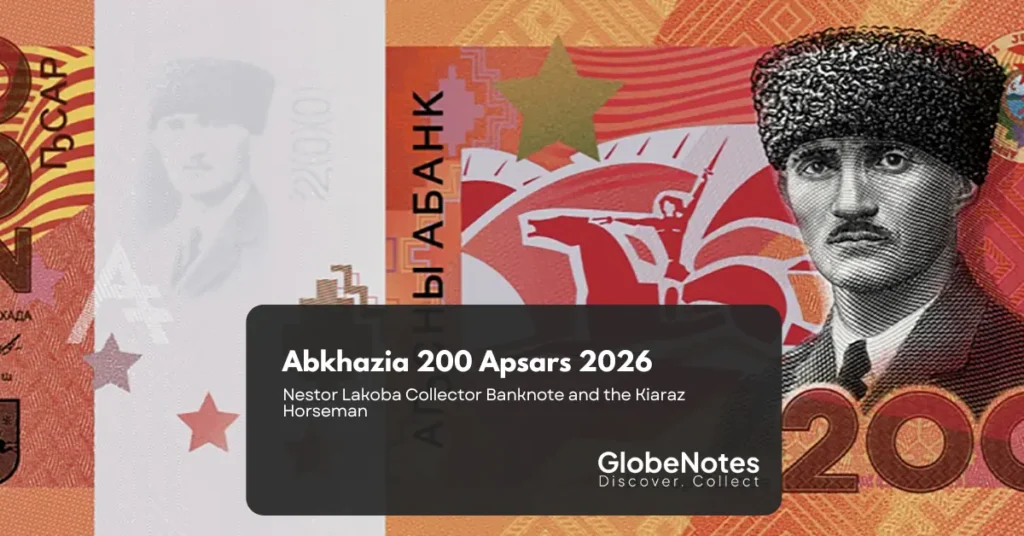
Abkhazia 200 Apsars 2026: Nestor Lakoba Collector Banknote and the Kiaraz Horseman
Abkhazia’s 2026 200 apsars note is not a normal pocket-money issue. It is a collector banknote built around memory, regional identity and the layered Soviet-era story of Nestor Lakoba.
Visually, it is one of those notes that does not whisper. It brings together a portrait, the Kiaraz horseman, stars, a historical emblem, a traditional homestead and a bird of prey. In other words, the note arrives already dressed for an argument.
Quick Facts
- Country: Abkhazia
- Denomination: 200 apsars
- Year: 2026
- Issuer: National Bank of the Republic of Abkhazia
- Material: White cotton paper
- Status: Commemorative collector banknote; not for retail circulation
| Specification | Details |
|---|---|
| Denomination | 200 apsars |
| Reported Value Context | 1 apsar = 10 Russian rubles in Notafilia’s issue-price calculation |
| Size | 150 × 65 mm |
| Printer | Goznak / Moscow Printing Factory of Goznak |
| Main Figure | Nestor Apollonovich Lakoba |
| Main Motifs | Kiaraz horseman, SSR of Abkhazia emblem, homestead, bird of prey |
| Reported Mintage | Conflicting reports: 5,000 or 50,000 pieces |
Collect banknotes related to this article
Explore authentic world banknotes connected to this country, region or collecting theme.

For GlobeNote, the value is not only in the denomination. It is in the note’s tension: collector object, political memory and carefully staged regional symbolism.
A Collector Note With a Heavy Historical Passenger
The 200 apsars note honours Nestor Lakoba, a figure whose story runs through revolutionary Abkhazia, Soviet power and Stalin-era tragedy.
Not Everyday Money
Notafilia reports that the note cannot be used in retail trade. This positions it as a collector commemorative, not as a circulating banknote.
Why Lakoba Matters
Lakoba’s image gives the note political weight. He is not a neutral decorative portrait but a historical figure tied to Abkhazia’s Soviet formation.
The Mintage Problem
BanknoteNews reports 5,000 notes, while Notafilia reports 50,000 pieces. Until the issuer is checked directly, GlobeNote should present this as a reported discrepancy rather than pretending the numbers agree.
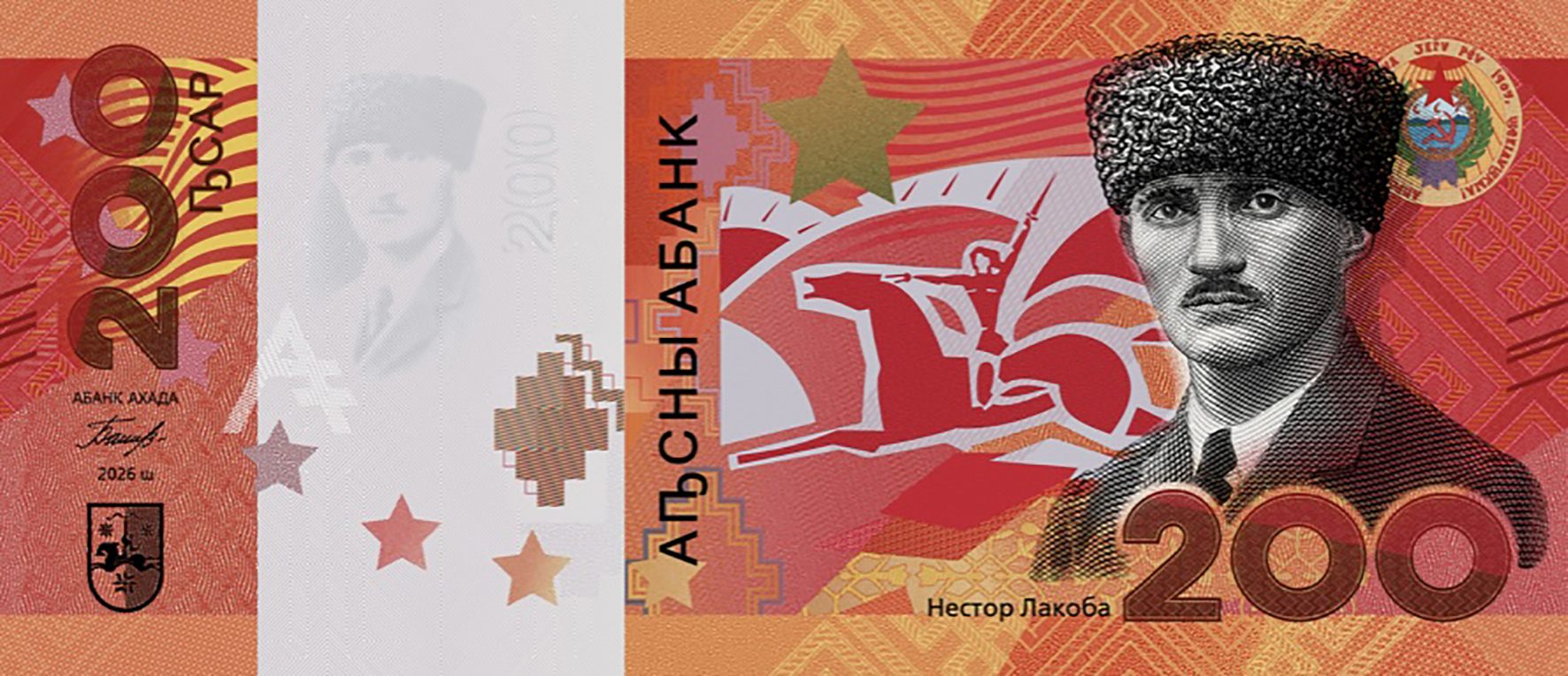
Obverse Design Elements
The obverse turns the note into a political and cultural collage.
Primary Design Elements
- Nestor Lakoba Portrait: The central historical figure and the note’s main narrative anchor.
- Kiaraz Horseman: A stylized rider motif that adds movement and heroic symbolism.
- SSR of Abkhazia Emblem: A historical emblem connecting the design to Abkhazia’s Soviet-era identity.
- Apsar Symbol: The currency sign reinforces the local monetary identity.
- Seven Stars: Repeated star symbolism gives the design a ceremonial rhythm.
The front is not a quiet portrait note. It is a small stage where history, statehood and memory all demand the microphone.
Reverse Design Elements
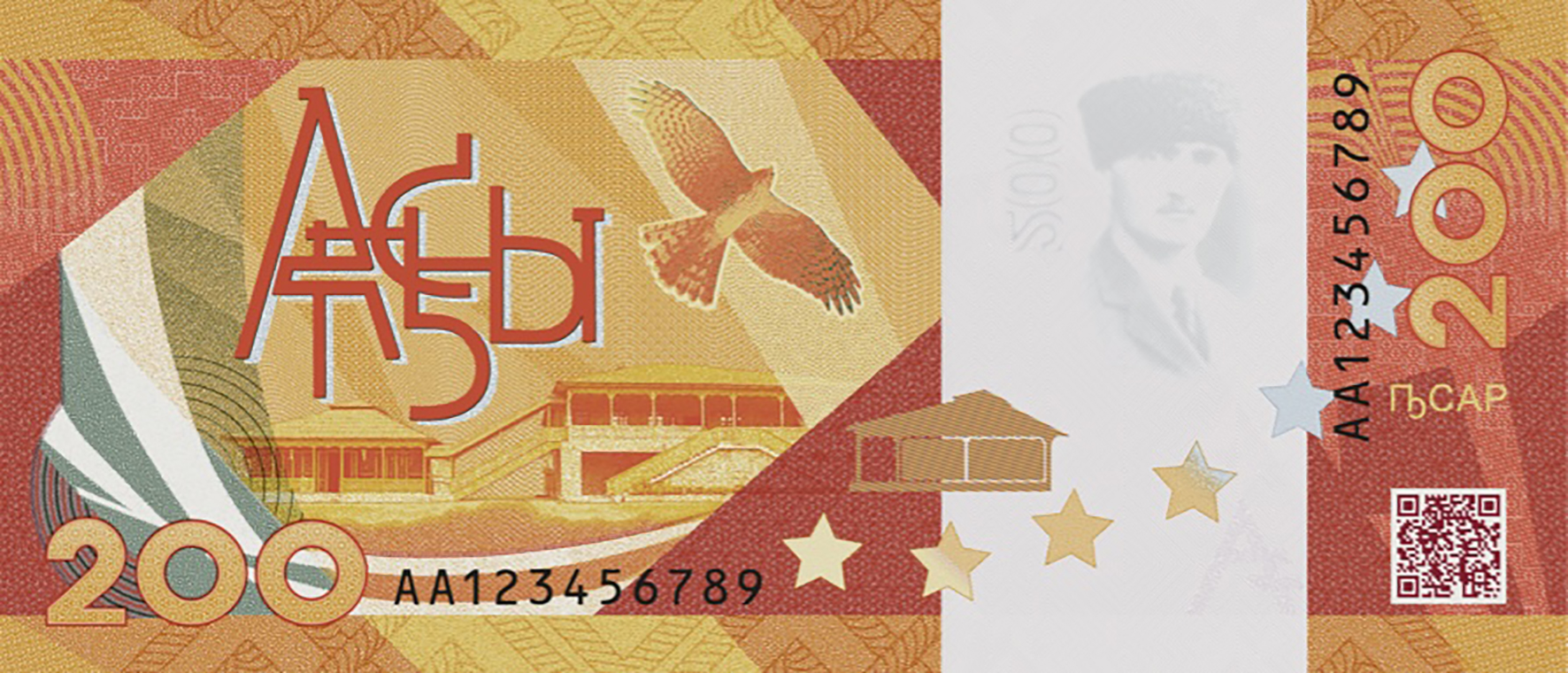
The reverse shifts from political portraiture to landscape, homestead and symbolic flight.
Primary Design Elements
- Traditional Abkhaz Homestead: Domestic architecture grounds the note in local culture.
- Soaring Bird of Prey: Reported as a hawk or eagle motif, creating a visual counterweight to the horseman.
- QR Code: Modern collector-note functionality, useful for issuer-linked information.
- Serial Number: Essential for tracking and collector documentation.
- Denomination Layout: Large value markings make the note visually assertive despite non-circulating status.
The reverse is less theatrical than the front, but it may be more useful for collectors because it shows how heritage and modern document design are stitched together.
Security Features & Anti-Counterfeiting Technology
Notafilia reports a security package based partly on earlier Abkhaz emissions.
Watermark
The reported watermark includes the Lakoba portrait and denomination reference, a logical choice for a portrait-based collector banknote.
Embedded Fibres
Two types of embedded security fibres are reported, supporting inspection under normal and special lighting.
Optically Variable Element
Notafilia describes an optically variable HMC/star feature, useful as a modern security accent.
Guilloches and Anti-Copying
Fine linework, guilloche patterns and anti-copy elements help prevent simple reproduction.
UV and Orlov Printing
UV-visible components and Orlov printing are reported as part of the note’s security architecture.
The security section is especially important here because collector notes are vulnerable to souvenir confusion and low-grade reproductions.
Issue Context & Reported Mintage Discrepancy
The most important editorial point is the discrepancy between published mintage reports.
| Source | Reported Mintage | Issue Date / Introduction |
|---|---|---|
| BanknoteNews | 5,000 notes | Introduced 08.06.2026 |
| Notafilia | 50,000 pieces | Issued 10 June 2026 |
How GlobeNote Should Handle It
State the discrepancy plainly. This is better for trust, better for collectors and better for AI search, because answer engines prefer explicit uncertainty over confident mush.
Why It Matters
A 5,000-note issue and a 50,000-piece issue are very different collector propositions. Mintage affects scarcity, market psychology and long-term appeal.
Collector Market Analysis & Numismatic Significance
This is a strong modern collector note because it combines limited-purpose issue status, historical portraiture and regional symbolism.
Why Collect It
- Distinctive 200 apsars denomination.
- Nestor Lakoba historical theme.
- Kiaraz horseman and Soviet-era emblem imagery.
- Goznak production and security details.
- Clear non-circulating collector status.
Collector Warning
Because mintage reports conflict, buyers should keep source documentation, serial-number records and seller provenance.
Sources & Further Research
This article was built from verified sources, issuer material where available, and specialist banknote reporting. Broken, blocked or unconfirmed links were excluded from the public sources box and recorded separately in the audit sheet.
- BanknoteNews: Abkhazia new 200-apsar note reported – Specialist report with denomination, motifs, printer, size, material and mintage claim.
- Notafilia: Abkhazia collector commemorative banknote – Detailed Polish report with design and security information.
- Bonistika: Input link 5585 – Direct parsing and search verification failed. Not used in public claims except as an input audit item.
- BanknoteNews Abkhazia archive: Abkhazia banknote archive – Useful context for prior Abkhazia collector notes.
- AbkhazWorld: Nestor Lakoba historical context – Background on Lakoba’s death, reputation and rehabilitation.
Browse authentic notes, modern issues and collector favourites in the GlobeNote shop: Shop GlobeNote
Frequently Asked Questions
Is the Abkhazia 200 apsars 2026 note a circulating banknote?
No. Reports describe it as a commemorative collector banknote that cannot be used in normal retail trade.
Who is Nestor Lakoba?
Nestor Lakoba was a major Abkhaz political figure of the Soviet era, closely tied to early Soviet Abkhazia and later Stalin-era power politics.
What appears on the front of the note?
The front features Nestor Lakoba, the stylized Kiaraz horseman, the SSR of Abkhazia emblem, the apsar symbol and seven stars.
What appears on the reverse?
The reverse includes a traditional Abkhaz homestead, a soaring bird of prey, QR code, serial number and denomination elements.
How many notes were issued?
Published reports differ: BanknoteNews reports 5,000 notes, while Notafilia reports 50,000 pieces. The article should preserve this discrepancy until confirmed by the issuer.
This article is part of our New Banknotes 2026 guide.