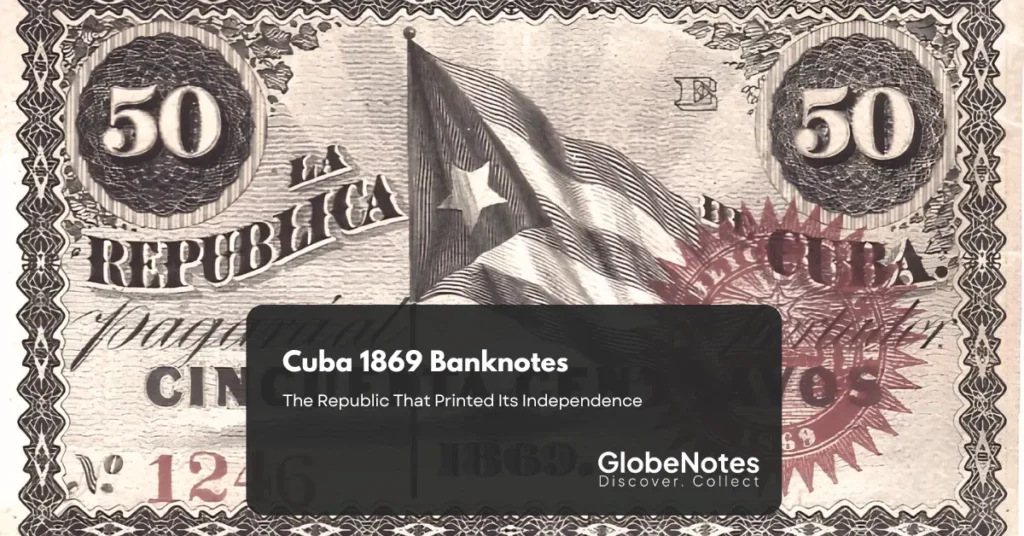
Cuba 1869 Banknotes: The Republic That Printed Its Independence
Cuba • 1869 insurgent issues • Ten Years’ War • Early Cuban notaphily
Cuba’s 1869 insurgent banknotes are not just early paper money. They are a claim of statehood printed while the state was still fighting to exist. That gives them a special kind of voltage: part currency, part political document, part survival certificate.
The Cuban independence struggle began with the Grito de Yara in 1868. Almost immediately, the insurgent movement understood something every revolution eventually discovers: ideals need weapons, weapons need money and money needs authority. Banknotes became one way to declare that authority.
Quick Facts
- Country: Cuba
- Period: 1868-1878 Ten Years’ War
- Key Year: 1869
- Issuer Context: Insurgent Republic of Cuba
- Known Values: 50 centavos, 1, 5, 10, 50 pesos and high-value rarities
- Status: Historic revolutionary paper money
Collect banknotes related to this article
Explore authentic world banknotes connected to this country, region or collecting theme.
| Specification | Details |
|---|---|
| Historical Trigger | Grito de Yara, October 1868 |
| Political Milestone | Guáimaro Assembly, April 1869 |
| Legal Context | Law of July 9, 1869 on banknote circulation in liberated territories |
| Production | Ordered through revolutionary networks linked to the United States |
| Collector Angle | Issued notes, remainders, red stamps, signatures and scarce high denominations |
| Strategic Tags | Cuba, 1869, Ten Years’ War, revolutionary banknotes, notaphily |
These notes make one thing clear: notaphily is not always born in central-bank calm. Sometimes it begins in mud, exile, war councils and the stubborn belief that a republic can be printed before it is internationally recognized.
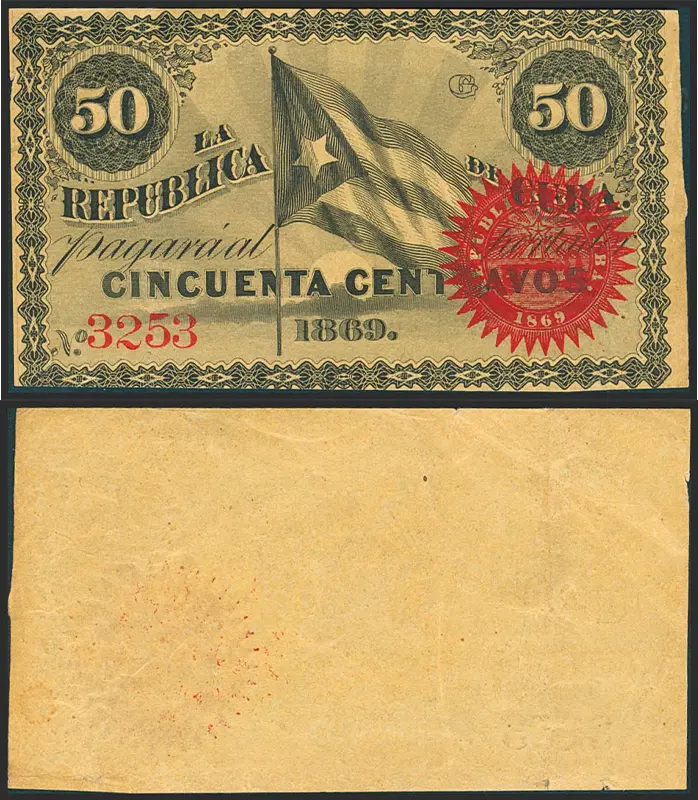
The birth of Cuban notaphily
The insurgents printed paper money to finance the war, buy arms and demonstrate political sovereignty. A banknote is not only a promise to pay. In a revolution, it is also a promise that the issuer has the right to make promises.
The Guáimaro Assembly
In April 1869, the insurgent movement held a constituent assembly and framed the first Cuban constitution. The new political structure gave the banknotes a legal and symbolic backbone.
The July 1869 law
The law on circulation in liberated territories placed the notes inside a political economy. They were meant to function where the insurgent government held influence, even if Spanish silver remained far more trusted in daily life.
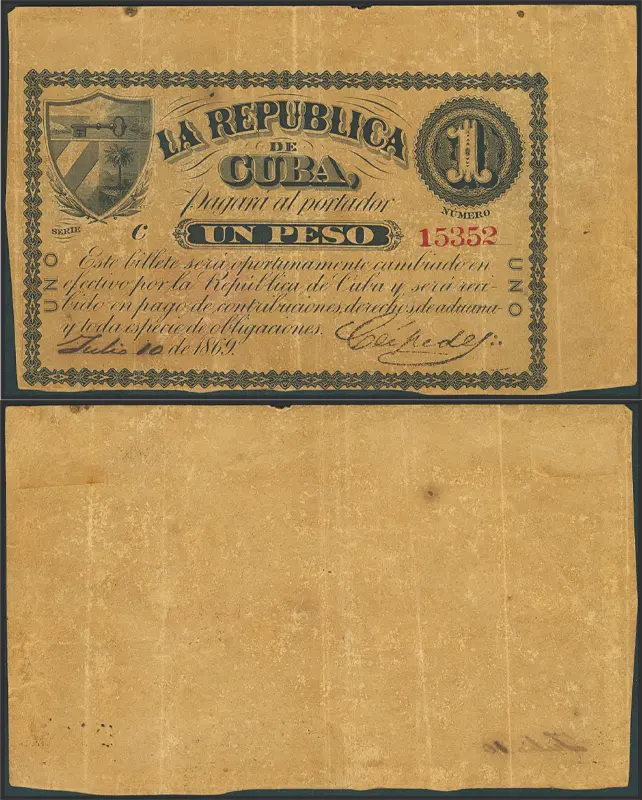
Denominations, printing and variants
The early Cuban issues are fascinating because they are not uniform factory products from a stable state. They include issued notes, remainders, different stamps, signatures and denominations that now form a collector’s maze.
Key collecting categories
- 50 centavos: A small denomination with powerful symbolism and strong visual appeal.
- 1, 5, 10 and 50 pesos: Core denominations linked to the early independence issue.
- 500 and 1,000 pesos: Very scarce high denominations known to specialists.
- Remainders: Unissued notes without full date or signature features.
- Stamped issues: Red stamp variants tied to the required validation of circulating notes.
- Signature variants: Hand signatures and stamped signatures add another layer of complexity.
For collectors, this is not a simple “one type, one note” field. It is a historical puzzle, and every stamp or signature can change the story.
Why these notes rarely behaved like ordinary money
The insurgent government did not have the comfort of a stable capital, a quiet treasury or a population eager to abandon hard coin. Spanish silver remained a safer medium for many people. That means some surviving Cuban revolutionary notes may have functioned more like patriotic receipts than everyday cash.
A banknote as political evidence
Even when not heavily circulated, these notes are evidence of authority. They say: there is a government here, it can legislate, it can issue money and it asks people to believe in its future.
Collector market angle
Condition, validation marks, signatures and provenance are crucial. A note from this field is not merely bought by denomination. It is interpreted like an archival object.
How to collect Cuba 1869 banknotes
A realistic collection can begin with one accessible denomination and grow into variants. The deeper collector will compare issued examples against remainders, stamped notes against unstamped notes and hand signatures against stamped signatures.
What to look for
- Clear date, denomination and Republic of Cuba text.
- Presence or absence of the red validation stamp.
- Signature type and placement.
- Evidence of issue versus remainder status.
- Provenance from reputable auctions or specialist dealers.
These notes are more than beautiful old paper. They are the first paper echoes of a republic trying to announce itself to the world.
Sources and Further Research
This article was built from verified sources and specialist banknote reporting. Broken or unconfirmed links were excluded from this public sources box.
Browse authentic notes, modern issues and collector favourites in the GlobeNote shop: Shop GlobeNote
Frequently Asked Questions
What are Cuba 1869 banknotes?
They are early paper-money issues connected with the insurgent Republic of Cuba during the Ten Years’ War.
Why were they printed?
They helped finance the independence struggle and asserted the authority of the insurgent government.
Which denominations are known?
The field includes 50 centavos, 1, 5, 10 and 50 pesos, plus very scarce higher denominations such as 500 and 1,000 pesos.
What are remainders?
Remainders are notes that were printed but not fully issued, often lacking complete date, stamp or signature features.
Why are stamps and signatures important?
They help distinguish issued notes from variants and can strongly affect collector interpretation and value.
This article is part of our historical world banknote research archive.
Explore more paper money history in the GlobeNote shop.