
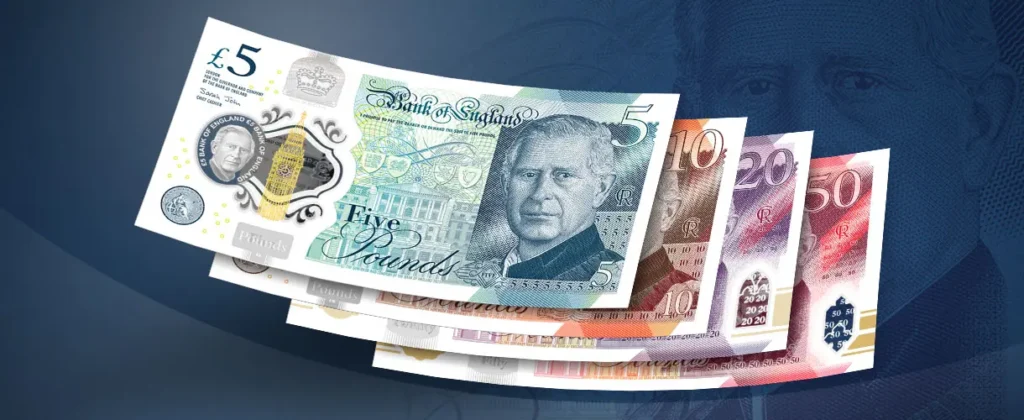
Have the Cayman Islands King Charles III Banknotes Been Released?
No. The Cayman Islands Monetary Authority has confirmed the redesign programme and the move to polymer, but the new King Charles III banknotes have not yet entered circulation.
CIMA has not announced a definitive public issue date. The Authority has indicated that significant design, production and preparatory work must be completed before issuance.
The existing Queen Elizabeth II banknotes therefore remain the normal circulating Cayman Islands currency while the new series is developed.
Cayman Islands New Banknotes: Quick Facts
Collect banknotes related to this article
Explore authentic world banknotes connected to this country, region or collecting theme.

Cayman Islands Banknote Redesign Timeline
Beyond the Crown: Letting Caymanians Define Their Currency
Here’s where the Cayman Islands project gets interesting: rather than letting bureaucrats in air-conditioned offices decide what belongs on the national currency, CIMA asked the public. The January–March 2023 consultation invited residents and stakeholders to nominate themes, landmarks, flora, fauna, and cultural icons worthy of banknote immortality. It’s participatory democracy applied to monetary design—rare in the Caribbean, rarer still in British Overseas Territories.
The current 2010–2018 series features marine life (queen angelfish, blue iguana, Caribbean reef squid), nautical heritage (schooners, lighthouses), and scenic landscapes (Seven Mile Beach, blowholes). Beautiful, yes. Distinctly Caymanian? Debatable. Many designs could swap into any Caribbean nation’s currency without raising eyebrows. The public consultation aimed to fix that generic problem by elevating hyper-local symbols—think Cayman parrots over generic tropical birds, Pedro St. James over colonial administrative buildings, traditional Catboat sailing over vague maritime nostalgia.
Why Public Consultation Matters for Currency Design
National Identity: Banknotes circulate for decades. Getting the symbolism right—capturing what Caymanians actually value rather than what tourists expect—matters for generational relevance.
Anti-Counterfeiting Culture: When citizens recognize and care about their currency’s imagery, they’re more likely to notice fakes. Emotional connection drives vigilance.
Tourism Soft Power: Cayman dollars are souvenirs. Notes that tell authentic stories (not generic beach-and-fish clichés) become conversation pieces, spreading cultural awareness globally.
CIMA hasn’t released the consultation results publicly—typical for security-sensitive currency projects—but the fact that feedback was solicited at all signals a shift toward inclusive monetary governance. Expect the final designs to balance three constituencies: local pride (cultural/natural heritage), royal protocol (Charles III portrait on obverse, likely), and technical requirements (polymer-compatible security features). The challenge: honoring tradition without becoming a museum piece, celebrating modernity without erasing history.
Paper to Polymer: The Technical Leap Forward
The Cayman Islands’ adoption of polymer substrates represents more than aesthetic preference—it’s an economic and environmental calculation. Polymer notes last 2.5 to 4 times longer than cotton-fiber equivalents in tropical climates, where humidity, salt air, and heavy circulation accelerate paper degradation. For a jurisdiction heavily reliant on tourism (meaning high cash turnover in bars, shops, and dive operations), durability translates directly to cost savings. Fewer replacements, lower printing bills, reduced environmental waste from destroyed notes.
Technical Specifications (Confirmed & Expected)
| Substrate Material | Polymer (confirmed by CIMA, May 2024) |
| Denominations | 1, 5, 10, 25, 50, 100 Cayman Islands Dollars (KYD) |
| Portrait | King Charles III (obverse, standard Commonwealth placement) |
| Design Themes | Public consultation results (unreleased); likely local flora, fauna, heritage sites |
| Security Features | Transparent windows, holographic elements, UV inks, microtext (standard polymer package) |
| Printer | Likely De La Rue (CIMA partner since 1972); CCL Secure or Note Printing Australia also possible |
| Size/Dimensions | Not yet disclosed (may vary by denomination for accessibility) |
| Circulation Start | TBD (dependent on existing QEII stock depletion) |
| Current Series Validity | Indefinite (no demonetization planned) |
Polymer also enables security features impossible on paper: transparent windows with intricate holographic imagery, color-shifting patches that defy photocopiers, and tactile elements that double as accessibility aids for visually impaired users. The Cayman Islands joins a global trend—Canada (since 2011), Australia (since 1988), New Zealand (since 1999), and the UK (since 2016) have all converted to polymer for high-circulation denominations. Even the European Central Bank is experimenting with polymer for future Euro redesigns.
One wildcard: will CIMA maintain the unusual 25-dollar denomination? The “quarter hundred” note is rare globally (only a handful of countries issue it), making Cayman dollars distinctively collectible. If the new polymer series retains the KYD 25, it’ll be one of the few polymer “quarter notes” in existence—automatic numismatic appeal.
Security Arsenal: What Polymer Brings to the Caribbean
The Cayman Islands may be a low-crime jurisdiction, but its status as a global financial center makes currency security non-negotiable. Counterfeiters target high-value, widely traded currencies—and the Cayman dollar, pegged 1:1.2 to the US dollar since 1974, qualifies. The shift to polymer isn’t just about durability; it’s about making forgery economically unviable through layered, substrate-dependent security features that casual counterfeiters can’t replicate.
Expected Polymer Security Features (Based on CIMA Standards & Industry Best Practices)
- Transparent Polymer Windows: Clear zones with embedded holographic imagery, impossible to photocopy or scan accurately
- Shadow Image Watermarks: Polymer-embedded translucent designs visible when held to light
- Optically Variable Devices (OVD): Holographic foil strips that shift color and pattern when tilted
- Microtext & Guilloché Patterns: Ultra-fine line work readable only under magnification, frustrating digital reproduction
- UV Fluorescent Elements: Hidden inks and fibers visible only under ultraviolet light
- Raised Intaglio Printing: Tactile textures for both authenticity checks and accessibility
- Serial Numbering: Unique alphanumeric codes (horizontal/vertical, likely with UV reactive ink)
- See-Through Register: Front/back alignment features visible when held to light
De La Rue—CIMA’s likely printer given their 50+ year partnership—specializes in SAFEGUARD® polymer substrates with integrated security threads and holographic patches. If the Caymans follow recent De La Rue client patterns (Fiji, Samoa, Mauritius), expect at least three transparent windows per note, each with distinct diffractive imagery. The 100 KYD note will likely showcase the most elaborate security suite, balancing anti-counterfeiting needs with collector appeal.
Public education will be critical. Polymer feels different—slicker, more plastic, less “money-like” to populations accustomed to cotton fiber. CIMA will need awareness campaigns demonstrating security checks: tilt tests for color-shift, light tests for shadow images, touch tests for intaglio. Australia’s “Check Your Cash” mobile app model—using smartphone cameras to verify authenticity via augmented reality—could be adapted for Cayman-specific features.
When Will They Actually Arrive? The Stock Depletion Question
CIMA’s official stance—”no timeline until existing stock is exhausted”—is fiscally responsible but numismatically frustrating. How long does it take to deplete eight years’ worth of banknote inventory (2010–2018 printings) through natural circulation? Depends on denomination usage patterns, tourism fluctuations, and central bank replacement thresholds. Let’s extrapolate from available data.
Projected Rollout Timeline (Speculative Based on Stock Depletion Rates)
2025–2026: Design finalization incorporating public consultation feedback; prototype production and testing; security feature validation
2027: Printer contracts finalized (likely De La Rue); pilot production runs for quality assurance; staff training on new note handling
2028: Low-denomination stock (1, 5 KYD) likely depleted first due to high turnover; first polymer notes may enter limited circulation for field testing
2029–2030: Mid-denominations (10, 25 KYD) transition as paper stocks diminish; ATM and vending machine firmware updates rolled out
2031+: High-denominations (50, 100 KYD) transition last, as they circulate less frequently and paper stocks remain robust; full polymer family complete
No demonetization planned: QEII notes remain legal tender indefinitely; dual circulation continues until natural attrition
This timeline is conservative but realistic. The UK managed its QEII-to-Charles transition in under two years because the Bank of England prints continuously to replace worn notes. The Cayman Islands doesn’t—CIMA orders bulk printings designed to last years, then exhausts inventory before reordering. The 2010–2018 series was overprinted anticipating long use; that foresight now delays the King Charles rollout.
Tourism patterns complicate predictions. The Cayman Islands saw record visitor numbers in 2024–2025 post-pandemic, accelerating currency circulation and wear. If high tourism persists, lower denominations (the 1 and 5 KYD workhorse notes) could deplete by 2027–2028, triggering the first polymer releases. Conversely, an economic downturn or cruise ship reduction could extend paper note lifespans into the 2030s. CIMA isn’t committing to dates because it genuinely doesn’t know—the market will decide.
For collectors, this ambiguity creates strategic opportunities. Unlike hard-deadline transitions (where panic buying inflates prices), the Cayman rollout will be gradual and observable. Monitor CIMA announcements for “final order” notices on specific denominations—that’s your signal to acquire pristine QEII examples before premiums kick in.
QEII Paper vs. King Charles Polymer: What’s Changing
The current Cayman Islands banknote series (technically the “D/4” series in CIMA nomenclature) debuted in 2010 and saw revisions through 2018. It features Queen Elizabeth II in regal profile on the obverse, paired with Caymanian themes on the reverse: the blue iguana (1 KYD), queen angelfish (5 KYD), Caribbean reef squid (10 KYD), lighthouse and schooner (25 KYD), traditional catboat (50 KYD), and Grand Cayman blowhole (100 KYD). The notes are printed on cotton-fiber paper by De La Rue, with traditional security threads, watermarks, and intaglio printing.
Side-by-Side Comparison: Current vs. Upcoming Series
| Feature | Current Series (2010–2018) | King Charles Series (TBD) |
|---|---|---|
| Monarch Portrait | Queen Elizabeth II | King Charles III |
| Substrate | Cotton-fiber paper | Polymer |
| Denominations | 1, 5, 10, 25, 50, 100 KYD | Likely same (25 KYD retention unclear) |
| Design Themes | Marine life, nautical heritage, scenic landscapes | Public consultation results (unreleased) |
| Security Level | Watermarks, security threads, microprint, UV fibers | Polymer windows, holograms, OVI, shadow images |
| Lifespan | ~18–30 months (tropical climate wear) | ~60–100 months (polymer estimate) |
| Printer | De La Rue (confirmed) | Likely De La Rue; CCL Secure possible |
| Accessibility Features | Limited (size variation, basic tactile marks) | Enhanced (polymer-enabled raised features) |
The most dramatic visual shift will be the substrate’s sheen—polymer notes have a distinctive glossy finish versus paper’s matte texture. Transparency is the game-changer: expect at least one clear window per note, likely featuring the Cayman Islands coat of arms or a marine motif (turtles, stingrays) in holographic form. These windows aren’t just decorative; they’re anti-counterfeiting moats that casual forgers can’t cross.
Will the new series retain the current color palette (green 1 KYD, purple 5 KYD, red 10 KYD, etc.)? Probably—color-coding aids quick recognition, and CIMA has no reason to confuse a population accustomed to decades of consistent hues. But the reverse imagery is up for grabs. If public consultation emphasized cultural heritage over nature, expect more human elements: traditional Caymanian architecture, historical figures (pirates? shipwreck survivors?), or cultural practices (rope-making, turtle farming heritage). If nature themes prevailed, look for upgrades like the endemic Sister Islands rock iguana or bioluminescent bay scenes.
Collector’s Angle: Why Cayman Currency Deserves Attention
Cayman Islands banknotes occupy a curious niche in global numismatics: high intrinsic value (the KYD is one of the world’s strongest currencies, worth ~$1.20 USD), low collector awareness, and moderate scarcity. Most dealers stock Australian dollars, Canadian polymers, or British pounds—Cayman currency remains a specialist interest, which creates opportunity for informed collectors. The pending QEII-to-Charles transition amplifies that opportunity exponentially.
Why Cayman King Charles Notes Will Be Collectible
- First Commonwealth Polymer Transition in the Caribbean: While Canada and Australia adopted polymer years ago, Caribbean jurisdictions have lagged. Cayman leads the region—historical significance for island currency evolution
- Low Population = Low Print Runs: Only ~70,000 residents means circulation needs are minimal. Compare to UK (67 million) or Australia (26 million)—Cayman notes are inherently scarcer
- Tourist Demand Creates Wear: High visitor-to-resident ratio (4:1 annually) means notes circulate heavily despite low population. Uncirculated examples will be rarer than raw numbers suggest
- Unusual Denomination (25 KYD): If retained in polymer, the “quarter hundred” becomes one of <5 polymer notes globally with this value—instant collector appeal
- Royal Transition Milestone: First Cayman currency featuring a king in over 70 years (last king was George VI, pre-1952). Monarchists and Commonwealth collectors will chase complete sets
- Dual-Series Window: Extended rollout timeline means QEII and Charles notes coexist for years—matched paper/polymer pairs will be thematic gold
Current & Projected Market Values
| QEII Series Complete Set (UNC, 2010–2018) | $150–$250 USD (undervalued; face ~$186 KYD = $223 USD) |
| QEII 100 KYD Single (UNC) | $125–$150 USD (face ~$120 USD + minimal premium) |
| QEII 25 KYD “Last Paper” (UNC) | $35–$50 USD post-polymer release (currently ~$30 face value) |
| King Charles Polymer First Issue Set (UNC, projected) | $300–$450 USD (speculative; assumes 2028+ release) |
| Low Serial Numbers (001–100, any denom) | +200%–400% premium over face value |
| Matched QEII Paper / Charles Polymer Pairs | $60–$100 per denomination pair (same value, different substrate/monarch) |
| Graded PMG Gem UNC 66+ (QEII final series) | +80%–150% premium over raw UNC examples |
The play: acquire QEII Cayman dollars now, while they trade near face value. Focus on the 50 and 100 KYD notes in Gem Uncirculated condition—these are the denominations tourists rarely touch (they use 1, 5, 10 KYD for daily transactions), meaning high-grade survivors are plentiful today but won’t be in five years. Once CIMA announces the first King Charles denomination entering production, “last QEII” premiums will materialize overnight.
For the polymer series, early adoption is key. If CIMA releases collector sets (folders, albums, presentation packs) through their website or authorized dealers, buy immediately. These typically appreciate 30–60% within the first year if kept sealed. Low serial numbers (especially 000001 through 000100) command exponential premiums—Cayman’s small print runs make sub-1000 serials genuinely rare, unlike mass-market currencies where “low number” means sub-10,000.
Risk assessment: The extended timeline creates holding-period uncertainty. If the polymer series doesn’t launch until 2030+, your capital is locked for years in notes yielding no return beyond potential appreciation. Currency strength is a hedge—the KYD’s USD peg means you’re protected against Cayman devaluation, but not against USD weakness. Diversify: don’t sink your entire numismatic budget into speculative Cayman holdings. Allocate 10–20% max, treating it as a 5–10 year play rather than quick-flip opportunity.
Cayman Islands King Charles III Banknotes FAQ
Have the Cayman Islands King Charles III banknotes been released?
No. CIMA has confirmed the redesign programme, but the new banknotes have not yet entered circulation and no definitive release date has been announced.
Will the new Cayman Islands banknotes be polymer?
Yes. CIMA has confirmed that the redesigned banknotes will move from traditional paper to polymer.
Will King Charles III appear on Cayman Islands banknotes?
Yes. CIMA announced that King Charles III will replace Queen Elizabeth II on the redesigned Cayman Islands currency.
When will the new Cayman Islands banknotes enter circulation?
No official circulation date has yet been confirmed. The programme remains in development.
Are Queen Elizabeth II Cayman banknotes still valid?
Yes. Existing Cayman Islands banknotes remain legal tender and redeemable at face value.
Which denominations will be redesigned?
The current family includes CI$1, CI$5, CI$10, CI$25, CI$50 and CI$100. CIMA has announced a complete redesign, but final denomination-by-denomination production details have not yet been published.
What security features will the new notes have?
CIMA has not yet published the final technical specifications. Polymer allows advanced features such as transparent windows and optically variable elements, but the exact Cayman Islands feature set remains unconfirmed.
References
This article is part of our New Banknotes 2026 guide.